Apple Podcasts

 Spotify

 YouTube
 RSS Feed
Luiz Levy, Director & Quality and Regulatory Affairs at Emergo
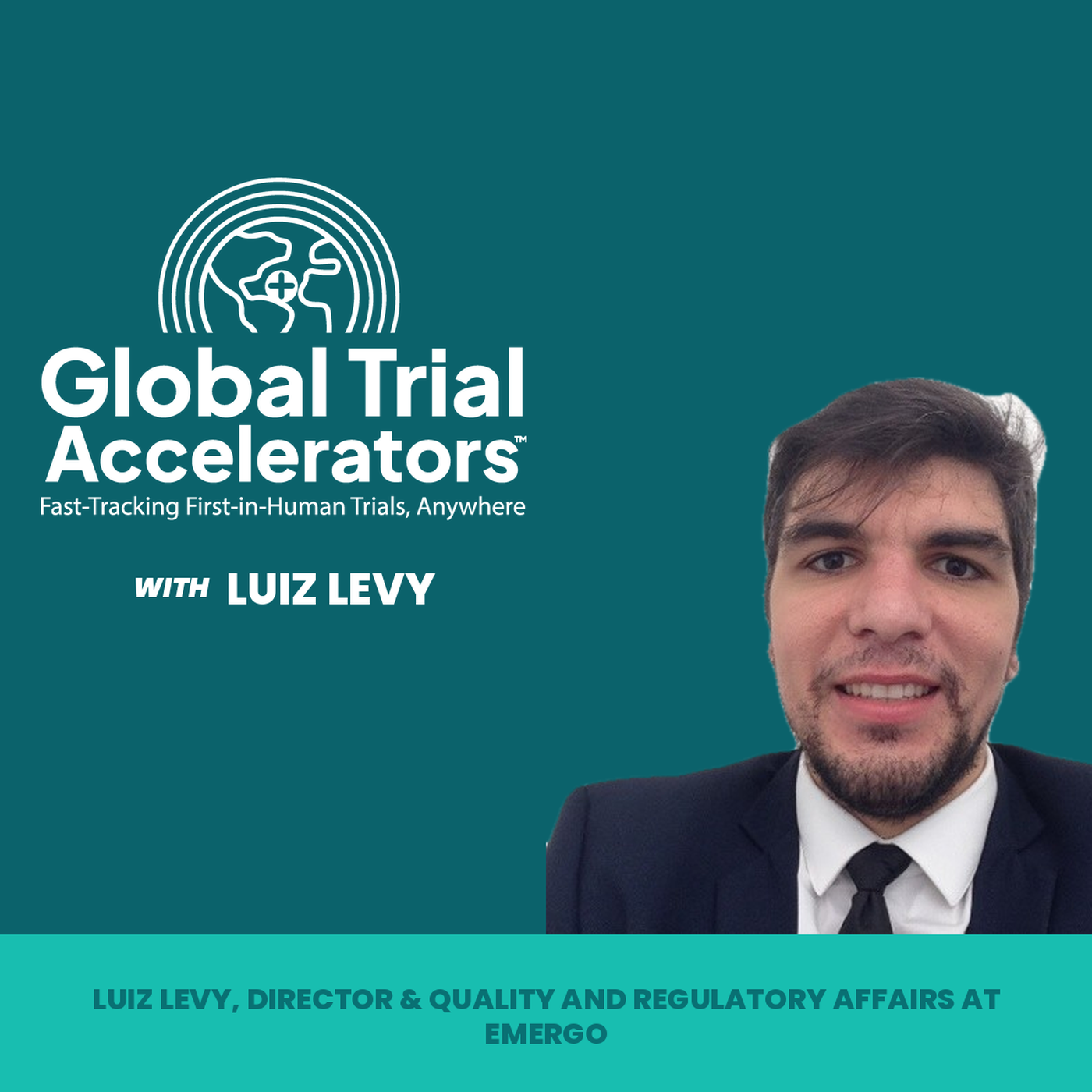
Luiz Levy has over ten years of medical device industry experience, primarily focused on high-risk devices, including implantable devices, electrical medical equipment, and disposables subject to INMETRO Certification. Luiz’s background includes: implementing and auditing quality systems to B-GMP Regulation RDC 16/2013, ISO 13485:2016, Directive 93/42/EEC, Regulation (EU) 2017/745, FDA 21 CFR 807, FDA QSR 21 CFR 820, MDSAP-Medical device Single audit program; performing multiple local and foreign (US, Europe, Japan) audits to prepare companies for ANVISA inspections; assisting companies during ANVISA inspections; compiling medical device and IVD applications; clinical data review; compiling clinical evaluation reports and compiling and peer-reviewing market access reports.
As Director, Quality and Regulatory Affairs, Luiz has peer-reviewed more than 300 regulatory filings and reports, conducted multiple onsite audits on local and foreign manufactures, performed internal audits, and performed or reviewed more than 350 classifications/technical files of healthcare products, attended strategic meetings with ANVISA to help Agency on the final draft of new regulations (RDCs). Luiz is the designated Health Manager for Emergo’s Brazil Registration Holder services, and he additionally managers Emergo Brazil’s RDC 16/2013 quality system. Prior to Emergo, Luiz held RA/QA positions at CPL Medicals, Goen3, and Medics.
Announcer: Welcome to the Latin MedTech Leaders podcast, a conversation with MedTech leaders who have succeeded or plan to succeed in Latin America. Please subscribe on your favorite podcasting platform. Apple Podcasts, Spotify, Google Podcasts, Amazon Music, Stitcher, TuneIn, iHeartRadio, Pandora, or Deezer. Welcome to the Latin MedTech Leaders podcast.
Julio G. Martinez-Clark: Today, our guest is Luiz Levy, or Levi. How do you pronounce your last name, Luiz?
Luiz Levy: Levi. Levi, Levi. All right.
Julio G. Martinez-Clark: Luiz is director, quality, and regulatory affairs at Emergo in Brazil. He has over 10 years of medical device industry experience, currently focused on high-risk devices, including implantable devices, electrical, medical equipment, and disposables. Luiz's expertise is in performing local and foreign U.S.-Japan audits to prepare companies for ANVISA inspections and also assisting companies during ANVISA regulatory filings, compiling medical device and IVD applications, clinical data review, compiling clinical evaluation reports, and compiling peer review market access reports. Additionally, he teaches courses on ANVISA, medical device and IVD regulations, and quality system requirements at two postgraduate institutions in Brazil. So, Luiz, it's great to have you here today. Welcome to the show.
Luiz Levy: Thank you very much for the invite, and I hope this will be a good talk for our listeners, and they'll learn more about the Brazilian markets, and I can give you my true thanks on the requirements and everything else.
Julio G. Martinez-Clark: Awesome.
Luiz, let's get started. Could you please tell listeners how you got involved with Emergo, how you got involved with the medical device industry in the regulatory field? Tell us a little bit about your history.
Luiz Levy: On the medical device side, I started in 2008 on medical device distributors. This was the first time that I had an experience of selling medical devices, so I was selling implantable devices, which is a very complex selling system in Brazil. And then I decided to grow my career and move to a manufacturer because I was really looking forward to putting in place all the technical backgrounds that I have in my graduation and also my post-graduations on industrial management and quality management system. And I stayed there for a few years, so I took over the regulatory affairs and quality assurance, so I helped companies to address their quality system, to meet Brazilian regulations and U.S. regulations. And I also moved to another factory that I was able to manage more than three facilities in Brazil, three factories, which was a very nice experience. And after I stayed for almost four years on a factory, then I moved to Emergo, which is a consulting firm that is amazing because we are exposed to a lot of different types of technologies, which is great for whatever person that wants to learn and do different things all the time, which is very nice. And at Emergo I manage the quality and regulatory affairs system, and I also do quality audits, both for Brazil, for example, because in Brazil, if you are trying to register a high-risk device, sometimes ANVISA decides to go perform an inspection by their own, which is one of their requirements, so it gives me the opportunity to assist companies abroad, so in China, Japan, Europe, so travel all over the world, and help our clients to navigate all of these challenges that the country has. But it's also good to work in such a challenging scenario.
Julio G. Martinez-Clark: Yes, and diverse as well. As you said, you're very much exposed to all different types of innovative technologies coming to Latin America, which is great. It's a great position to be in. And Emergo is a great company. Yeah, and it's amazing.
Luiz Levy: So we see the new technology coming, whether from regulatory roadmap, so the clients reach out towards understanding what will be the requirements to reach the market, and also working on the applications. So we've seen the technology trends, for example, we're starting to see devices using artificial intelligence coming to Brazil. A lot of companies invest in wearable technologies because the customer, actually the people, they want to be more self-aware about their health. So there are a lot of companies investing in different types of technology, and there's a lot of opportunities around these areas. And also, a lot of [unclear: potential] issues from a regulatory side, not only in Brazil, but in the entire planet, for example, lack of regulation [unclear: for] artificial intelligence. So cyber security, which becomes a major challenge, not only for us on the regulatory side, but also for the regulator, which they also need to evolve in understanding these new technologies.
Julio G. Martinez-Clark: Usually regulators, we're jumping ahead because that was actually one of the questions that I have for you. We can talk about that later, but usually the regulator is behind the industry a few years, right? And the regulations are not always up to speed with what's coming.
Luiz Levy: Yeah, it's tough, let's say, can feel their pain because sometimes we on the consulting side, we need to also get familiar with the technology. And then we know the requirements, but every technology has its own particularities. But I see that, especially artificial intelligence, it's going to challenge not only Brazil, but the entire world because of the lack of regulations. For example, technologies that use deep learning, which don't necessarily need the company to evolve themselves. So how do you control these?
Julio G. Martinez-Clark: Wow, yeah, exactly. New versions, every day there's a new version.
Luiz Levy: Exactly. So how you challenge the software to make sure the technology is still safe and effective, which is the main goal. So it's amazing the technology, but there's a lot of things to do on this requirement.
Julio G. Martinez-Clark: All right, so you touched on a few topics that I wanted to touch upon, but one of the questions that I usually ask my guests during the beginning of the episode is about trends. What trends do you see happening in Brazil or in Latin America, specifically in Brazil that are relevant to our discussion today? We can talk about political trends, economic trends, epidemiological trends, et cetera. Regulatory trends that you see are relevant to the discussion or to medical device companies that are looking to enter Latin America. Can we talk about that, please?
Luiz Levy: Yeah, sure. From a epidemiology standpoint, so you can look at the COVID situation, which needs to be very hard. So we have a lot of, so we have more than 200 million people. So we have almost 500,000 deaths. So it hit the country very hard. So for the medical, for the healthcare system, because in Brazil, it's a little bit different from other countries. For example, in Brazil, health is a constitutional right. So every Brazilian citizen has the right to have access to the actual healthcare system. Then this presents a challenge in terms of COVID because you have private and also the government companies are reaching, have access to these types of technology. So a lot of things have been done over the past year. So the regulator, ANVISA, they made a lot of changes, which was good to help this technology to reach Brazil, for example, COVID tests. So the PCR, the ventilators, which was very much needed. So for almost eight months, ANVISA had a regulation that they actually, they facilitate the market entry.
Julio G. Martinez-Clark: Emergency use authorization, that's how the FDA calls it, yeah.
Luiz Levy: Exactly. So they have a regulation that exempts a few requirements for a certain period. And they also, they focus that revision. They prioritize the revision of this type of product, which helped a lot of the countries. So on this, on the COVID situation, there is a lot of things still needing in the market. So now we are seeking for vaccines, right? So we have the rich countries that is pretty much, very much more than 50% or very close 50% of the population. In Brazil, we are still only 20%. So we are still a long way to be in a health situation. On the technology trends, as I mentioned to you, it's wearable technology is something that a lot of companies are investing and there is a lot of need because we have the obvious trend of what people want to have in a more friendly environment, right? So environmental friendly technologies. And also they want to be more aware about their own health status. The pandemic situation, they push it for the telehealth to be more used. And this as a consequence needs this type of technologies for the doctors on the other side to make medical decisions based on an effective health solution. So this is an obvious trend. A lot of companies are very much investing on this. So for example, you have technologies over the glucose monitoring system. So in the past, people only figured their prints and put their blood. Now you have sensors that stayed in your skin for 15 days and you can see all that time. You can also run an ECG during your watch. So it's something that who thinks in the past people doing pulse oximeter for the COVID. So pretty much everyone has these on their own. So this type of technology and also novel technologies as use of artificial intelligence. It's obvious trend because all the health system in the world needs more effective solutions. And this technology, especially artificial intelligence, they will be with us for a long time. And as I mentioned to you, there is a trend of need of regulation on this type of technology. Right. So to help the companies, for example, what happens if the softwares understand, for example, a software that does the diagnostics, so a software that does that. What happens if they teach incorrectly and then it gives the wrong diagnosis to the doctor? How you control that? So it's something that we already see some movement on the FDA. So FDA released a paper on it. And also the [unclear: IMDRF] also released a document. And there are some movements about standards. We used to have a long way to go to make this a reality and to assist the companies. And we are in a hurry because technology keeps evolving all the time.
Julio G. Martinez-Clark: Every day is faster and faster. Yeah. So two comments on that. One is, I recently heard that Apple is preparing a new version of the Apple Watch. And it's going to come out with glucose monitor and also blood pressure monitor. So imagine, I mean, everybody has a medical device in their pocket or in their wrist. So it's just amazing.
Luiz Levy: And you see, it makes sense. So unfortunately, due to the COVID, we have isolated in our own places. So people are getting more diabetes. So more people are diagnosed with diabetes, more people diagnosed with high blood pressure. And this creates a demand for the market. So because of COVID, a lot of people are afraid to go to the hospital. So the telemedicine needs these types of technology for the doctors to have data or to make decisions on a treatment or on a medical exam. So this is very much needed. It makes a lot of sense for them to invest on it.
Julio G. Martinez-Clark: Exactly. You're making a good point. I mean, Brazil, like any other country in Latin America, has an emerging middle class. It's increasing. It's adopting American standard of living, right? Eating fast food, not exercising that much, workaholics. And now with the pandemic, people working from home are working actually more than before. And the mental health situation is terrible. So things are changing a lot. I mean, there's a lot of demand for medical care. I think the two industries that are benefiting from the pandemic are technology in general, and you know, everything digitized, virtual, telecommunications, networking, etc. And also healthcare.
Luiz Levy: I mean, healthcare technologies. So healthcare in Brazil was one of the few areas that is still increasing. So every year, so from now on, it was a 5% increase last year, despite all of the crisis that COVID caused to us. So it's still growing despite all of the challenges in terms of in Brazil is a very challenging tech system. So companies that are trying to establish a company in Brazil needs to be very self-aware about those requirements, because these are the ends, in fact, when you want to sell, where you want to sell, and how you want to sell it.
Julio G. Martinez-Clark: Exactly.
Luiz Levy: So depends on your strategy. All of these impacts made a huge impact for your profitability and also for even for from the logistics standpoint, because it can be very complex to move your device depends on your device storage and condition. So it's like I said, it's a huge country. So a good strategy is a key point for you to succeed in the market. And opportunities have a lot for all areas inside of healthcare. But a good strategy is a key point.
Julio G. Martinez-Clark: Selecting the right partner.
Luiz Levy: Yes. It's critical because people, a lot of companies, they see the distributor are just a company that will sell a device. But it's much more than that. This company will represent your brand. So I see in Brazil, a lot of issues that manufacturers select a distributor that went out of business. And then they lost Brazil, because in Brazil, you have the registration holder. So the company that submit registration, they own the registration. So I saw companies that were out of distributors out of business that are a result, manufacturer couldn't export anymore. So I saw that distributors with a poor quality system, or, or that as a consequence, they made errors on the customer access, the helping the customers to understand the device, because sometimes you have, I can see a lot of issues you have in the market when several complaints are associated with usability, or the interactions between the customer and the solution. So these are solved with training. So the proper attention to your customer is key, provide problems to reduce the complaints. So that's why it's so critical for you to choose your right partner to navigate in Brazil, because it can be quite challenging.
Julio G. Martinez-Clark: Yeah, it's a chess game. It's not just as simple as just meeting somebody at a trade show and shaking their hand and having a couple beers. It's not that I mean, it goes way beyond that you have to look for their reputation, their financials, their stability, the coverage, national geographical coverage, because Brazil is a huge country. I mean, you have, I don't know, like five, six, seven regions, different regions, different cultures, different dialects. And so it gets a little tricky.
Luiz Levy: A typical mistake. So companies went to Brazil, they watch the trade shows, right? So they start meeting a lot of distributors. But there is no registration.
Julio G. Martinez-Clark: Yeah.
Luiz Levy: So the distributor can be very much looking forward to sell your product. But how are you going to sell if the device is not registered? And in Brazil, you will have different routes. We have notification route, which is for the low risk devices, which can be finalized pretty quickly. So I would say in 30 days, you can start selling. But we also have the high risk devices for class three and class four, that you have the B-GMP inspection. So ANVISA inspection process. And also the high risk device application analysis could take up to one year, you may try to look at a distributor that [inaudible] a long time ago and
Julio G. Martinez-Clark: [inaudible] correctly, yes, the [unclear: provider]. [inaudible] French fries on the street. Exactly. And also, I understand there is a cost or economic analysis, you have to do high risk devices about pricing and all that you also have to do. So it may take you about three years sometimes to register a device in Brazil. Is that correct?
Luiz Levy: Yeah, so I would say one year, because your device may require additional certifications, not only for ANVISA, for example, certain device require an ANATEL certification with a wireless, any device have wireless and Bluetooth, telecommunication, we have a certification in Brazil for that. And we also have the INMETRO certification. So devices that have 60601 applicable for them. So electrical medical devices, they require a certification, which is done by a certification body accredited by INMETRO, which is another Brazilian entity. So and then this could take some time because you also have to request the B-GMP from ANVISA. And then if you have MDSAP already, so this could be very quick, because ANVISA accept MDSAP certificate and they don't have to travel and visit the factory. Exactly. But you also have to take an account, the INMETRO certification that could take to one to three months, you can always submit your application once these certifications are completed. When they used to meet and you have ANVISA has a 90 day period to analyze applications such as [unclear: FTA], for example. And then they start the analysis, they may have some questions as any other country and they wish you additional information requests, and then you have to respond and they will start the revision again. I would say one year, it's a good estimate, but it's a good estimate.
Julio G. Martinez-Clark: Okay, okay. I've heard three, but you are the expert.
Luiz Levy: Yeah, in the past, so there was a huge back line of inspections. And also in the past, some ANVISA wanted to inspect all factories. But this changed a few years ago. So now ANVISA conduct a risk based approach on the inspection request. And they may either expect accept your international inspection reports, then issue the certificate without traveling to your facility. Or they can either do inspection if I reduce it out its scope. So instead of staying five days in your facility, they can stay two or three days. This helped them to reduce this backlog. And now they are pretty much in one year. So is their timeline currently to schedule if they decided to do the inspection and go on site? Yeah, and also with the MDSAP, so a lot of companies, if you have MDSAP, ANVISA will never go to your facility. So this makes the process much quicker.
Julio G. Martinez-Clark: Okay, and MDSAP includes Canada, United States, Japan, Brazil, what else?
Luiz Levy: Yeah, United States, Canada, Australia.
Julio G. Martinez-Clark: Okay, very good. All right, Luiz, going back to the trends. You're already talking a little bit about that. But I want to get a little deeper into this topic. What political trends do you see happening in Brazil that are beneficial to to the medical device business? What I really mean is, I just heard, for example, that Brazil is applying to be an OECD member. Do you know that?
Luiz Levy: No, I don't know this.
Julio G. Martinez-Clark: Yes, it just came in the news a week or two ago, which is great, because the first country in South America was Chile, after Mexico, then Colombia, and Peru is in the [unclear: accession] path, and Brazil now is a candidate, which is great. Because, correct me if I'm wrong, I think it will align Brazilian policies to international standards and guidelines. The OECD, as you know, is the club of wealthy countries around the world that they promote best practice.
Luiz Levy: You have to wait for the application approval. So each application, regardless of the risk of the device, you had to wait, let's say, at least 90 days to have this published in the official diary, which is the official correspondence of ANVISA, and start selling. So what ANVISA did, ANVISA, they changed the regulatory pathway. So instead of the implementing the notification system. So it's pretty much the companies submit the application, and ANVISA, not necessarily they review your application. So your application after ANVISA receives the payment, they already release your numbers. So this helps a lot of companies, I would say 60% of the devices are on the lower risk range.
Julio G. Martinez-Clark: Wow, fantastic.
Luiz Levy: So this helps a lot of companies to get to the market.
Julio G. Martinez-Clark: Into the market faster.
Luiz Levy: Exactly. And the addition with the MDSAP for the high risk devices helps a lot. So people that are automatically, Canada is the country that it's the only country that MDSAP is mandatory. So if you are selling in Canada, you automatically require MDSAP. So because MDSAP is only applicable for Canada, which is a mandatory requirement. And the program works like whatever you are selling. If you are selling over the five countries, member of MDSAP, you need to comply with those regulations. So if you are selling Canada and have the MDSAP and you're coming to Brazil, you will have to amend your MDSAP and include Brazil, because it's a country where you're selling. Either way, if you are selling Canada and move to the US, you have to add 21 CFR 820 to the scope. So the MDSAP helps a lot because it's just one [unclear: audit] organism that goes to your facility, not a lot of inspections for different authorities, which makes everything much more easier. And more I would say, it makes more sense, right? Because if you combine all the requirements and just conduct one inspection instead of five, it saves a lot of time, increased efficiency for both the agencies, and also for the facilities, which makes more. So for companies that are selling Brazil, Canada, Japan, so they have a lot of benefits using MDSAP. And for Brazil, it's very interesting because ANVISA pretty much receives the inspection requests and are published automatically. So instead of waiting one year, one month to month to have everything published, and then you are ready to proceed with the application submission.
Julio G. Martinez-Clark: Very good, very good.
Luiz Levy: So another very important point that I believe is critical for the audience to understand is that if you have a novel device, make sure you have good clinical data. I would say good, complete clinical evidence. So I've seen a lot of companies that have CE Marking, for example, when we receive the documentation, we see that there is not enough clinical evidence.
Julio G. Martinez-Clark: Oh, really? So the fact that you already have CE Marking doesn't mean that you're going to get accepted because of... Yeah.
Luiz Levy: Now with the new MDR, so things are changing and clinical data becomes much more strict. But in the past, the old rules of MDD, so it wasn't like that. So I saw many companies struggling during the application reviews because they had an novel device without enough clinical evidence to support the application. And it's a lot of money wasted because you lost the time of your regulatory team, you lost the fees you pay for ANVISA for the inspection, for the application, and this becomes more complicated. So a good clinical data, in addition, of course, to the safety and effectiveness on the design verification studies, it's essential if you are putting on a high risk device. So a lot of our clients, so before even deciding to move to the application, decide, I want to check if my clinical is sufficiently good for the application, which is important. So with the new regulations in Europe, so companies are now, it's more aligned with the requirements, but it can be very challenging. Okay. And for example, even if you have a 510(k) in the US, it does not mean anything because a different regulatory system, so FDA relies on substantial equivalents. So you have to show that your device is similar to your [unclear: predicate] device, so on ANVISA is different. So it's more aligned for the safety for all your devices specifically. So if you're a high risk device, you have to show that your device meets the safety and effectiveness requirements. In the Europe, you have the general safety and performance requirements, right? GSPR on the MDR. And in Brazil, you have RDC 56 from 2001, which is our essential requirements. So every time any companies submit an application, they have to show objective evidence that they comply with those essential requirements. One of them is clinical and performance and everything else associated with this.
Julio G. Martinez-Clark: Wow. So a question that I have, Luiz, is about corruption and ANVISA. I hear people saying, oh, Brazil is so corrupt and everything takes forever. It's so difficult to do business in Brazil. Do you feel that way? I mean, do you see corruption? No? Okay.
Luiz Levy: I don't think corruption and ANVISA, to be honest, they are very independent agents compared to other government authorities and never see any types of corruption. Every time, for example, people have this understanding that they are corrupt. Okay. They will review my application tomorrow and that doesn't work like that. For example, if you submit an application, you have to go to a specific client and then it is reviewed based on the date that you submit. So you go to a line.
Julio G. Martinez-Clark: It's a queue. Yeah.
Luiz Levy: And believe me, they keep improving all the time. So in terms of the understanding of the requirements because they are part of the IMDRF groups. So they keep evolving there. Sure. Yeah, they have to. See, this is one of the trends because of the issues we had with the vaccine, the Russian vaccine that was denied. But I saw this particular evidence and the issue that they point out was lack of objective evidence. It does not mean that the vaccine doesn't have those evidence. It means that the company did not present to the inspector. For you to take regulatory decisions, you need to be based on evidence. So if we don't present those evidence or justifications, the regulator should reject your application because at the end, it's the user that will have a problem with the technology. So in this regard, I have no complaints at all with the [unclear: ANVISA]. Okay.
Julio G. Martinez-Clark: So Luiz, let's talk a little bit about something that we mentioned, which is something that I just learned recently about a month ago after doing a project for a client, which is that economic evaluation that needs to happen in Brazil for high-risk devices, right? Please correct me if I'm wrong. How does it work?
Luiz Levy: It's called economic and monetary report. So for a specific device, you have to submit to the agency six days after the approval. Information is about the price you want to sell in the market, so the growth range, so a lot of economic information. But this is limited to cardiovascular stent. So there are the pacemakers. So very few devices that are required, these submissions, not every device. Okay. And ANVISA make this public available. So for example, and ANVISA started this regulation with the cardiovascular stents. So now there's a specific site that you can see the pricing depends on the attributes of those these stents. For example, if it's observable, not observable. So it depends on the features of the device. You can see on the site where is the price point. And for the government, this is very important because of the public binders. So as I said, so health is a constitutional right. So the government plays a critical role on the health system. And for them to buy something, they issue a public tender, and then they issue how much they are willing to pay for that device. And those monitoring, it's actually to help the government to understand how much they expect to invest on this device purchasing.
Julio G. Martinez-Clark: Yes, yes. So you as a manufacturer have to submit to ANVISA these reports these days, after the submission of your application for regulatory approval. It's not that it has to go to a third party agency or anything like that.
Luiz Levy: No, no, it's a specific division site on ANVISA.
Julio G. Martinez-Clark: Oh, it's inside ANVISA.
Luiz Levy: Yeah, which is different from the division that reviews our regulatory application. And then we will actually receive those information, then we make the pricing publicly available and all your company information in your product information will not be available. What should be available is the pricing, the average price of the technology, the average pricing of the technology.
Julio G. Martinez-Clark: Okay, so let's talk a little bit. We are over 30 minutes. I'm very mindful of your time. But before we close, let's talk a little bit about commercialization, let's talk about reimbursement, and let's talk about distributors, briefly. Reimbursement, how does reimbursement work in Brazil if one entered the market with a newer technology?
Luiz Levy: The reimbursement is something that I'm very a little familiar with this, but for distribution I have a lot of experience. So typically, if you are a manufacturer you want to sell your device, so it's very good to establish a relationship with the partner. In Brazil, it's possible for you to sell direct to hospitals, which is the best way for manufacturers because they don't need to have a distributor.
Julio G. Martinez-Clark: Really? So a foreign manufacturer can sell directly to a hospital in Brazil, a public hospital? Wow, that's great. You don't have to have a local company or anything?
Luiz Levy: Yeah, you don't have to have a local company. So you have to have a registration, for example, you need to hire a consulting firm to be your holder.
Julio G. Martinez-Clark: With a registration holder? Which is a local company, okay.
Luiz Levy: Exactly, exactly. And then they will own the registration and they will qualify any companies that want to import the device, whether it's a hospital or it's a distributor. And then, as I said, distributors can be very challenging to select and to work with. So sometimes for the lack of infrastructure, or if you have a specific technology that requires very qualified personal, let's say, to those purpose activities, if you have medical equipment, for example, can be quite challenging. So it's key for you to understand who is your end user in Brazil, and then you invest the right tools. And if you need a distributor, make sure to invest time and selecting the right partner, which, as I said during these podcasts, is that they will represent your brand, which is much more than just sell, okay. So discuss pricing, which is important because one thing that you want to sell something, but the other thing is the end user will have to pay [unclear: and compete] with any place on the road. And then this is a critical select, a good distributor. And for your registration holders, so be very close to them in terms of, especially in terms of changing control. So it's normal that the device change during their life cycle. It's normal. So change sterilization, shelf life extension or reduction. So changing raw materials, so things that improve the technology. But it's critical for you to have a very good relationship with your partner, because this can make a lot of problems for you when you try to come to the device, to bring the device to Brazil, because you have the importation process so that on ANVISA view, if went to the regulation state right channel, which the physical inspection, they will check your device. And if it's not consistent with what is registered, there can be a lot of financial loss. So I see a lot of companies struggling. Even the agency had to change the rules for shelf life. So they made some changes on the importation process and where the company had to include the expiration date of your device. And then when the [unclear: implementals] change, when the device was inspected in Brazil, they figured out that the shelf life was different. The product was stuck on the port and then you have to pay storaging fees, which is daily.
Julio G. Martinez-Clark: Of course. That's so fun.
Luiz Levy: A good partner, a partner that you actually, you are free to change your partner. For example, if you decide to go to a distributor, make sure to have more than one or to have agreements with them. Because as I said, if they go out of business or if you end your relationship with them, you suddenly can no longer shift device to Brazil. And then this is very, very critical.
Julio G. Martinez-Clark: Totally, totally. Yeah. I once interviewed somebody who told me, he's an expert in medical device innovation and everything. He said, if you choose the [unclear: wrong] distributor, you will probably lose about three years of sales in a country because you have to restore the process again. You may have to restore the product because sometimes the distributor is a registration holder. I think it's a mess.
Luiz Levy: And also something even more difficult, which is your brand. You can damage the brand with the customer. So for example, I saw issues with clients that suddenly stop receiving the spare parts for servicing activities. And then this becomes a lot of issues, complaints. And then for you to resell again with a different partner, that's going to be some investment. Really tough.
Julio G. Martinez-Clark: Yeah. So what would be, before we close, Luiz, what would be the best way in your opinion, of course, to find a distributor in Brazil?
Luiz Levy: You have two ways. One is we have some association with the distributors so that these companies can present to you a few distributors and you can select. But it's essential you do a [unclear: due diligence] activity. So understand more about their financial health and also their quality system. If they do have enough, so you can make sure that your device will be in a good hands. So this is extremely critical. And keeping a good relationship with the distributors and the registration holder in terms of your changes. [unclear: Yes], for you to avoid problems, this is the best tip. And if you want, for example, to change your plans and come to Brazil, evaluate if it doesn't make sense. You have a due diligence investment in Brazil. So before you purchase something, hire specific companies to assist you through the process. Because it doesn't mean that if the company have their license, it doesn't mean that they have the quality system and you can be very surprised. And as I said, depends on where your customer is, you can be in a very tough situation for a tax standpoint or even for a logistic standpoint. So if it's a good tip, so start first with your partner or selling with our consulting firm and selling to multiple distributors and then move to our next stage, and then opening a facility in Brazil and starting selling. And take that in mind if you want to buy some place. So before you are able to issue an invoice, you have to pass through the licensing process. So you have to be licensed in both local and federal authority, which is a reason.
Julio G. Martinez-Clark: State and federal.
Luiz Levy: State and federal. So you have to be inspected by the local and also to have the authorization parameter, which is called AFE in Brazil. And only after you have the AFE that you are able to actually start selling. And this could take to eight to 12 months at least.
Julio G. Martinez-Clark: Wow. Well, certainly it is pretty much mandatory to hire the services of a consultant who can guide foreign companies into navigating the Brazilian waters because they seem to be a little different from other countries in Latin America complex.
Luiz Levy: Or a consultancy or a distributor. So at the beginning, you need these assistance.
Julio G. Martinez-Clark: You need to assemble a team. You're a consultant, you're a registration holder, you're a distributor.
Luiz Levy: Exactly. And with the rise of MDSAP, because as part of the manufacturers MDSAP inspection, so they have to show evidence that the Brazilian entity is properly licensed. And also the Brazilian entity is actually submit the required modification applications, for example. So it is quite critical to have the right partner to work with you, to navigate everything, to have a good post-market system is actually. Yes. Yes.
Julio G. Martinez-Clark: All right. Fantastic. Well, Luiz, we're close to the end of the show. What would be your final words of wisdom? Let's imagine you have the CEO of a medical device company who is just starting to understand Brazil, is starting to explore Latin America as a place to do business, is starting to look at Brazil as a potential market. What would be your main words of wisdom?
Luiz Levy: First, understand your customer. So to whom you want to sell the actual device, and then investigate the distribution chain. So if you want to sell trade to the hospitals, if you need a partner, and then you start assessing the first, assess the costs to go to the market, which is essential, because since you have the [unclear: ahead], your device classification, which is the main point. So you want to come to Brazil or to any country in the world, first assess device requirements. So what do I need to present to the agency to be registered? And then after that, and then you start working on distribution chain. So how you were going to chip your device, how to become aware of the changes, communication with your holder, which is very essential. And if you decide to sell work distributors, how to control them and how to make sure they are taking care of your brand, which is essential, which is when they sell your device, they are presenting your brand. A good control over those parties is critical to have success in Brazil.
Julio G. Martinez-Clark: Okay. Is it mandatory to do a trademark registration in Brazil for your brand or not?
Luiz Levy: If you have a device trade name, so if you want to make a trade, you have to pass through a specific process, the trade, but it's critical for you to control those aspects. It's very important.
Julio G. Martinez-Clark: Yeah, but it's not mandatory. It's optional. If you want to register in Brazil, your trademark.
Luiz Levy: Yeah, yeah, it's optional. It's not. It's optional.
Julio G. Martinez-Clark: Okay, okay, okay. Good. The reason I ask is because in Colombia, for example, if you want to register a drug, it's mandatory to trademark the name of the drug. This is not.
Luiz Levy: The only rule is that you cannot use the same trade name as if a competitor already has a trade protection over. That specific name. So understand the device requirements and control over your partners that you have to work with. It is critical. So if you want to show your device in a trade show, for example. So check if it makes sense for you to register first, because it doesn't matter. You show us something that you cannot sell.
Julio G. Martinez-Clark: Yes. Yes. Good point.
Luiz Levy: Exactly. Good point.
Julio G. Martinez-Clark: You can name many importers, right? In the registration, you can add or remove importers. The key is to have a very good registration holder so that you have total control over the [unclear: you].
Luiz Levy: You can even have more than one registration holder in Brazil for your same device.
Julio G. Martinez-Clark: Oh, really? Oh, okay.
Luiz Levy: And you can diverse your strategy. So controlling those aspects is critical for this success.
Julio G. Martinez-Clark: One thing that I say to my clients is in a new market like Brazil, for example, you have to know your market better than your distributor sometimes. Because the distributor, correct me if I'm wrong, and you were the [unclear: distributor], you know what I'm talking about. The [unclear: distributor] isn't always aligned with your interest as a manufacturer. The [unclear: distributor] may tell you one part of the story.
Luiz Levy: Exactly.
Julio G. Martinez-Clark: I mean, the part of the story that benefits him or her.
Luiz Levy: In other words, so for example, your customer may have a lot of inputs to even improve your device. For example, you can even try to understand a new different intent they use that you may want to navigate or different design changes in your device. So your customer is key for you to receive those feedbacks. So it's critical to improve your technology and a good relationship with the customer is a cycle. So a good customer, you have a good selling process, you reduce cost of non-conformities, you have to ship new devices for due to complaint. So action in terms of [unclear: field safety corrective action]. So it's actually a very important point. So a good partner will ensure you have proper traceability, which is essential for you if you have an issue with your device to work as fast as possible to mitigate those risks on the market and make the device safer again, true to your end user.
Julio G. Martinez-Clark: Fantastic, Luiz. Luiz, I can't thank you enough. I mean, you've been very helpful to me for my own understanding of Brazil to the audience. I also thank Emergo for facilitating this recording of this podcast. And I'm sure listeners got a lot out of it. And I look forward to being in touch. And thank you again.
Luiz Levy: I'm glad I hope this was beneficial to all your audience and look forward to see you again.
Julio G. Martinez-Clark: Excellent, Luiz. Ciao. Take care.