Apple Podcasts
 Spotify
 YouTube
  RSS Feed
 Shareef Mahdavi, Founder at PX Movement

Shareef Mahdavi joins the podcast to discuss how patient experience directly impacts practice growth, referrals, and retention. He shares the strategies that helped transform Laser Eye Center of Silicon Valley by improving how patients felt throughout their journey — leading to stronger reviews, increased leads, and long-term growth.
Global Trial Accelerators™ is produced by bioaccess®, a CRO built for first-in-human and early feasibility trials that can activate and deploy clinical research resources on demand across the Americas, Canada included. Explore first-in-human trials: bioaccessla.com/first-in-human-cro · LATAM market access: bioaccessla.com/market-access
Julio Martinez-Clark (00:02.33)
Welcome back to Global Trials Accelerators, the podcast where we dismantle the barriers to clinical innovation and explore the strategies driving the next generation of life-saving therapies. I am your host, Jesus Moreno, and today I am joined by Sharif Mandabi, patient experience strategist and founder of the PX movement, as well as author of Beyond Bedside Manners. Sharif has spent over three decades helping the medical industry rethink
what it often overlooks, that patient experience isn't a soft metric, it's a core business driver. He led the US commercial launch of Lasik and has given more than 60 product launches.
Shareef (00:46.858)
Thank
Lasik. Because you're going to cut this out, right? You can make cuts and edits. Lasik. Lasik.
Julio Martinez-Clark (00:56.194)
Yes, sir. LASIK. LASIK. Thank you. He led the US commercial launch of LASIK and has guided more than 60 product launches across ophthalmology, aesthetics and dental markets. As one of the first 10 professionals globally certified as an in
Experience Economy, he is also the creator of PX90, a transformational framework, grounded in a simple but powerful idea. When patients feel genera- excuse me. When patients feel generally cared for, outcomes improve across the board. Today we're going to explore how this philosophy transforms- excuse me.
Today we're going to explore how that philosophy translates into the clinical trial environment, where retention, compliance, data integrity hinges on the human experience as much as the protocol. Sharif, welcome to the show. It's a pleasure to have you with us.
Shareef (02:13.934)
Well, Jesus, it's great to be with you today.
Julio Martinez-Clark (02:19.088)
Sheriff, I would like to start with your decades worth of experience in this space. And I'm sure the audience as well as I am, were intrigued by what originally sparked your focus on patient experience as a strategic lever rather than nice to have.
Shareef (02:43.33)
Well, you know, they say that you don't learn from your successes, you learn from your mistakes. And I had the privilege, as you had mentioned in your opening of leading the marketing team. Now it's about 30 years ago when we got our first FDA approval. And by the way, that company, we were involved in clinical trials for years to help the FDA determine that using a laser to correct your vision on your eyes, you don't need glasses or contacts was a safe and effective idea.
And we got that and we just, had an incredible, incredible run from, I'm going to say 1996 up through 2000. Uh, the company grew tremendously. The customer base grew tremendously. within a few short years, we were celebrating the one millionth laser vision correction procedure done in the United States on our platform. But the company made some critical errors along the way, particularly towards the end of my tenure there over eight years. And the most important of one.
I believe is that they did not understand what truly needed to happen at the point of service, which was in a doctor's office or a LASIK clinic, if you will. And what we know is from the elective medical space where patients pay directly for services as opposed to it being reimbursed by a third party like insurance or Medicare, what we know is that the requirement for customer service goes way up.
when someone is handing over a credit card versus an insurance card. Do you follow?
Julio Martinez-Clark (04:18.328)
Absolutely.
Shareef (04:18.894)
And I think we underestimated it. Us, the other manufacturers, even the companies that opened laser centers around the country just underestimated what it was going to take to help to educate patients and nurture their interest and make it safe for them to make a decision. And in fact, it's ironic because the procedure for people who have had refractive surgery, they know that it's transformational. It's incredible to walk into a building and less than an hour later walk out.
and you don't need glasses anymore to see. It's one of the most transformational things that happens in medicine. Many, many things in medicine are, but it's incredible in terms of the amount of time it takes and which is very little and the safety profile. But what we skipped over in the process is this understanding that we had to act differently. We couldn't just be doctors. We had also put on our business hat and we had to think like retailers. In fact, the whole medical
retail category, that is elective medicine. It's a hybrid of medical and retail because patients are paying directly. And while some doctors think that might not be so great, and they've never had any experience like that in their practice because they don't have that opportunity, in an era of declining reimbursements and increasing costs to run a medical practice, having self-pay procedures to help augment practice revenue is a godsend to many.
Julio Martinez-Clark (05:48.259)
That's a wonderful experience. I imagine that helped you understand the psychology behind how patients make decisions in regards to their health and what they opt to, what type of services they opt into. So would you say that was the defining pivotal moment that allowed you to understand how systematically
undervalued the patient experience was or was there another moment along those 60 plus product launches that you've been part of? Contribute to that understanding.
Shareef (06:19.192)
you
Shareef (06:25.204)
it started with mine. Well, it's, certainly started, really came to sh light and focus in my role as the head of marketing at VizX. But then over the years, working with other companies, we were able to prevent many of those mistakes by guidance and figuring out, both how to create messaging that would resonate with doctors and then help those doctors understand that it is their patient who is also their customer. And that's really the principle.
Foundation behind my book Beyond Bedside Man are helping doctors just understand and embrace that concept and once they do Everything can change because each of us you me everyone listening. We're all consumers. We're out there We're customers we make buying decisions every day about how we're to spend our money and how we're going to spend our time and Increasingly what we know from the experience economy, which is a fantastic book by pine and Gilmore as privileged to work with both authors
and I use that work with my clients, is that the notion of goods and services being enough, like a high quality good or even like an efficient level of service, that's not enough anymore. The competitive battlefield for the consumer wallet, if you will, is at the realm of experiences. And you see it all around us now with experiences, not just being really good customer service.
but can be measured as a distinct form of economic output where people are spending, you're measuring how much time they spend with you in addition to how much money we spend with you. And right along with that, just to make it real for people, just think about a recent experience you had that was really good, really, really good, something that was unexpected, unique, personal. It became memorable, something you remember, and it probably wasn't the food you ate at the restaurant. It might've been the way the server...
Interacted with you or the sommelier if you chose a bottle of wine but there's something that's more memorable and experiences happen inside of us and my point of view is that this should not be limited to consumer interactions whether it be you know in stores or restaurants or hotels or theme parks or Travel this should be happening in the medical practice Because people when they walk in the doors of a doctor's office, they don't all of a sudden just think oh, I'm not a consumer anymore
Shareef (08:47.086)
In fact, what we've seen over the last 30, 40 years is this rising expectation that a level of customer service will be good. So imagine if you would walking into a clothing store because you wanted to get fitted for a new suit. And you were told by the person who greeted you once they found you, they didn't see you right away. Once they found you, they say, oh, please have a seat. We'll be with you in 45 minutes. Chances are you just get up and walk out, right?
Julio Martinez-Clark (09:04.592)
Phew.
Shareef (09:16.142)
Right, Azuz? You just get up and walk out. You'd go somewhere else. You'd find another store because you say, that's not right. I shouldn't have to wait 45 minutes. Yet in medicine, we do this every day. We're not understanding and respecting the consumer needs in the same way that we do the clinical needs. And that's both the problem in medicine and the opportunity because it can be fixed. Doesn't involve spending a lot of money.
It just really involves time and focus and along the ways working with these companies on these projects and working with hundreds, if not, I would say thousands of doctors, helping them understand these principles. And they have a lot at stake where they've invested many, maybe a lot of money in a piece of equipment, like a laser or a setting up to do a new procedure. could be tens of thousands to hundreds of thousands of dollars for that investment to truly be worthwhile. You have to have both an environment that is, let's just say inviting.
put a label on it and a team that is engaged. If your expectation is that people will go, yes, this is something I want to do. Yes, here's my checkbook or my credit card. Yes, I want to do this. Can you help me arrange financing? Okay. If you want people to say yes, then you have to have the environment and the behavior of your team all aligned to be inviting again, just like when you walk into a store and you know, this place is really cool. It's got a great vibe. It's got a
maybe an X factor, you can't maybe describe it, but you can feel it. Same thing is true of patient experience. We know this. And there are plenty of examples now of doctors out there who are doing it differently, who have in fact left the reimburse system. They just do self-pay. The whole era, the whole area of concierge medicine is a testament to the need for better experiences in medical environments and the desire.
and the willingness of patients to pay for those. Not every patient can afford to do it, but many can and they do. And on top of their insurance, they're several hundred dollars a month just for access to a doctor who will listen to them, who will be available to talk to them at night, who will bring them in the next day. I mean, our system's gotten so bad that it's not a surprise this has happened. again, my teachings and my programs are not designed just for people doing elective procedures. It's really everybody in medicine.
Shareef (11:41.422)
And that includes your group, your clients, which are practices, regulatory people, investors, all associated with clinical trials. So I'm hoping we're gonna turn to that, because that's what's interesting to me is your world.
Julio Martinez-Clark (11:54.545)
Of course, and I would love to explore that. before we transition to that segment, I would like to invite you to give us a more, let's say chiseled out definition or definition of what care is and how patients define that term versus how providers assume they do. And where is that disconnect between the two, let's say, opposite kinds of
Shareef (12:21.998)
Sure.
Julio Martinez-Clark (12:24.238)
opposite points of view.
Shareef (12:26.158)
Sure, I think if you look at it from the doctor's perspective, the focus, and we were to draw a circle, the focus would be on the outcome. We want that outcome to be exceptional, excellent, right? Based on our knowledge, our skill. Now that could be a diagnostic outcome, it could be a surgical outcome, it could be a therapeutic outcome, but the doctor's focused on the outcome. Surrounding that outcome would be what you think of as everything else, which used to be called the soft stuff, the stuff that didn't matter, right?
how we treat people or whether or not we were seen on time as a patient or whether my staff members were polite or rude or whether I as the physician made eye contact with the patient or was I so busy entering data into a computer that I never ever looked at the patient directly. Okay, that's that outer circle. And, you know, I could say if you know, if maybe 30, 40 years ago, this was not so important. But today it's critically important. So care now
You want this outer circle of patient experience. That's how the patient's viewing it. So they're drawing a much larger circle outside of that outcome at the core. Outcome didn't get any less important, but the other things did. They got more important, relatively speaking. And in the past 20 years or so, reviews of medical practices, reviews, consumer reviews on websites from Google to Yelp and everything else have become mainstream.
When it first happened, I remember there was a doctor in the Carolinas who was in the news because he was asking his patients to sign an informed consent that included, you will not post anything bad about me on the internet. And now First Amendment rules and rights aside, I just think that's a bad idea. The cat's out of the bag. People are going to review you whether you like it or not. So my advice is use that as feedback and get back to answering your question. Care is now seen with a much
wider lens than just the outcome itself. It's everything that surrounds the before, during, and after they're with you as a doctor in a practice. They're sitting with you as part of a clinical trial. If you're on a clinical trial team or part of a CRO, okay? Everything else matters from the time they set the appointment to the time they're done with their part of the clinical trial. How they're made to feel.
Shareef (14:48.718)
I don't mean feel better like my pain is gone. I mean how they're made to feel emotionally. That's the driver. That's how consumers are making decisions. And all we have to do is look at our own behavior. If we don't feel good about something, we are less likely to buy it, regardless of the price. And that's where consumer sentiment has really shifted in the last few decades. And there's a sociologist mentioned in the experience economy named Virginia Paulstrawl.
And I love this quote from her. used to make decisions to buy things on this fact. I like that. I like that. But now it's shifted to I'm like that. I'm like that. Whoever I'm buying things from has a sense of shared values or they respect what I respect. We just have respect for my time. Be kind. Tell me if there's going to be a delay. Your environment should be clean. If you're going to make me wait.
Give me something to do, give me wifi access on your guest network, give me refreshment, let me spend time. And again, my point of view has just grown over the years that the consumer's time is just as important as the doctor's time. So in care, to have the first room be called a waiting room and to tell a patient walks in, please have a seat in our waiting room, immediately violates that principle of mutual respect. It says our time as the doctor and
provider is more valuable than your time as the patient. So you will wait until we're ready for you. I think that's an outmoded concept from a different era. And when all the information available on Google or now chat GBT can be brought in on my phone, right? You have nowhere to hide. You can't hide. And the doctors that just ignore what I'm saying do so at their own peril. But in addition, they're just going to be more frustrated.
They're going to keep doing, think they just keep working harder and harder while reimbursements go down, costs go up, and it's not a fun life. The doctors on the other hand that embrace this notion of PX, or patient experience, and want to take active steps to make it better for their patients, also see that it's better for their teams and for themselves. They find a new joy of medicine. So I went off for a while there, but care isn't just about the patient, it's also about the whole entire staff and about the doctor too.
Julio Martinez-Clark (17:10.894)
That's a wonderfully holistic view of the experience, especially when a patient is coming to a practice because they're in sometimes desperate need of help and from a vulnerable place to be received with that, let's say, signs of respect and appreciating their time and effort of coming to the practice. I can see
Shareef (17:35.544)
Yes.
Julio Martinez-Clark (17:40.451)
easily how that has everything positive to it and would increase the likelihood that a positive outcome is going to come out from that interaction. And that's particularly important in clinical trials, which where retention and compliance remains to be remains as a major pain point.
From your perspective, what are sponsors and CROs still getting fundamentally wrong about engaging patients in the context of voluntary clinical trials?
Shareef (18:11.555)
Yes.
Shareef (18:25.39)
Well, it's a great question and it's one we should let's deep dive into that because I think and I try to put myself in the shoes of someone who is either running clinical trials, investing in clinical trials, is at the practice or hospital level having to implement the clinical trial, all the different stakeholders. I'm just, again, I'm no expert in this area, but given what I've seen in everyday medicine and practice, it's so easy when we're inside it every day to forget.
about the needs of the patient beyond the thing that we're doing, the clinical study that we're doing. Okay. And it's easy to forget because we all have blind spots. I companies have blind spots too, not just medical practices or clinical trial sites. Companies have blind spots. CEOs are asked in a survey, you know, to rate the level of customer service that their company provides. And 80 % of them say, in this one survey I read, they say, we offer excellent, customer service. But when you ask the customers,
of those same companies, only 8 % rate it as excellent or outstanding. That's a 10x gap. So that's, it's not because they're ignorant, this is blind spots. We can't see it from the inside. And the same thing happens there. There's so much focus on just, you know, getting the patient in, getting them treated and getting the data that we forget. We forget that we could actually create a much better experiential moment when we're enrolling, when we're treating.
and when we're doing the follow-up. Those are, see as the three phases of a clinical trial, because I've been, you know, lightly, tangentially involved, because I've worked with companies that are due clinical. So I understand the parlance more or less, but I would just argue that a clinical trial site is no different from a regular doctor's office or, you know, even a hospital setting. And, you know, to your point about missing this, hospitals are starting to figure this out. I've spoken at conferences around patient experience that are mainly hospital.
directors in this area and what they know to be true from their own data is when the patient experience is better in the hospital environment and they see that through the customer satisfaction scores and the net promoter scores, guess what happens? Readmission rates go down. Return visits go down. Why? Because there's an absolute correlation between a more satisfied patient in their experience and a better clinical outcome. Simply put,
Shareef (20:50.388)
I as a patient am more willing to follow the doctor's orders if I feel good about the whole situation that I'm in. Regardless of how mild or severe my symptoms are, I'm more willing to listen. And you're right, people walk in and they're desperate and maybe they'll listen to everything. But if the doctor or the team treats them like a jerk, that's still going to make it harder. That's unnecessary friction. And it's completely avoidable, completely avoidable. It just requires changing our mindset and how we view this.
And, you know, I could think the benefits of I were a venture investor putting a multimillion dollar bet on a clinical trial for a new device, a new drug, a new treatment, whatever it may be. I would certainly want to increase the likelihood of success of my trial. Now, you could say independent of the clinical outcomes and the clinical endpoints, but I think they're related. And I'm not there's no need to introduce bias in here if we just take good care of our patients.
and treat them well, everything will go better. We'll enroll faster, treatments will happen, follow-up will be more compliant, and we'll get the data we need to present to the government authority to say, can we have approval or not? And some people say it's not that simple. I say it is actually absolutely that simple. Because you and I and everyone listening and everyone, we're all human beings. And we just want to be treated well. And if we are treated well, most of the time,
we give it right back in a wonderful way. But you see when patients get angry, if they're made to wait an hour, and it happens sometimes, it happens sometimes. So the question becomes, what can we do as a team to offset that, right? And try to also prevent that. anyway, I hope that answered your question about clinical trial sites. They're no different. Clinical trial sites are no different. I really thought about this in preparation for our time today. Are they different? Is it exceptional? Is it, well, you know,
Julio Martinez-Clark (22:38.242)
Absolutely.
Shareef (22:48.172)
You're coming in for this treatment and maybe you get it free because you enrolled in the trial. So wow, that should count for something because you're getting it free. And I go, nonsense. Don't look at it that way because half the people getting it free are probably getting a placebo depending on the clinical trial design. They're not going to get the benefit of it. And so everybody deserves to be treated well, just like in a medical practice that does both reimbursed and elective care.
And that's very true in ophthalmology and dermatology, for example. I've got clients who say, you know, we do your program and we believe in your philosophy and we implement this because our entire clinic is gonna be better, not just the people with means to pay extra for the extra stuff. I love that attitude. And that's what I want all of medicine to be. I really believe that all of medicine can be better. So that when we go see the doctor, we leave that experience feeling
better than when we walked in. And again, I'm talking about how we're made to feel, not our particular malady or illness that brought us in that day.
Julio Martinez-Clark (23:55.043)
Absolutely. And I would agree with you from conversations I had with previous guests. One of the biggest pain points of clinical trials is patient compliance, patient adherence to the protocol, especially when there's so much happening in their end. So many forms they need to fill out, so many pre-procedure data collections and the post-procedure
Shareef (24:00.62)
is that.
Julio Martinez-Clark (24:24.89)
post-op in case the intervention requires an OR, it's crucial to the outcome of the device, the outcome of the study. correct me if I'm wrong, but it sounds to me that you're suggesting that patient experience is directly tied to the business outcome of the clinical trial, is through means of
compliance on the part of the patient.
Shareef (24:59.334)
I can share you with you with confidence that doctors who embark on this journey of, we're going to take patient experience seriously. We're going to make it a core strategy, a core differentiator of our medical practice versus the one down the street that does the same services. They will tell you, PX is good for business. Absolutely. And in the context of a clinical trial, me create a distinction that might be helpful to everyone listening or watching. And it's the difference between service
and experience because experience is not just really good customer service, like be really nice that day. That's not what we're talking about here. And you just listed elements of a clinical trial, right? Enrollment and the treatment and coming back if there's an intervention, that is the services performed. That is what we do. Experiences to contrast is how we do it, what we bring to the role. It's how we do the service. It's how we do what we do. Okay.
Now, if you walk in, again, let's just use a hotel, let's just use you're checking into a hotel and you walk in, hey, Zeus, and I'm the person at the front desk. I'm the front desk manager person. And I'm just like, you walk in, I go, hello, welcome to our hotel. Are you ready? Could you show me your credit card and license, please? I can do that. That's the service. I had to greet them. had to.
asking for their hotel credit card and all that. But I'm like, hello, sir, welcome to our hotel. We're so glad you're here with us. Could I offer you some water while I check you in? That's bringing intention to that act. That is how you do what you do. And just that little example, multiplied by probably several hundred interactions or process steps of having a patient enroll
and complete a clinical trial. Every one of those could be made experientially better or as a candidate to everything, everything. And that's part of the experience economy. When you just see this popping up all around us, there are there are industries today that didn't exist a generation ago. Personal trainers, wedding planners, right? All these services now. But the services can become commoditized and then you have to up your game into the realm of experience. How do you design something?
Shareef (27:23.406)
so that you create a unique and personal and hopefully memorable experience. Why? Because we can't help talking about experiences which happen inside of us. Services are outside of us. It's activity from one person to another person versus physical goods is something we buy, right? But if you think about this kind of ladder, if you will, this hierarchy, it's a ladder from goods to services to experiences. And goods, you know, we think about the...
Quality of the good the physical good but most goods, know shirts what it suits which are clothes The goods are good. The goods are the quality good services have become commoditized So the battleground is the realm of experiences and for a clinical trial to just say well, we just did the trial Okay. Yeah, you got it done. You got the job done But could you have done better? Could you had faster enrollment? Could you had much higher rate or lower rate of no shows or cancellations? Could you have?
gathered to data faster, sure, if you focus on the things that you used to think didn't matter, but now really do. And without question, without question.
Julio Martinez-Clark (28:28.13)
Absolutely. Yes, absolutely. And a follow up on that, we've seen a surge in decentralized trials where digital health tools become prevalent, AI driven engagements and telemedicine. Are these innovations truly improving patient experience? Are those levers clinical design specialists can use to try to
Shareef (28:50.158)
Yeah.
Julio Martinez-Clark (28:57.882)
fine tune the experience of the patient or are there other, let's say less obvious or less used tools available for clinical trial design groups to use to improve and focus and really drill down patient experience into the protocol.
Shareef (29:20.674)
Well, it's a great question. There's a couple of things we got to tackle there. First of all, let's just throw AI into that mix of technology and tools because AI is in our society now. you know, these are all tools that can be used for good or can be used for not so good, right? Any tool we've ever had. An automobile is a wonderful thing until someone gets in a drunk driving accident, right? I mean, just think about it. All these incredible technologies. The Internet's a wonderful thing until we find that our children have become addicted to social media.
And that was the intention, right? So it's good and bad, right? You've got to look at even AI, it's the same thing. And so yes, these tools can be used for good, but here's the salient point. It's an easy decision rule. Does the technology I'm considering employing make the experience better? If the answer is yes, move on to the next step. If the answer is no, get rid of it unless you absolutely fundamentally have to have it. Because AI is a good example. And there are now AI virtual assistants and AI receptionists and...
AI chat and we're experimenting with some of that or the practices I work with and sometimes it works well but it's not perfect and it is absolutely no substitute for the human touch and there is not enough automation in a clinical trial that can be done that is going to substitute for helping someone overcome the fear that they have on the day of the intervention right they've signed up they filled all that paperwork hopefully it wasn't too painful to do it
They've done all the pre-tests and now they come in and they are just scared. And it's the person in there who thinks about how they do what they do. And we know those people. They're the exceptional people on our teams who will hold that person's hand, both figuratively and literally through the whole process. And at the end of the patient goes, that wasn't so bad. Thank you. But medicine's scary. Eye surgery is really scary, right? To the consumer. And that's where I spent a lot of my career. But medicine's scary. Anytime someone's going to touch us or
poke us or probe us. And so anything we can do to alleviate that fear helps. And that's where patient experience absolutely comes into play. But it's everything from how you were first greeted, you were walked in, how you were greeted on the phone call, how you were first invited to enroll in the study. It happens well before someone commits to a study. And again, people listening to this can choose to ignore this and maybe they're in a good position because consumers are so desperate for the treatment that they'll have no problem enrolling.
Shareef (31:44.738)
That's not why I think you invited me to your podcast. I think there are lots of problems with enrollment and treatment and follow-up, just getting people to show up in one of those phases. And again, patient experience can absolutely play a role in this and should play a role in this. And you know, the investment in patient experience is a tiny fraction of the investments made to do in a clinical trial. Cause I know it's thousands and maybe tens of thousands of dollars for every patient you enroll.
Um, yeah, but to have a whole team learn about this, start studying this, start working on this, start combining their thoughts to like, Hey, here's how we can make it better. That's what I'm about. I want to work with teams and help teams who want to help themselves. And we've seen so many of this. I mean, just in the first year of this program, uh, called PX 90, and that stands for PX for patient experience. We call it practice transformation. We say it can happen in as little as 90 days. And he says, you may be too young, but there was a.
a workout program that was on you know, on TV that you could buy called P90X, you know, a generation ago. And that was a physical workout program, right? If you did it and committed in 90 days, your body could go through a transformation, right? This is like a workout for your practice, for your clinical trial site. And you know what? The analogy is right because you have to commit, you have to have the discipline, you got to put in the work, but it's not like you're going to get sore abs.
right, or sore legs from doing weightlifting. This is more like we're to put our minds together. We're going to sit around a table. We're going to talk. We're going to brainstorm solutions. And what we've done is created a structured approach, a step-by-step approach that allow teams to get together. And in your context, it's like, hey, how can we make this next phase of this clinical trial even better? Let's break it down, right, into the different phases. And people who gone through it love it. So that's a solution.
that I offer to a problem that you and I have been talking about for the last few minutes about this just incredible problem, not just in medicine, but also affecting clinical trials. And I'm sure some get enrolled immediately because there's some promise. And I'm guessing when those GLP-1s were under clinical trial, it wasn't too hard to enroll people given that 2 thirds of our population is obese or overweight. That was probably an easy one for those companies. They probably thought it was hard. The lilies and the...
Shareef (34:08.083)
and the other, Norvo Nordisk and all those guys. there's hundreds, if not thousands of clinical trials going on every year. And I think that whole experience can be made better. And just like the doctor feels more joy, I would think the CRO people would feel more joy. I would think whatever sponsors are involved, I would think the investors that are backing these trials would all have a greater sense of relief knowing their investment is
has a greater likelihood of succeeding if there's a better foundation in the whole clinical trial environment about what it is we're trying to do and how we're going to accomplish this.
Julio Martinez-Clark (34:48.432)
Absolutely. And I want to keep exploring the PX movement and the PX90 program, particularly how you think the core principles translate to clinical trial settings. And I know we've talked about this a little bit in this conversation, but can you outline for us what are the core principles and how do you see them playing a role in the setting of a clinical trial?
Shareef (35:16.478)
Sure, sure. So I'll give you a couple and you know, it's not the titles of the workouts though I think it's worth mentioning workout number one is called what business are you in and I challenge not just the doctors but every team member to rethink What is the purpose? What is our why why are we here? And if you say your business is you know, like an audiology for example, well, I'm here to sell hearing aids Okay. Well, you're selling physical goods. That's one level of economic value
But you could raise it all say, hey, I'm here to help patients by testing their hearing. Okay, now you're providing the service. Or you could say, I'm in the better hearing business, right? Now you're thinking more experientially, I'm in the better hearing business. But I'll tell you one audiologist I met at a conference where I was speaking, I asked him this question, what business are you in sir? And he said, without missing a beat. And as a backdrop, he was introduced to me because he was one of the top customers of the company who sponsored the conference. They sell hearing aids.
without missing a beat, he answered my question, what business are you in the following way? He said, I'm in the communications business. And it immediately hit me. absolutely, he's operating at that highest level, even beyond experiences in the realm of transformation, because getting a hearing aid, it's exactly what it does. It puts the patient in the ability to communicate with their friends and family and coworkers. Beautiful, okay.
Every clinical trial site should ask that question. What business are we in? Every CRO, what business are we in? It's a foundational fundamental question. And it's probably the most important one that you can ask because it sets the trajectory for the perceived value of the entire clinical trial. The value by the patient, the value by the patient's family, the value by the site, the value by the sponsor, the company. And we can increase value overall.
by focusing on these touch points. Just a couple of other things about the philosophy and the outline of this. In PX90, we provide every employee with a login and a playbook. We don't call it a workbook, we don't call it a lesson book, it's a playbook. And we do that intentionally. And the key theme here is that everybody should be involved. This is not just for the managers and above or the doctor and the administrator, this is everybody. Because you know what, when it comes to patient experience,
Shareef (37:39.818)
everybody, especially the frontline employees who are doing the execution of the trial and the follow-up, they need to be involved. So you got to get everybody involved. And what happens when you do, and of course you're to have people that are into it and people who are skeptics and a lot of people in the middle. You're to have people in these streams, but the more that they see consistently, we did this every week for 12 weeks, or we did this every month for 12 months. And they see that this is a priority and this is how we're going to change the way we do.
we're going to change how we do what we do, people start getting on board. Because guess what? They have great ideas. was talking to a client the other day, a CEO of a practice, and he said, you know, it's probably not fair of me to expect a $20 an hour employee to really feel like they have ownership. But this program is doing exactly that, the engagement I've never seen.
people are actually really caring about how we do what we do. And that to me is sweet music to my ears, because that's what this is all about. So it's not just making, you know, to have a great customer experience in any business, you've got to have a great team. You got to have a great team. So the employee experience has to be good too. And investing in a program like this is something that is good, it's great development. And what we hear routinely is that employees love going through this because it's important stuff to talk about that
Julio Martinez-Clark (38:47.77)
hips.
Shareef (39:07.126)
never gets discussed because we're so busy getting ready to do the trial, making sure we have all the paperwork, making sure all the I's are dotted and the T's are crossed, that we just lose sight because of the blind spot we all.
Julio Martinez-Clark (39:19.792)
And regulatory agencies are growing increasingly more patient centric, which I think aligns perfectly with the principles that you've described. This is definitely about making sure the patient is receiving the best standard of care while we explore the potential of a new technology. And I would like to
Also ask if you can share with us any experiences or anecdotes that speak to how this type of patient experience improvement has a measurable increase in data quality, which is the end result of the study, right? It's what we're looking for. It's making sure that we're...
Shareef (40:05.102)
Sure.
Julio Martinez-Clark (40:16.1)
being
being intentional about measuring the outcome in terms of the technology, in terms of the intervention. So have you...
Shareef (40:27.384)
Well, is not hard to do because you've got a very closely related entity called the hospital system. And all you have to do, those of you who listening that are associated with hospital systems, you all have, there's a director or vice president of patient experience at pretty much every hospital now. Just go talk to them. They'll tell you, they'll show you the data. The data are incontrovertible. If you invest in making the patient experience better,
and you measure it through your customer satisfaction metrics or patient satisfaction metrics, you can correlate higher patient satisfaction with better clinical outcomes. They've got plenty of data. There are plenty of studies on that in a medical practice. It may be or may look slightly different. These first of all medical practices tend to be much smaller in size from five people to, you know, 50 in a given practice location, depending on the size of the building and whatnot. But the same principles apply.
Now the metrics and the outcomes, most practices don't have the infrastructure to have be doing net promoter score and, you know, routine customer satisfaction, but patient surveys are quite routine and you get immediate feedback if you do a patient survey, but you don't need to have a formal tool with an internet link to go do it. You can just simply ask patients. You can ask them at the end of the day, could we sit down for a few minutes? I want to know how that was for you today. Could you share for me what you like, what you didn't like? Okay.
You could do a paper survey with a stamped envelope and give it to them. Would you be so kind as to take 10 minutes and fill this out? You need data. Okay. You need data at the practice level. Now what I'm hearing, I'm not asking and I'm not expecting that, wow, my conversion rate, which in elective medicine would be the percentage of patients who have a consultation or qualified and move forward with the treatment plan. My conversion rate doubled or, know, whatnot. You're not, I'm not going to promise that.
But what I am going to promise is that if you do this, you will see improvements there. just can't, I don't know if it's going to double or not. don't know. So the best customers of this are the ones that are already really good and they do this because they want to get even better. They understand that the minute they stand still, they're at risk of getting passed up by a competitor. They're always looking to do better. The best businesses think the same way. The best humans think the same way. We're lifelong learners. How can we get better? So I don't want to, I don't want to ever be misleading or over-promising.
Shareef (42:52.386)
but we are seeing improvements and here's where we see improvements mainly morale, let a better employee retention. Okay. Easier to hire because now we have a couple workouts around who are you hiring? Where are you finding them? How are you nurturing your people? And everybody's talking about it. Not just the HR manager, right? And the doctor, everybody's talking about it. It's neat getting everybody involved in thinking about what's possible. You get better ideas that way, by the way.
So I think if it's more foundational and the thing that is shifting is culture. And the other things can all be shifted. You can spend money on marketing or advertising to promote your clinical trial and get more and more people to come in. But if the clinical trial experience is really good, guess what? Your patients enrolled in that trial are gonna tell other people about it, how wonderful it was. That takes pressure off of having to spend money on advertising. Cause you invested in the sustainable and the long-term thing.
in the foundation of your whole entity and your enterprise and your trial. That's what it's about. know, skeptics will hear this and they'll go, but it's not hardcore KPI measurable. You know, it may not show up immediately on the balance sheet in the income statement. It won't. But long-term, you tell me a, you know, businesses and practices that have good culture and have, and those that have bad culture. I'd rather be in one that has good culture. I'd rather do business with it. I'd rather be there as a patient.
And that's what this is all about, improving culture. That's what we see as the main benefit. That is harder to measure and it's harder to do than these other things. But man, once it changes, nothing's more powerful than unleashing the engagement of the team of employees who now get it. So I collect data all the time. I interview every doctor after their practice has gone through it or administrator. I want to get their feedback, how'd it go? And I routinely hear,
Oh my gosh, this is the way we're going to differentiate because every other practices do what we do. This is how we're going to differentiate. This is our secret sauce or, you know, I can't force people to care, but man, when they do, it's like a rocket fuel for my practice. When doctor told me I've had multiple say, you know, we went through the 12 workouts. We're going to keep doing it. We're going to do it every month. We're going to do another one. Just repeat it because now PX 90 is just how we do things around here. In fact,
Shareef (45:15.182)
I had another doctor say, it's like part of our genes right now. It's so deeply embedded in us. So when that's impacting how you do what you do and multiply that times every employee in the building or most of them, boy, the whole place has a whole new energy about it. And given that we spend eight, 10, 12 hours or more every day in working in these, in these entities, it should be better. It can be better. It doesn't have to suck. It does not have to be miserable.
And if it is miserable or someone's miserable, maybe they should get out and do something else because they're adversely affecting the whole team. And we've seen that happen. Employees exit the practice because they're not buying into this whole program. And it becomes clear to the doctor and the owner and everybody, maybe that person shouldn't be on our team. They'll go find something else to do that is better suited to them. It's all about getting the right team, right people on the team and in the right seats on the bus. That's a Jim Collins good for great from years ago. No different, no different now.
Julio Martinez-Clark (46:18.242)
Excellent. You mentioned the skeptics and it's clear that many teams that are operating currently or they're designing a trial, they're running a trial, they're working on under a tight time limit in a very constraining regulatory framework.
And they might be concerned about how implementing those, this principles of focusing on, on experience might slow down the execution of the trial. What, what can you say to that? What are realistically, realistic ways of implementing this principles that are not in opposition to fast execution, which is a key component of
first in human clinical trials, for example.
Shareef (47:16.75)
Let me provide an exercise that anyone can do, okay, at some point. And just to illustrate by example, what's possible. Because what's required, we wear the same pair of glasses every day, right? We should wear the same pair of glasses. And I'm gonna ask people to put on a different pair of glasses. And the ones labeled on the side, the patient's perspective. And I want them to walk into the front room of any,
clinical trial site, okay? And I want them to have, or the glasses are put on a hat called the patient's hat. They need to literally go in with fresh eyes or take someone with them who's a friend who has no direct experience in running a clinical trial or designing a trial. Take a friend, take a friend along with you. Maybe that's easier because we're so biased or we're under so much pressure and say, I want you to come in with me into this office and tell me, let's spend five, 10 minutes in this front room.
I want you to tell me what you observe. I want you to take some notes. Spend one to two minutes telling me what you see. Another one to two minutes, what you hear. Tell me what you feel, different surfaces that you feel, that you touch, chairs, desks, tables. What maybe, see what's outside, that's sound, that's touch.
Sight, sound, touch. What am I missing? What you hear, feel, see, gosh, I'm getting, pardon. What you observe in work or behavior. Okay, that's another one. But it's the five senses. And sorry, I'm just so focused on doing the exercise that I kind of forgot. But I'll come back to it. Give me a second in this exercise, because it's really important. Again, you're with your friend and you know, it's, I'm sorry, what you smell, what you smell. Okay.
Julio Martinez-Clark (48:47.544)
Smell?
Shareef (49:13.782)
And then the sense of taste, what would you taste? If what does this environment evoke? What sense of taste is evoke? Is it burnt coffee on one end of spectrum or is it fresh mint on the other or something in the middle? It's a sensory assessment. It's a simple exercise, but maybe we're too biased to do it. So we bring in someone who has no knowledge about a clinical trial, just like, we're walking this place. Tell me what you think. Would you spend your time here? Would you pay money to be seen by the doctors in this practice? Okay.
And it's pretty easy to find good. It's pretty easy to find really bad ones. It's harder to find good ones. Good ones are out there. Go into a plastic surgeon's office. They get it for the most part. Go into a cosmetic dentist office. They get it. The aesthetic with an E, the aesthetic, just the value of just hanging out is incredible. Is incredible. So I ask you to put on a different pair of glasses or a different hat called the patients and walk in. And that will be very informing because you know who does this?
Every client I work with does this and they come up with a long list of what we call negative cues. my gosh, we never, we just, that stain on the wall we just missed, that torn wallpaper, that mess of magazines on the table. There's no water for someone to drink. We don't offer people wifi. We have this sliding glass window, which is really just kind of like from like 50 years ago, right? It's like, I wouldn't spend my time here. Well, why do we expect a patient to?
So yeah, some things might require remodeling, but most don't. Most just require paying attention and cleaning up. Having a receptionist on the phone the whole time is not a great idea because they can't serve the person in front of them. They're conflicted. Okay? There's things you can observe and it's no different for the skeptic on this call. It's no different than you as a customer walking into a restaurant, being sat at a table and no one greets you for 10 minutes. You get a little irritated.
Now, most of time that doesn't happen anymore because service standards have gone up. Restaurants have training protocols. you're going to greet that customer within 60 seconds and offer them something to drink. At least get their water going. That's standard now. Why can't that be standard in medicine? Why can't that be standard in every clinical trial run? Why can't the people listening to this decide? Well, they can. They can decide. We are going to be the most outstanding CRO and we're going to make sure that we train every clinical site.
Shareef (51:41.398)
and the principles of PX as part of what we do to differentiate our CRO from the other one that our venture sponsor could have picked to run this trial. I'm just thinking out loud with you, but it's no different. It's no different. And experiences now are the realm. have, the reason they go to Walmart and spend on Amazon is they want to save on the commoditized goods and services so they have more disposable income.
invest and pay for on experiences and especially transformational experiences. I know that's a little off because that's more consumer behavior. We're talking about patients, but that's what's happening in society. And I think there's enough parallels here. You know, people are saying they want to have their time, not just be time well spent, but time well invested. That's the difference between experience and transformation and health care. Let's not forget health care.
is naturally transformative, where a patient goes from sick to well, from glaucoma out of control to with eye drops and interventions, glaucoma under control, from wearing glasses to not needing glasses, from having crooked teeth to nice teeth, right? From having whatever problem that brought me to the clinical trial to, my gosh, this cured my problem, as long as they weren't in the control group, right?
Julio Martinez-Clark (53:08.876)
Absolutely. Sharif.
Shareef (53:10.136)
So it's no different, Zeus, it's no different.
Julio Martinez-Clark (00:02.156)
Thank you for that answer, Sharif.
Thank you for that answer Sharif. as a closing question, looking ahead, how do you see the role of patient experience evolving in clinical trials over the next five years? And what's gonna differentiate between the leaders in the space and the laggers?
Shareef (00:23.096)
Thank
That's a good one. you know, fundamentally, clinical trials are about innovation, innovation in health care and medicine and our approach to patients by coming up with new solutions to current disease states or other health problems. And that's wonderful. What's going to happen over the next few years, the leaders are going to start to recognize that they need to innovate just as strongly and passionately in the way
they are conducting these trials in how they do what they do in this thing we call patient experience. They will lead the way. They will separate themselves from the laggards who just stick with the same old, same old in terms of the way they go, the way that they run their trials because that's happening in every business across every industry bar none. And you know, if what I say resonates with you and you're listening as it has with Jesus and our
in our first call, Jesus, I invite you, I invite you to learn more. We have a website, pxmovement.com, and in there, you can join the PX movement. You can be part of this. And, you know, in there, you get access to a ton of free resources, videos. I have a newsletter that goes out every other Saturday morning with commentary usually about something going on in the world and how that relates to medicine and medical practice. And in fact, it would relate to clinical trial sites.
and clinical trial studies. So I invite you to join the PX movement in there. If some of you need to reach me and have a meeting with me, you can do that as well from that site. again, thank you. This was awesome. And I just love what you're doing to help increase the knowledge and awareness out there in the clinical trial community about ways to think about their business differently.
Julio Martinez-Clark (02:13.772)
Thank you sir, thank you for your kind words.
Julio Martinez-Clark (53:15.8)
I would agree 100%. Thank you so much for this conversation, Sharif. It's been an incredibly insightful conversation. You've made a compelling case that patient experience isn't peripheral. It's foundational to the clinical and commercial outcomes. For our listeners, if you're designing a trial, launching a therapy, or rethinking engagement strategies, the message is clear. How patients feel is directly tied to how
trials perform. Be sure to check out Sharif's work with the PX movement and his book Beyond Bedside Manner for a deeper dive into these principles. Until next time, keep accelerating.
Shareef (54:06.606)
Awesome.
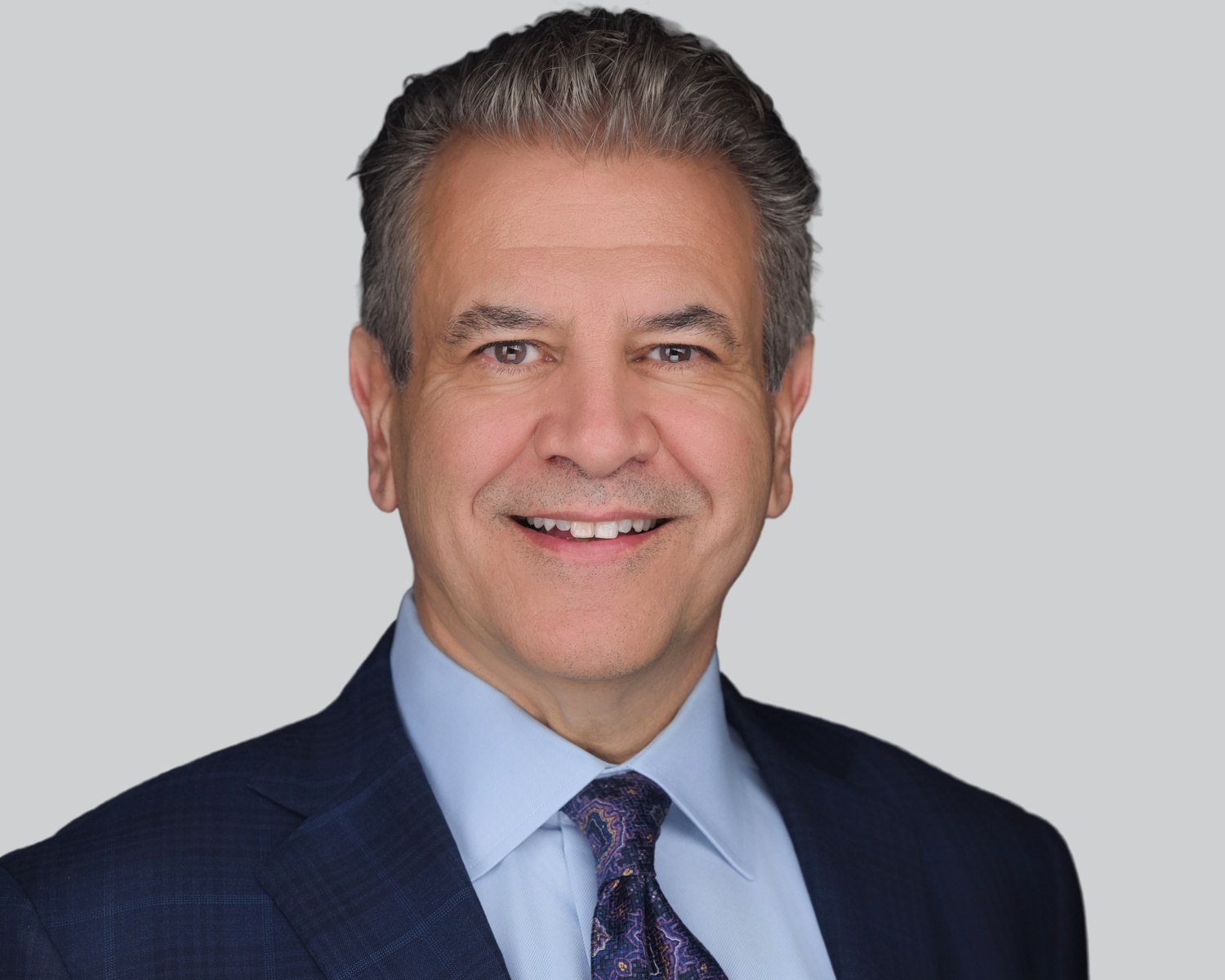
Patient Experience Strategist & Author -OR- Founder, PX Movement | Author, Beyond Bedside Manner
Today's guest has spent three decades helping the medical industry understand something it keeps overlooking: that the patient experience isn't a soft metric — it's a business driver.
Shareef Mahdavi led the U.S. commercial launch of LASIK and has guided more than 60 medical product launches across ophthalmology, aesthetics, and dental markets. He's one of the first ten professionals worldwide certified as an Expert in the Experience Economy, the author of Beyond Bedside Manner, and the creator of PX90, a practice transformation program built around a simple premise: when patients feel genuinely cared for, everything else gets easier.
That premise, it turns out, applies just as much to clinical trials as it does to private practice. Today we're going to explore what patient experience principles look like inside a trial environment — where retention, compliance, and data quality all depend on how enrolled patients feel about the process they've agreed to go through.
Please welcome Shareef Mahdavi.