Why Local Physicians Matter More Than Another Trial Site

Many conversations about trial recruitment still start with the same assumptions: open more sites, buy more media, and hope more patients respond. In his conversation with Jesús E. Moreno on this episode page, Scott Stout, CEO & Co-Founder at MedVector Clinical Trials, argues that the larger missed opportunity is much closer to the patient: the local physician who already has the relationship.
That makes this episode useful beyond one company story. Stout connects three problems that sponsors and CROs often treat separately: patient trust, physician economics, and the operational design of decentralized trials. His argument is that recruitment improves when those three pieces fit together instead of working against one another.
Patient centricity is not the same as patient self-navigation
One of Stout’s clearest points is that the industry often defines patient centricity too narrowly. Forms can be simpler. Visit schedules can be lighter. Educational materials can be clearer. But those changes do not address the moment when a sick person has to decide whether to enter a study.
As Stout puts it, “Patients don't want to be their own advocates.” His point is not that patients should be excluded from decisions. It is that most patients, especially when they do not feel well, want guidance from the doctor they already trust.
That matters because many current recruitment methods ask patients to act like researchers. They have to notice an ad, interpret it, judge whether it applies to them, and then share personal health information with an unfamiliar organization. Stout’s alternative is to involve the treating physician earlier, so the study is introduced inside an existing care relationship rather than as a cold outreach event.
He makes a practical claim here: when the treating doctor remains part of the experience, patients are more comfortable enrolling and less likely to disappear later. Even when the principal investigator is remote, the local physician can still provide familiarity and continuity, which can help conversion and retention.
Recruitment breaks when incentives punish referrals
Stout’s central business insight came from a simple observation: health systems and physicians may lose revenue when they send patients elsewhere. If a recruitment model depends on that kind of referral, it may be fighting the economics of care delivery.
That is why MedVector’s model, as described in the episode, tries to engage local physicians without forcing them to become investigators. Some study visits can happen at the clinical trial site, while others can happen in the physician’s office when the protocol allows it. In Stout’s telling, this reduces the sense that the doctor is handing off a patient and losing the relationship.
The most concrete example in the episode is a cardiology study. Stout says the study itself needed 1,300 participants, while one site’s goal was only five patients, and the site was struggling to find even those five. After partnering with that site and identifying 11 local cardiologists, MedVector says it found 163 potential participants using the study’s inclusion and exclusion criteria.
Whether or not every study produces a result that dramatic, the lesson is clear. Sponsors may get more from a structured network around a site than from adding another isolated site drawing from the same saturated pool. Stout sums up the logic simply: “We know exactly where the patients are.”
The real constraint is often the compliance funnel
Stout’s outsider perspective shows up most clearly in how he talks about regulation. Early in the episode, he explains why he saw the problem differently: “I was never in the box.”
He argues that teams often confuse actual regulatory requirements with layers of internal caution added over time. His example is drug storage. Some sites may use biometric locks and treat that setup as if it were required, while his point is that the standard he cites from the FDA is broader: the drug must be under lock and key. In other words, organizations may choose stricter controls, but those choices can slowly be misremembered as law.
From there, he describes a narrowing process from regulator to sponsor to CRO to study team. Each handoff adds a margin of caution. The result is a much smaller operating space than the one originally allowed.
That has strategic consequences. In Stout’s words, “It values caution over innovation.” For an industry that depends on new products, he sees that imbalance as a real problem. His argument is not for ignoring regulation. It is for reading it accurately, then designing processes that use the room that already exists.
Decentralization works when it supports care relationships
Stout does not present telemedicine as a magic replacement for sites. He presents it as infrastructure that makes collaboration with local physicians easier. That is an important distinction.
In his view, decentralized and hybrid models can reduce the need to place every visit at the trial site. If some visits can happen closer to home, physicians stay engaged, patients travel less, and sponsors may be able to reach wider populations without opening as many sites. He also argues that fully decentralized models could satisfy geographic diversity requirements with fewer physical locations, because the study team is no longer tied to the same real-estate footprint as the patient pool.
The broader concept he lands on is useful language for trial leaders: “Patient access is a two-way street.” Access means helping patients reach trials, but it also means helping trials reach patients. Stout’s thesis is that both improve when community physicians are part of the design instead of sitting outside it.
Listen to the episode
If you are working on enrollment strategy, this episode is worth hearing in full because it connects recruitment mechanics with the economics and trust structures underneath them. You can listen on the episode page.
About Global Trial Accelerators™
Global Trial Accelerators™ is the podcast for MedTech, Biopharma and Radiopharma founders navigating first-in-human clinical trials. It is hosted by Jesús E. Moreno and produced by bioaccess®, a CRO purpose-built for first-in-human trials across the Americas.
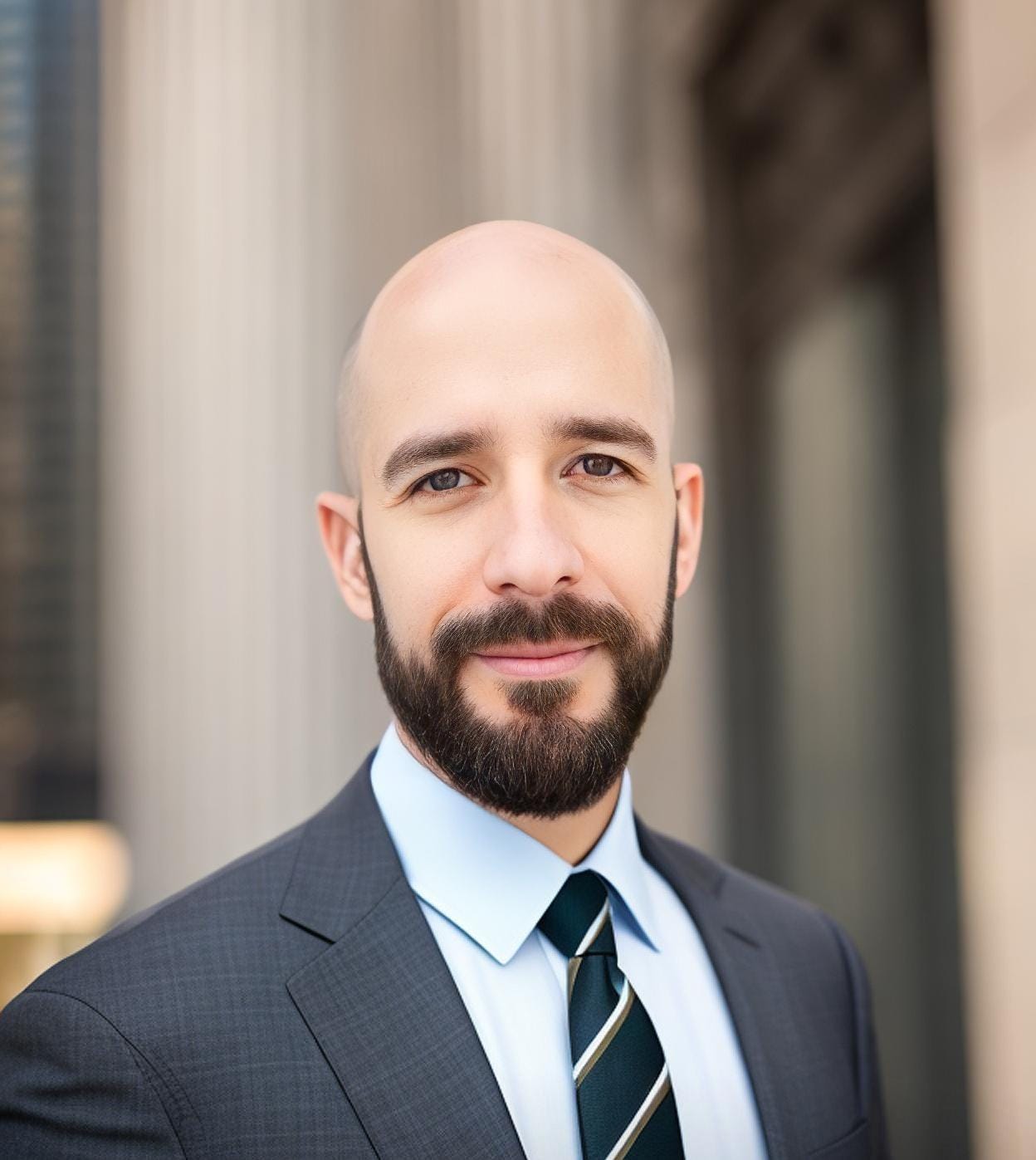
Host · Business Development Director, bioaccess®
Jesús E. Moreno is a business development director who provides efficient and reliable clinical research services across the Americas. With a passion for driving innovation in the healthcare sector, Jesús leverages his bilingual biomedical engineering background and his understanding of the unique challenges that Medtech startups face to provide valuable support and deliver accelerated clinical study results. Jesús profoundly understands the critical role that reliable and streamlined clinical research plays in the success of Medtech startups. He firmly believes that by offering cost-effective solutions without compromising quality, Medtech startups can achieve their clinical goals faster and make a meaningful impact in the healthcare industry. Jesús is passionate about supporting Medtech startups in their journey towards bringing innovative medical technologies to market. Jesús possesses the technical expertise to understand the complexities of medical devices and technologies. This knowledge enables him to identify tailored solutions that meet the specific needs of Medtech startups. Jesús has a bachelor's degree in biomedical engineering and a master's degree in electronics engineering.
What Trial Teams Miss When Science and Operations Work Separately


 RSS Feed