Why Device Startups Need a Trial Plan Beyond Europe
For years, many medical device companies treated Europe as the default first stop for early clinical experience and commercialization. In this episode, Julio Martinez-Clark speaks with Lishan Aklog, Chairman and CEO of PAVmed Inc., about why that script was changing in 2019 and what that meant for companies weighing Europe against Latin America and other regions.
What makes the conversation useful is that Aklog does not reduce site selection to a search for the fastest approval. He connects three issues founders often handle separately: the tightening European regulatory environment, FDA expectations for foreign data, and the commercial logic of entering a country after an early study.
The old Europe-first playbook was already under pressure
Aklog describes a familiar pattern in device development: for many products, especially those that needed PMA-level evidence and clinical trials, Europe was the first target. As he puts it, "The standard practice was to ... go to Europe first."
That approach made sense for two reasons he names directly. First, companies were working within a world market dominated by the United States and Europe. Second, Europe could offer a foothold for launch, revenue, and clinical experience that could help support later U.S. work.
But Aklog argues that this standard script was weakening. Part of the shift was macroeconomic. He says the market opportunity had expanded beyond the U.S. and Europe as economies developed in Asia and Latin America. In other words, these regions were not just trial locations; they were becoming meaningful end markets.
The other part of the shift was regulatory. Aklog says the hurdles in Europe appeared to be increasing, and for a small company trying to commercialize multiple products, that created real planning problems. In the conversation, he describes uncertainty not only about the rules themselves under the new European framework, but also about how practically executable those rules would be. That is an important point for founders: regulatory difficulty is not only about what the law says. It is also about whether you can build a reliable timeline around it.
Latin America becomes more interesting when it is more than a shortcut
One of the sharpest ideas in the episode is Aklog’s distinction between token clinical activity and a real development strategy. He contrasts the older pattern of using countries outside the U.S. and Europe for only a handful of cases with a newer possibility: broader, more meaningful clinical experience.
That is where Latin America enters the discussion. Aklog says, "The emergence of a country like Colombia and others in this space is really of great interest to us." He is careful not to frame that interest as a novelty. Instead, he ties it to a larger change in the global market and to Europe’s rising complexity.
This matters because many companies still think about non-U.S. geographies in narrow terms: Can we do a few early cases there? Aklog’s comments suggest a better question: Can this country support a program that goes well beyond a symbolic first step? If the answer is yes, then the region can play a bigger role in product development, evidence generation, and eventual commercialization.
That is a more demanding standard, but it is also more useful. It forces companies to look at the full development path instead of treating an international site as a temporary workaround.
Foreign data only helps if FDA sees it as comparable
Aklog makes another point that founders sometimes underestimate. Running a study outside the U.S. is not enough by itself. The real issue is whether the resulting data will be accepted as relevant to U.S. regulatory decision-making.
He begins from a common-sense observation: "Human beings are human beings." But he immediately adds the practical limitation. For companies seeking to use non-U.S. data with FDA, the burden is to show that the patient population and the healthcare environment are similar enough for the findings to be generalizable to the U.S. population.
Aklog gives a concrete example from his own company’s work. He says PAVmed was preparing to launch a study in New Zealand and had to go through formal steps to explain to FDA why the setting and population were analogous enough. That example is valuable because it moves the issue from theory to operations. Site selection is not only about cost or speed. It is also about evidentiary portability.
His warning is blunt: "That's never gonna go away." Companies can pursue data outside the U.S., but they should expect to justify why that data belongs in a U.S. regulatory file. In practice, that means asking early whether the care environment, protocol execution, and patient mix will stand up to that scrutiny.
Clinical planning and market planning should happen together
The last part of the conversation turns from trials to commercialization, and it adds a useful business discipline. Aklog then raises the commercial side, including distribution and market access. His reasoning is straightforward: if a company is already investing in local regulatory work and clinical cases, it may be worth asking whether the next step should be local commercialization.
He also explains why this is difficult for a small company. Distributors from many countries may express interest, but management bandwidth is limited. A company cannot chase every country one at a time. That is why Aklog says an initial country analysis matters. He wants an early view of the regulatory hurdles, the institutions that matter, the likely distributor fit, and the short-term commercial opportunity.
That is a concrete takeaway from a short exchange. A clinical entry strategy is stronger when it is paired with a realistic view of what happens after the study. If the country can only offer a few cases, that may still be useful. But if it can also support licensing, distribution, and near-term revenue, the decision starts to look very different.
Listen to the full conversation
Aklog’s comments are brief, but they outline a practical framework for choosing where to run early device studies: watch the regulatory trend, test whether the data will travel to FDA, and decide early whether the country also makes sense as a market. You can hear the full exchange on the episode page: Lishan Aklog, Chairman and CEO at PAVmed Inc..
About Global Trial Accelerators™
Global Trial Accelerators™ is the podcast for MedTech, Biopharma and Radiopharma founders navigating first-in-human clinical trials. It is hosted by Jesús E. Moreno and produced by bioaccess®, a CRO purpose-built for first-in-human trials across the Americas.
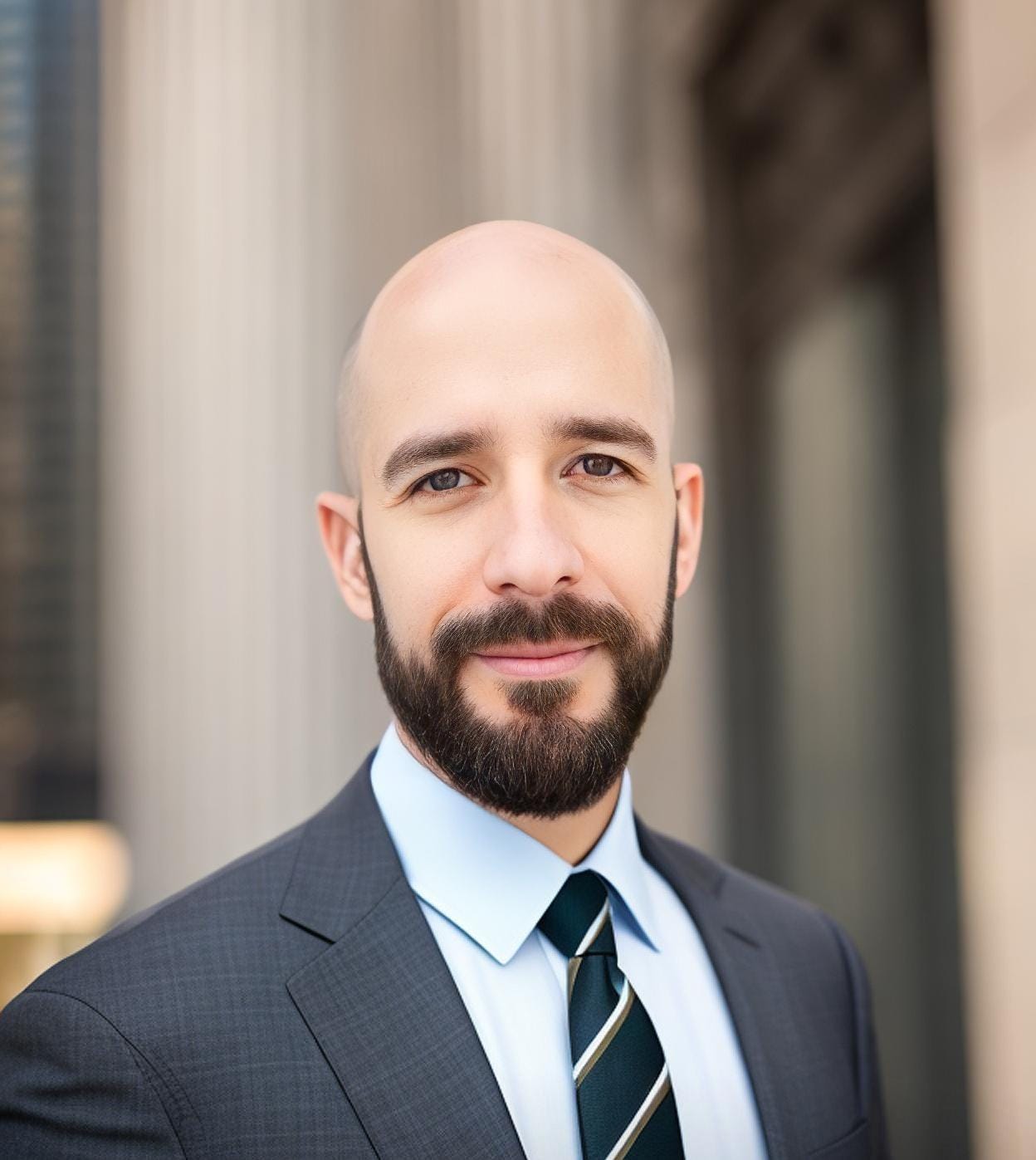
Host · Business Development Director, bioaccess®
Jesús E. Moreno is a business development director who provides efficient and reliable clinical research services across the Americas. With a passion for driving innovation in the healthcare sector, Jesús leverages his bilingual biomedical engineering background and his understanding of the unique challenges that Medtech startups face to provide valuable support and deliver accelerated clinical study results. Jesús profoundly understands the critical role that reliable and streamlined clinical research plays in the success of Medtech startups. He firmly believes that by offering cost-effective solutions without compromising quality, Medtech startups can achieve their clinical goals faster and make a meaningful impact in the healthcare industry. Jesús is passionate about supporting Medtech startups in their journey towards bringing innovative medical technologies to market. Jesús possesses the technical expertise to understand the complexities of medical devices and technologies. This knowledge enables him to identify tailored solutions that meet the specific needs of Medtech startups. Jesús has a bachelor's degree in biomedical engineering and a master's degree in electronics engineering.
What Trial Teams Miss When Science and Operations Work Separately


 RSS Feed