What MedTech Founders Miss About Latin America Entry

For many MedTech companies, Latin America still gets treated as an export afterthought: meet a distributor at a trade show, sign an agreement, ship product, and hope demand appears. In this conversation with Julio Martinez-Clark, Joseph D. Storer, who was managing director of Echo Consultant Group at the time, argues that this approach fails for reasons that are practical, not mysterious.
Storer has spent decades introducing medical devices across the region, and the episode is useful because he stays close to operating details. He discusses distributor selection, market coverage, registration control, pricing, reimbursement, and what companies should do when the region slows down. If you work on international commercialization, the full episode is worth hearing at this episode page.
Latin America is not hard because it is foreign
One of Storer’s most important points is that companies often create their own problems by treating Latin America differently from the way they would treat the U.S. market. As he puts it, "The biggest challenge is people don't understand it and don't know it." That is less a criticism of the region than of lazy planning.
His own early approach shows the opposite mindset. When he first had to build a distribution network, he did not start with whoever happened to approach him. He focused first on Mexico and Brazil because, in his view, those two markets held the largest share of the population. Then he visited major hospitals, identified which distributors those hospitals trusted, and recruited from there.
That sequence matters. It starts with demand and care delivery, not with channel convenience. The lesson for founders is simple: country prioritization should come before partner selection, and partner selection should be informed by what hospitals already value. That is a more disciplined way to enter any market, whether the language is Spanish, Portuguese, or English.
A distributor is not a strategy
Storer is especially clear about the limits of a hands-off distributor model. In his words, "The uh, hands-on strategy, the hybrid strategy is really the only strategy that I've ever found that works in Latin America." He is not rejecting distributors. He is rejecting the idea that a distributor alone can build your market for you.
In the episode, he contrasts reactive selling with active market development. The weak version is the classic trade-show deal: a few conversations, a signed contract, then product gets handed off with little oversight. The stronger version is what he calls a hybrid model, where the manufacturer stays involved in identifying market size, short-term and long-term opportunities, account targets, and the path to win those targets.
His own operating model included heavy travel from Miami and, later, dedicated managers for parts of the region. The exact structure will vary by company size, but the principle is durable: if the market matters, someone from the manufacturer has to help create demand, train the field, and keep the plan moving.
That advice also changes how due diligence should work. Storer says there is not always rich public data on every distributor, so his team supplemented formal checks with banking reviews, business-practice checks, and direct conversations with hospitals.
Control your registrations or lose leverage
The episode becomes especially practical when Storer discusses regulatory ownership. His warning is blunt: "If your distributor got your registration for you, he owned you." For companies entering the region, that may be the single most useful line in the conversation.
He explains the risk clearly. If a distributor pays for and holds a registration, changing partners becomes far harder. A weak distributor can underperform while still controlling the asset that determines whether your product can stay on the market. Storer says that in Brazil he removed that responsibility from distributors and instead used a third party to obtain and hold registrations.
Even outside Brazil, he says contracts should state that the manufacturer owns the registration if the relationship ends. He acknowledges that disputes can still happen, but the larger point is strategic: channel control and regulatory control should not be fused if you want flexibility.
This connects to a broader theme in the episode. Market access is not just paperwork. Storer describes working with distributors on reimbursement and awareness, including efforts in Brazil to build support for products through advocacy, physician engagement, and other lawful means. He stresses that demand generation can include clinical studies, training, and public education, so long as companies stay within compliance boundaries.
Price pressure is real, but so is room for creativity
Storer does not sugarcoat Latin America’s price sensitivity. He says companies should not expect U.S.-level premiums. But he also gives an example of how commercial design can solve budget constraints. In one case, hospitals lacked capital budget for equipment but did have operating budget. His team responded by pairing disposables with refurbished capital equipment and structured the offering around use.
The point is not that every company should copy that exact model. It is that willingness to understand how hospitals actually buy can matter as much as list price. Budget silos, reimbursement pathways, import costs, and registration timing all affect whether a product is commercially viable.
He makes a similar point about ethics and compliance. When asked about corruption and the Foreign Corrupt Practices Act, Storer argues that companies should remove dual standards and avoid stepping outside the law. His alternative is creativity inside compliant boundaries: studies, training, and legitimate efforts to demonstrate value.
Don’t wait for the recovery to start planning
The final lesson is about timing. Storer acknowledges economic slumps and political uncertainty, but he warns against retreating so far that a company loses its base in the region. His closing advice is sharp: "If you're not already there, you're going to show up too late."
That is not a call for reckless expansion. It is a call for continuity. Companies can scale activity up or down, but they should keep learning the market, maintaining relationships, and preserving a core business so they are ready when conditions improve.
Listen to the full episode
Storer’s perspective is valuable because it comes from operating experience rather than theory. If you want the full discussion with Julio Martinez-Clark, including his comments on clinical trials, distributor management, reimbursement, importation, and compliance, listen on the episode page.
About Global Trial Accelerators™
Global Trial Accelerators™ is the podcast for MedTech, Biopharma and Radiopharma founders navigating first-in-human clinical trials. It is hosted by Jesús E. Moreno and produced by bioaccess®, a CRO purpose-built for first-in-human trials across the Americas.
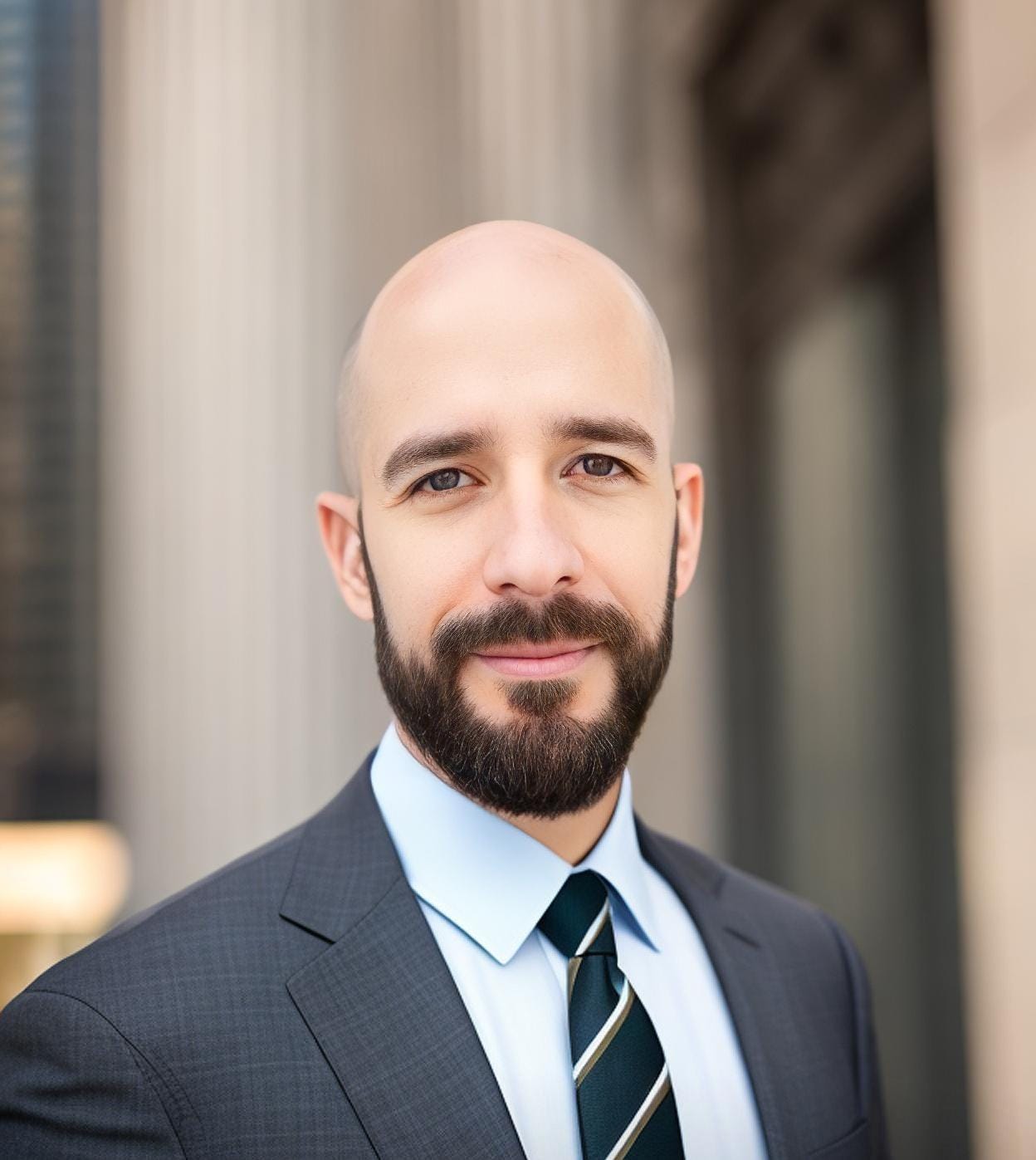
Host · Business Development Director, bioaccess®
Jesús E. Moreno is a business development director who provides efficient and reliable clinical research services across the Americas. With a passion for driving innovation in the healthcare sector, Jesús leverages his bilingual biomedical engineering background and his understanding of the unique challenges that Medtech startups face to provide valuable support and deliver accelerated clinical study results. Jesús profoundly understands the critical role that reliable and streamlined clinical research plays in the success of Medtech startups. He firmly believes that by offering cost-effective solutions without compromising quality, Medtech startups can achieve their clinical goals faster and make a meaningful impact in the healthcare industry. Jesús is passionate about supporting Medtech startups in their journey towards bringing innovative medical technologies to market. Jesús possesses the technical expertise to understand the complexities of medical devices and technologies. This knowledge enables him to identify tailored solutions that meet the specific needs of Medtech startups. Jesús has a bachelor's degree in biomedical engineering and a master's degree in electronics engineering.
What Trial Teams Miss When Science and Operations Work Separately


 RSS Feed