What MedTech Companies Miss About Latin America Market Entry

Latin America often gets described as a future opportunity for device makers, but this episode makes a more practical point: growth in the region does not come from showing up late with a product and hoping a distributor can do the rest. In his conversation with Julio Martinez-Clark, Sanjay Shrivastava draws on leadership roles at Medtronic and BTG to explain what actually matters once a company decides the region is worth pursuing. You can listen to the full episode here.
The useful part of this discussion is that Shrivastava does not treat Latin America as a single market. He talks about Brazil, Mexico, Argentina, Colombia, and smaller countries as places with different timelines, price dynamics, and operational demands. The lesson is not just that Latin America is attractive. It is that success depends on matching your market-entry model to the realities on the ground.
Start with a deliberate market-entry plan
Shrivastava’s basic view of the region is positive, but not vague. He says, "I view Latin America to be a tremendous growth engine that clearly underdeveloped as a medical device market, but has increasingly large opportunity to offer for medical device companies." That framing matters because it pushes against a common mistake: treating the region as an afterthought.
In his experience, the larger companies he worked with did not simply wait for inbound interest. They targeted specific markets, especially Brazil, and worked through the long path to clearance and commercialization. He notes that Brazil could take on the order of two years once quality-system and regulatory steps were involved, which meant companies had to plan well ahead.
He also describes a hybrid commercial model. Rather than using one template everywhere, companies combined their own regional leadership with local distributors and, in some places, sub-distributors. That is a reminder that expansion strategy in Latin America is less about picking direct versus distributor sales in the abstract and more about deciding where central control is essential and where local reach is indispensable.
Distributor choice is not a procurement task
One of the strongest parts of the episode is Shrivastava’s discussion of distributors. He says, "that's the number one, I'd say important thing for any company to be successful." He is not talking only about coverage maps or contracting terms. He is talking about trust, ethics, language, and clinical capability.
His criteria were clear: integrity, quality of service, no active conflict with a direct competitor, and enough geographic reach for the target market. Just as important, he wanted partners who could do more than move boxes. For training-intensive devices, distributor staff had to understand clinical use well enough to support physicians in the right application of the product.
That point is easy to overlook. In many medtech categories, the distributor is effectively part of the therapy adoption process. If the local team cannot absorb procedural nuances, a company may win registration and still fail in the market. Shrivastava also notes that language capability helped his teams assess partners more deeply, especially in Spanish-speaking markets. That is a practical insight for U.S. companies that rely too heavily on surface-level distributor vetting.
Demand creation comes from education, not just selling
Shrivastava makes a straightforward case that commercialization in Latin America requires investment in training and awareness, not just product availability. He says, "patient awareness programs, physician training programs, those two things are the key I think to create and develop the market."
He gives this idea substance. In some cases, companies sent a Spanish-speaking device specialist from Spain who already had experience with products launched in Europe and parts of Latin America. That person could train distributors and physicians with practical tips and procedural know-how. He describes that approach as very effective.
He also connects demand generation to the disease state. If patients do not recognize symptoms or understand available treatment options, adoption will lag even when the technology exists. His example of stroke awareness is especially useful: public education can change patient behavior quickly enough to affect outcomes. For companies, that means market development may require work well beyond physician targeting.
The tradeoff, of course, is that education takes time and money, and competitors may benefit from the category growth. Shrivastava’s answer is pragmatic: leaders who invest early can still build brand recognition and capture a large share of the market even if they do not keep all of it.
Clinical and regulatory shifts may favor the region
The episode was recorded as Europe prepared for the Medical Device Regulation, and Shrivastava saw a possible opening for Latin America. His argument was that if Europe became harder for early device approvals, companies would look for other places to gain early human experience, especially where trained physicians, facilities, and patient populations were available.
He puts it plainly: "the biggest beneficiary of that I think is going to be Latin America, in my opinion because of physical proximity to the United States." Whether or not every company followed that path, the logic is still worth paying attention to. Geography matters. So do physician quality and access to patients.
At the same time, he is candid about obstacles. He mentions slow reimbursement processes in Brazil, customs delays, and even a case where a product launch was limited because high-pressure argon gas cylinders were not available locally. That anecdote broadens the usual market-access conversation. A country can have doctors, demand, and regulatory approval, yet still lack the supporting infrastructure a device needs.
For founders and commercial leaders, that is the larger takeaway from this episode: Latin America is not only a sales territory. It can be a commercialization and clinical-development opportunity, but only for teams willing to think through regulation, logistics, training, reimbursement, and local execution as one connected system.
If you want the full context, listen to Sanjay Shrivastava’s conversation on Global Trial Accelerators here.
About Global Trial Accelerators™
Global Trial Accelerators™ is the podcast for MedTech, Biopharma and Radiopharma founders navigating first-in-human clinical trials. It is hosted by Jesús E. Moreno and produced by bioaccess®, a CRO purpose-built for first-in-human trials across the Americas.
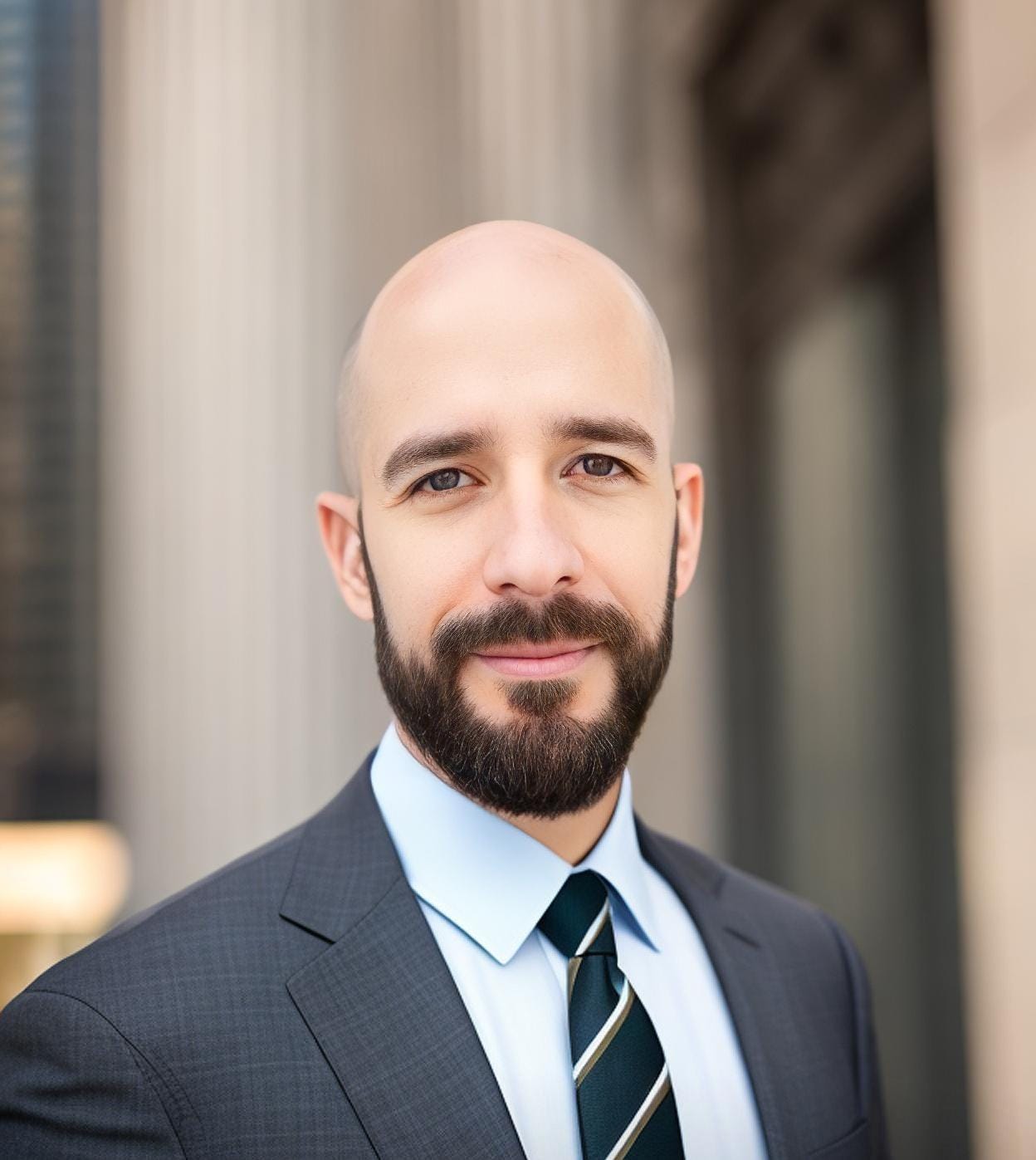
Host · Business Development Director, bioaccess®
Jesús E. Moreno is a business development director who provides efficient and reliable clinical research services across the Americas. With a passion for driving innovation in the healthcare sector, Jesús leverages his bilingual biomedical engineering background and his understanding of the unique challenges that Medtech startups face to provide valuable support and deliver accelerated clinical study results. Jesús profoundly understands the critical role that reliable and streamlined clinical research plays in the success of Medtech startups. He firmly believes that by offering cost-effective solutions without compromising quality, Medtech startups can achieve their clinical goals faster and make a meaningful impact in the healthcare industry. Jesús is passionate about supporting Medtech startups in their journey towards bringing innovative medical technologies to market. Jesús possesses the technical expertise to understand the complexities of medical devices and technologies. This knowledge enables him to identify tailored solutions that meet the specific needs of Medtech startups. Jesús has a bachelor's degree in biomedical engineering and a master's degree in electronics engineering.
What Trial Teams Miss When Science and Operations Work Separately


 RSS Feed