What John Hendrick Gets Right About Medtech in Latin America
John Hendrick has spent decades in medical devices, from startups to larger corporate roles. In this conversation with Julio Martinez-Clark, recorded when he was President of Safeco, a medical device consulting company, he offers a practical view of Latin America that still feels current. The full episode, John Hendrick, President, Safeco, is less about broad optimism than about execution: where founders lose time, where they burn cash, and how they can avoid both.
What makes the discussion useful is that Hendrick does not treat clinical development and commercialization as separate worlds. He ties them together. The same habits that make early trials more informative also make market entry more disciplined: close contact with physicians, careful country selection, and a refusal to outsource judgment just because a distributor or consultant is local.
A CEO should stay close to the operating room
One of Hendrick’s strongest points is about leadership behavior, not geography. He argues that startup CEOs should not treat clinical work as something to be delegated and summarized later. In his words, “it is absolutely paramount that the CEO be really involved in the clinical trials.”
That matters because early clinical cases are not only about proving a concept. They are also where a company discovers the device’s limitations, the friction in the procedure, and the small design issues that never show up clearly in slide decks. Hendrick describes being in the room with physicians, engineers, and clinical staff so that different people can notice different problems at the same time. The benefit is speed: decisions happen earlier, changes happen sooner, and a startup avoids spending months moving in the wrong direction.
There is also a credibility point here. Hendrick says physicians judge not just the product, but the seriousness of the company behind it. A CEO who knows the procedure, understands the workflow, and can discuss outcomes directly is different from one who only repeats secondhand reports. For founders, that is a concrete lesson: being hands-on in trials is not micromanagement if the product is still being defined.
Speed only helps if safety work is already done
Hendrick does make a clear case for the region’s value in development. “I think Latin America is a perfect place for doing clinical work,” he says. But he immediately frames that opportunity with a boundary that many companies need to hear: faster access to sites is not permission to arrive unprepared.
He stresses extensive bench testing and animal work before taking a device into humans. That is especially important because part of his rationale for working in Latin America is time. In the episode, he contrasts the months a company may wait for a U.S. Food and Drug Administration process with experiences in countries where approvals or trial starts moved much faster. He gives examples from El Salvador and Peru where local pathways helped his teams start meaningful work sooner, while also describing how Brazil became much slower over time.
The larger lesson is that founders should stop talking about the region as if every country offers the same regulatory profile. Hendrick is explicit about that selectivity. Predictability, physician quality, staff capability, and the ability to capture usable data matter more than a generic idea of lower cost. A quick start is only valuable if the site can teach you something and if the work is being done responsibly.
Latin America is not one market, so do not use one market plan
Hendrick is equally blunt about commercialization. He rejects the casual approach in which a company meets a distributor at a conference, signs a deal, ships product, and hopes demand appears on its own. His alternative begins with a simple phrase: “That’s what I call it, it is an entry plan.”
That entry plan is country specific. Hendrick walks through the variables founders need to understand before choosing a partner: reimbursement, licensing timelines, wealth differences across countries, physician concentration, practice settings, and local payment realities. Even when products look clinically promising, he says commercialization can struggle if the company has not mapped the actual market or if the product is only incrementally better than what is already available.
He also pushes beyond the usual advice to find key opinion leaders. Yes, podium speakers matter. But he is careful to point out that day-to-day adoption depends on the broader physician base, the people doing routine work in hospitals and clinics. That is an important correction for founders who mistake conference visibility for market traction.
Local partners matter, but founders still need to do their own homework
The most durable advice in the episode may be the simplest: “Don’t sit back there in your office and think.” Hendrick says even after years in the industry, he would still rebuild his understanding market by market instead of relying on old assumptions.
That applies to distributor selection, import strategy, and compliance. On distributors, he prefers getting multiple recommendations, meeting candidates in person, asking each for a penetration strategy, and then checking how they are regarded by customers. On registrations, he explains the tradeoff between letting a distributor hold them versus keeping them in the company’s name, especially if an acquisition is the likely endgame for a startup.
He also offers a practical way to reduce tension with distributors: be honest that startups are often built to be acquired, then structure incentives so the distributor benefits if it builds the business well before an exit. That kind of transparency can make future transitions cleaner for both the distributor and the eventual buyer.
Finally, Hendrick does not dodge compliance. He acknowledges corruption risk and says American companies must keep clear distance from improper payments. That point fits the rest of his philosophy. Local help is essential, but local help is not a substitute for standards.
Listen to the full episode
Hendrick’s message is useful because it is operational. Latin America can help medical device companies move faster, but only if they arrive with safety data, choose countries carefully, and treat commercialization as a country-by-country discipline. You can hear the full discussion on the episode page for John Hendrick, President, Safeco.
About Global Trial Accelerators™
Global Trial Accelerators™ is the podcast for MedTech, Biopharma and Radiopharma founders navigating first-in-human clinical trials. It is hosted by Jesús E. Moreno and produced by bioaccess®, a CRO purpose-built for first-in-human trials across the Americas.
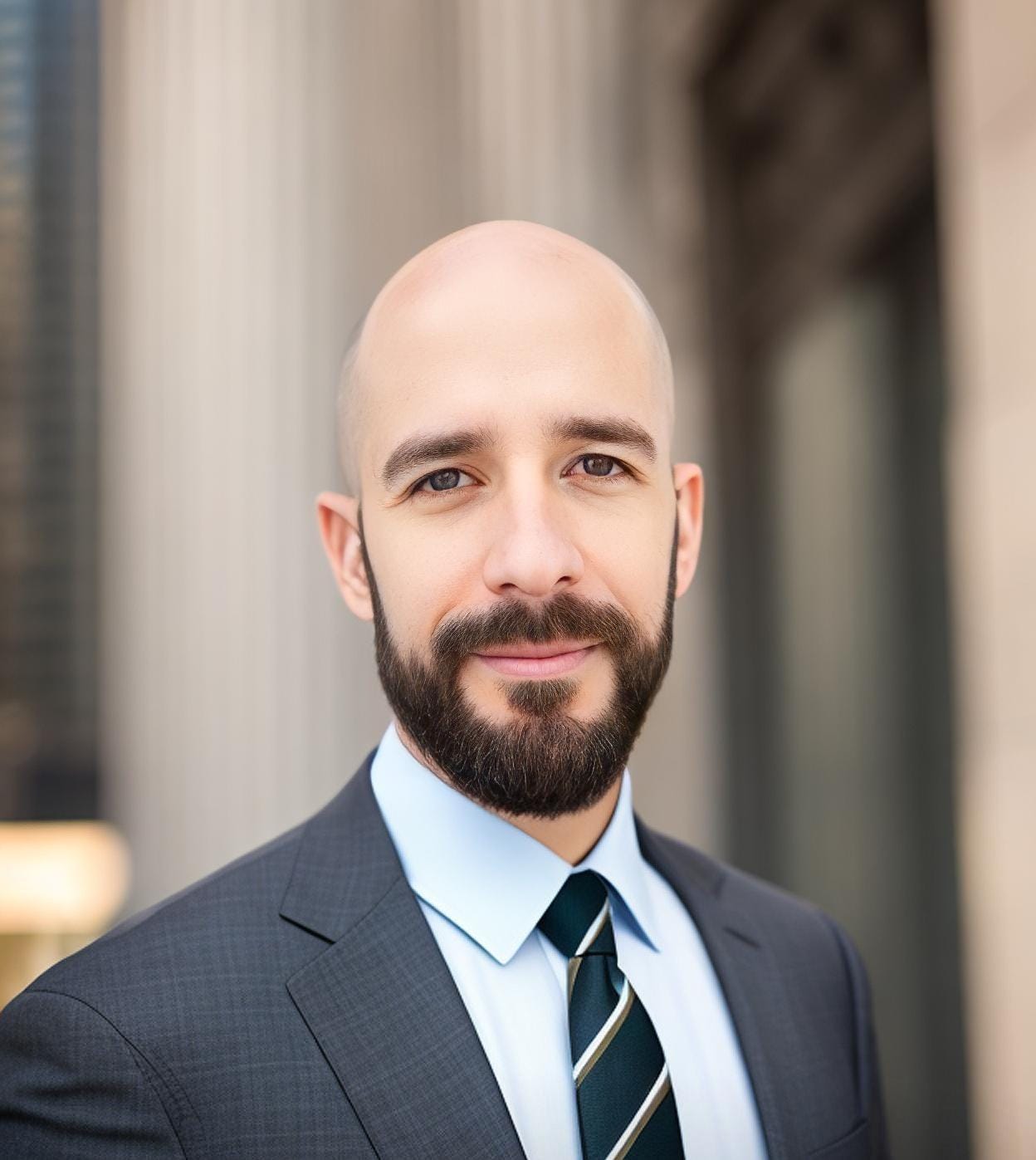
Host · Business Development Director, bioaccess®
Jesús E. Moreno is a business development director who provides efficient and reliable clinical research services across the Americas. With a passion for driving innovation in the healthcare sector, Jesús leverages his bilingual biomedical engineering background and his understanding of the unique challenges that Medtech startups face to provide valuable support and deliver accelerated clinical study results. Jesús profoundly understands the critical role that reliable and streamlined clinical research plays in the success of Medtech startups. He firmly believes that by offering cost-effective solutions without compromising quality, Medtech startups can achieve their clinical goals faster and make a meaningful impact in the healthcare industry. Jesús is passionate about supporting Medtech startups in their journey towards bringing innovative medical technologies to market. Jesús possesses the technical expertise to understand the complexities of medical devices and technologies. This knowledge enables him to identify tailored solutions that meet the specific needs of Medtech startups. Jesús has a bachelor's degree in biomedical engineering and a master's degree in electronics engineering.
What Trial Teams Miss When Science and Operations Work Separately


 RSS Feed