What EU MDR Really Changes for Connected Medical Devices

In this episode, Guy Vinograd, CEO and co-founder of bio-T, offers a useful counterpoint to the usual anxiety around the European Union’s Medical Device Regulation. Speaking in late 2019, before the new framework had taken effect, he did not dismiss the burden of tighter oversight. But he also did not accept the idea that stricter rules automatically make Europe less attractive.
What makes the conversation valuable is the way he connects regulation to product design. Vinograd argues that MDR is not just a compliance event. It rewards companies that can keep learning from devices after launch, especially when those devices are connected to cloud and mobile systems. For founders and clinical leaders, that is the practical lesson: regulation is shaping what kind of medtech infrastructure will matter next.
Europe was still a target market
One of Vinograd’s clearest points is that MDR did not, in his view, push companies to abandon Europe. From his perspective in Israel, medtech companies often looked to the U.S. first, although he also said the split might be closer to even when he thought about it more. Either way, he did not see MDR as a reason to stop pursuing the European market.
His reasoning was simple. Europe remained economically important, and companies still wanted access to that demand. He put it bluntly: "They are not running away from the EU because of that." That matters because it shifts the conversation away from fear and back to market fundamentals. A harder regulatory path may change timing, staffing, and documentation needs. It does not necessarily erase the business case for Europe.
That is a useful correction for leaders making commercialization plans. When a new rule arrives, it is easy to confuse friction with loss of opportunity. Vinograd’s view suggests a more disciplined question: not whether Europe is harder, but whether the market is still worth the added work.
Why a tougher system can also feel simpler
The most interesting part of the interview may be Vinograd’s comparison between MDR and the older MDD framework. He argued that the new system could reduce a kind of fragmentation that companies had learned to live with under the directive model. In his words, "It is actually easier in some ways."
His explanation was that MDD functioned as a directive, which meant individual countries could supplement or override it with their own rules. MDR, by contrast, is a regulation. His point was that once a company complies with the regulation, it is no longer dealing with the same level of country-by-country variation.
That does not mean the standard is lower. His point was almost the opposite: the bar may be higher, but the map may be clearer. For founders, that distinction matters. A system can be more demanding overall while still being more navigable than a patchwork of national interpretations. Companies planning European entry often focus on the first half of that tradeoff and miss the second.
Post-market evidence favors connected devices
Vinograd also saw MDR as a signal about where medical devices are headed. He said, "We really appreciate what the MDR is trying to do." The reason was its emphasis on clinical evidence after launch, especially post-market clinical follow-up.
His description of the requirement was practical. Companies cannot stop after a clinical trial and initial market entry. They need to keep monitoring device performance in the real world and keep checking whether devices are working as expected. That ongoing obligation changes what is valuable in a product architecture.
This is where connectivity becomes more than a feature. Vinograd said, "IoMT is a great solution for that." His argument was that connected devices, paired with cloud and mobile applications, let vendors see what is happening in the field much faster. They can review data, track device behavior, and support maintenance and quality activities without depending only on periodic patient visits.
That idea also explains bio-T’s position in the stack. Earlier in the conversation, Vinograd described the company as a software component inside a larger regulated system. The device maker owns the full product and the full regulated submission, while bio-T provides cloud, connectivity, mobile capabilities, and supporting documentation. In that model, connectivity is not a nice add-on. It becomes part of how a device company meets rising expectations for evidence, security, and operational follow-up.
Latin America becomes more attractive when rules line up
When the discussion turned to Latin America, Vinograd did not claim deep trial experience in the region. He said bio-T had customers selling there, but his own direct experience was in Europe and the U.S. Even so, his comments point to another practical lesson: market attractiveness is shaped not only by size, but by regulatory coherence.
He reacted positively to the Pacific Alliance because, in his view, device companies struggle when they must work through separate requirements country by country. Harmonization lowers that burden. That mirrors his earlier point about MDR: companies can live with rigor more easily than they can live with fragmentation.
At the same time, he was candid about risk. His general feeling about South America was not positive, mainly because of currency fluctuations. He also drew distinctions within the region, saying he did not feel the same way about Mexico and Colombia, and that Chile stood out as more like a European country. Whether or not one shares that assessment, the business logic is clear: for commercial planning, stability and predictability matter as much as demand.
Listen to the full episode
For medtech teams deciding how much connectivity to build, and how to think about MDR beyond checklists, this short conversation is still worth hearing. You can listen to the full episode here: Guy Vinograd, CEO at bio-T.
About Global Trial Accelerators™
Global Trial Accelerators™ is the podcast for MedTech, Biopharma and Radiopharma founders navigating first-in-human clinical trials. It is hosted by Jesús E. Moreno and produced by bioaccess®, a CRO purpose-built for first-in-human trials across the Americas.
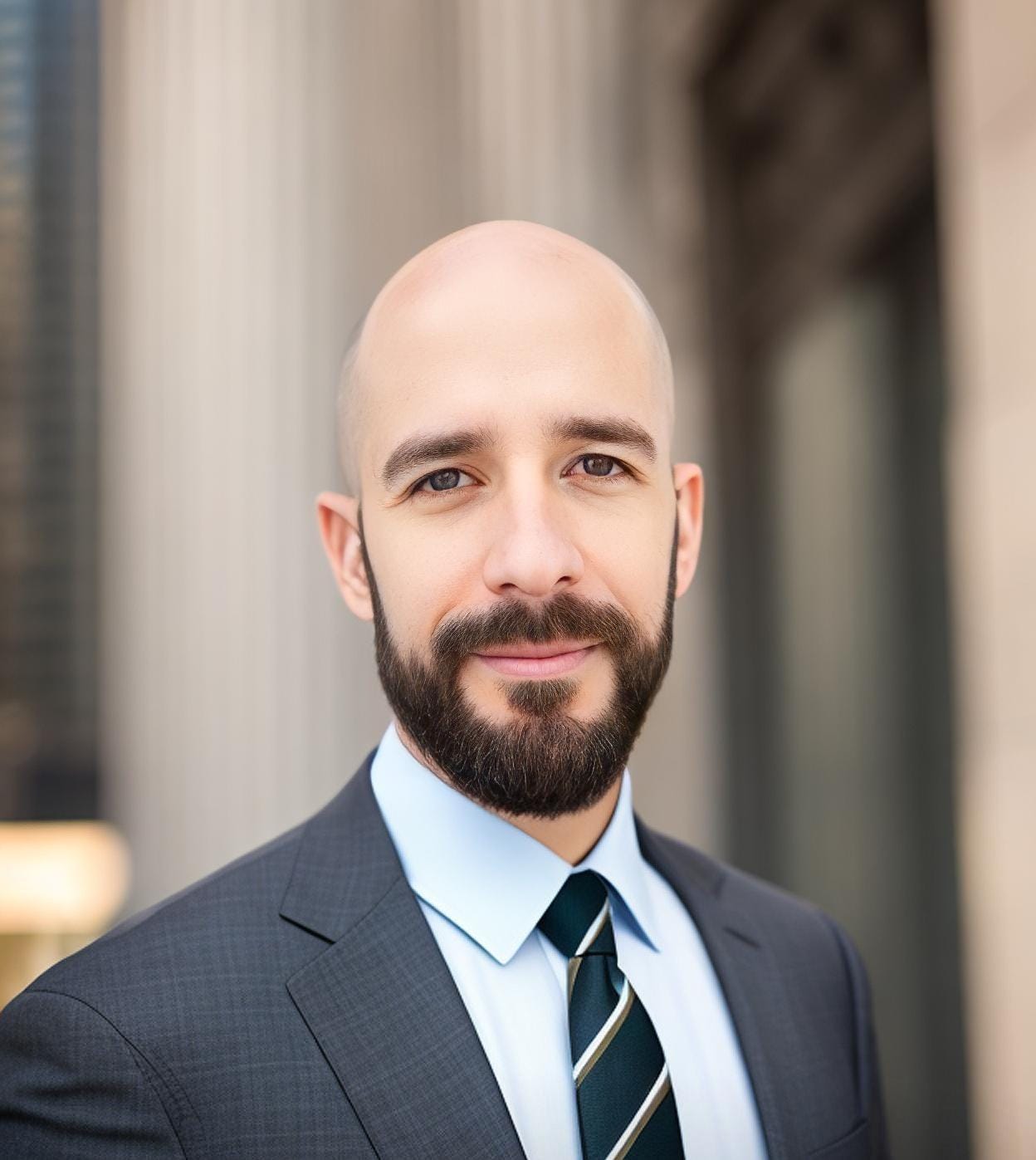
Host · Business Development Director, bioaccess®
Jesús E. Moreno is a business development director who provides efficient and reliable clinical research services across the Americas. With a passion for driving innovation in the healthcare sector, Jesús leverages his bilingual biomedical engineering background and his understanding of the unique challenges that Medtech startups face to provide valuable support and deliver accelerated clinical study results. Jesús profoundly understands the critical role that reliable and streamlined clinical research plays in the success of Medtech startups. He firmly believes that by offering cost-effective solutions without compromising quality, Medtech startups can achieve their clinical goals faster and make a meaningful impact in the healthcare industry. Jesús is passionate about supporting Medtech startups in their journey towards bringing innovative medical technologies to market. Jesús possesses the technical expertise to understand the complexities of medical devices and technologies. This knowledge enables him to identify tailored solutions that meet the specific needs of Medtech startups. Jesús has a bachelor's degree in biomedical engineering and a master's degree in electronics engineering.
What Trial Teams Miss When Science and Operations Work Separately


 RSS Feed