Rahul Modi on Entering Latin America Without Boiling the Ocean
For MedTech founders, Latin America is often described as a growth region. That is true, but it can also be misleading. In his conversation with Julio Martinez-Clark, Rahul Modi, then founder and CEO of Envision, talks less about abstract opportunity and more about the operational choices that shape a launch. His experience spans Argentina, Brazil, Colombia, Chile, Mexico, and Peru.
If you are evaluating the region, this episode is worth hearing because Modi keeps coming back to the same discipline: sequence the work, respect local differences, and do not spend like a multinational when you are not one. Those lessons matter as much as any headline about market size.
One region, many markets
Modi is clearly positive on Latin America, but he does not flatten it into a single commercial story. He describes the region as attractive for commercialization and clinical activity, yet he also warns that broad generalizations usually break down once a company starts examining countries one by one.
Founders often begin with regional ambition, then discover that regulatory pathways, distribution models, import burdens, and customer behavior vary sharply across markets. Modi says some countries fared better than others for his team, which is a good reminder that an expansion plan should not be judged by whether it covers the map. It should be judged by whether it gets traction in the first few places you can realistically support.
His advice later in the episode captures that mindset well: "Search for the path of least resistance beginning this journey and don't try to boil the ocean at once." That is not a call to think small. It is a call to choose an order of operations.
Distributor selection is a strategy decision
Many early commercial teams talk about finding a distributor as if the hard part is simply getting one to say yes. Modi describes a more demanding process. He credits trade shows as a strong channel for identifying serious partners, especially in a specialized field where the major players already attend industry meetings in the United States.
His real emphasis is on fit. "It's really all about building relationships and empathy is the game." In practice, that means looking beyond the first purchase order and asking harder questions. Where will your product sit inside the distributor's portfolio? Will they treat it as a priority, or just one more SKU? Can their team handle demos and post-sale support at the level your product requires?
That last point matters even more in Latin America because support models are often constrained by distance. Modi says his team did not establish a local office in the region, but they did not take a hands-off approach either. They trained partners, refreshed that training, checked in routinely, shared marketing materials, and used the advantages of software updates and video communication to stay close from afar. The lesson is that remote management can work, but only if it is active.
He is also cautious about exclusivity. For larger countries, his view is to avoid granting blanket countrywide exclusivity too early. That stance lines up with a broader theme in the episode: performance comes from accountability, not just from signing a contract.
Regulatory sequencing can save a young company
Modi is careful to place his comments in context. EyeNetra's products, as he describes them, were low risk, noninvasive, and technically nondiagnostic, so his experience sits within a lighter regulatory framework than many device categories. Even so, the contrast he draws across countries is instructive.
Mexico and Brazil, in his telling, were large and important markets but historically more complex, slower, and more expensive to navigate. Colombia stood out as attractive partly because timelines could be shorter. He also points to Peru and Argentina as promising places to consider, and he describes Chile as having a friendly import climate.
The deeper lesson is not which country always wins. It is that regulatory friction should shape launch order. Start where approval pathways, documentation demands, and import mechanics are most manageable for your product and your budget.
Modi also offers one specific warning that many first-time entrants learn too late: be careful about who holds your registration or importer-of-record role. If a foreign manufacturer gives that control to a distributor, changing partners later can become painful. His suggestion is to use an independent third party when possible. That is a small structural decision with large downstream consequences.
Another useful aside is his note that ISO 13485 took a backseat for his team at one stage and later became a stumbling block in some international markets. Founders sometimes treat quality-system readiness as something to finish after demand appears. His experience suggests that delay can narrow your options sooner than expected.
Demand generation still needs discipline
Modi's comments on marketing are refreshingly practical. "Strategy is formed above the shoulders and tactics below." For his team, marketing was not decoration around the commercial effort. It was the growth engine for a product that needed to be seen, understood, and trusted.
He argues for starting with customer knowledge, building awareness with both providers and patients, and identifying product champions who can help validate use in the field. He also stresses frugality. Digital channels and social media can help, but only if they support clear positioning and measurable sales efforts. He cautions companies to watch their claims, understand their cost of sale, and avoid the reflex to chase growth without regard to margins.
That same discipline shows up in his pricing comments. He does not treat Latin America as uniformly price sensitive. Instead, he says pricing depends on where a product is positioned, how differentiated it is, and what kind of institution is buying it. Sophisticated technology may hold price in top-tier settings. More commoditized products face pressure from local or Asian competition. Importation costs, VAT, duties, and currency volatility then add another layer, which means pricing strategy cannot be separated from logistics.
Hear the full conversation
Modi's value in this episode is not that he offers a formula. It is that he describes how a resource-constrained company can make better commercial choices under uncertainty. To hear the full discussion, listen to the episode here: https://www.globaltrialaccelerators.com/rahul-modi-founder-and-ceo-envision/.
About Global Trial Accelerators™
Global Trial Accelerators™ is the podcast for MedTech, Biopharma and Radiopharma founders navigating first-in-human clinical trials. It is hosted by Jesús E. Moreno and produced by bioaccess®, a CRO purpose-built for first-in-human trials across the Americas.
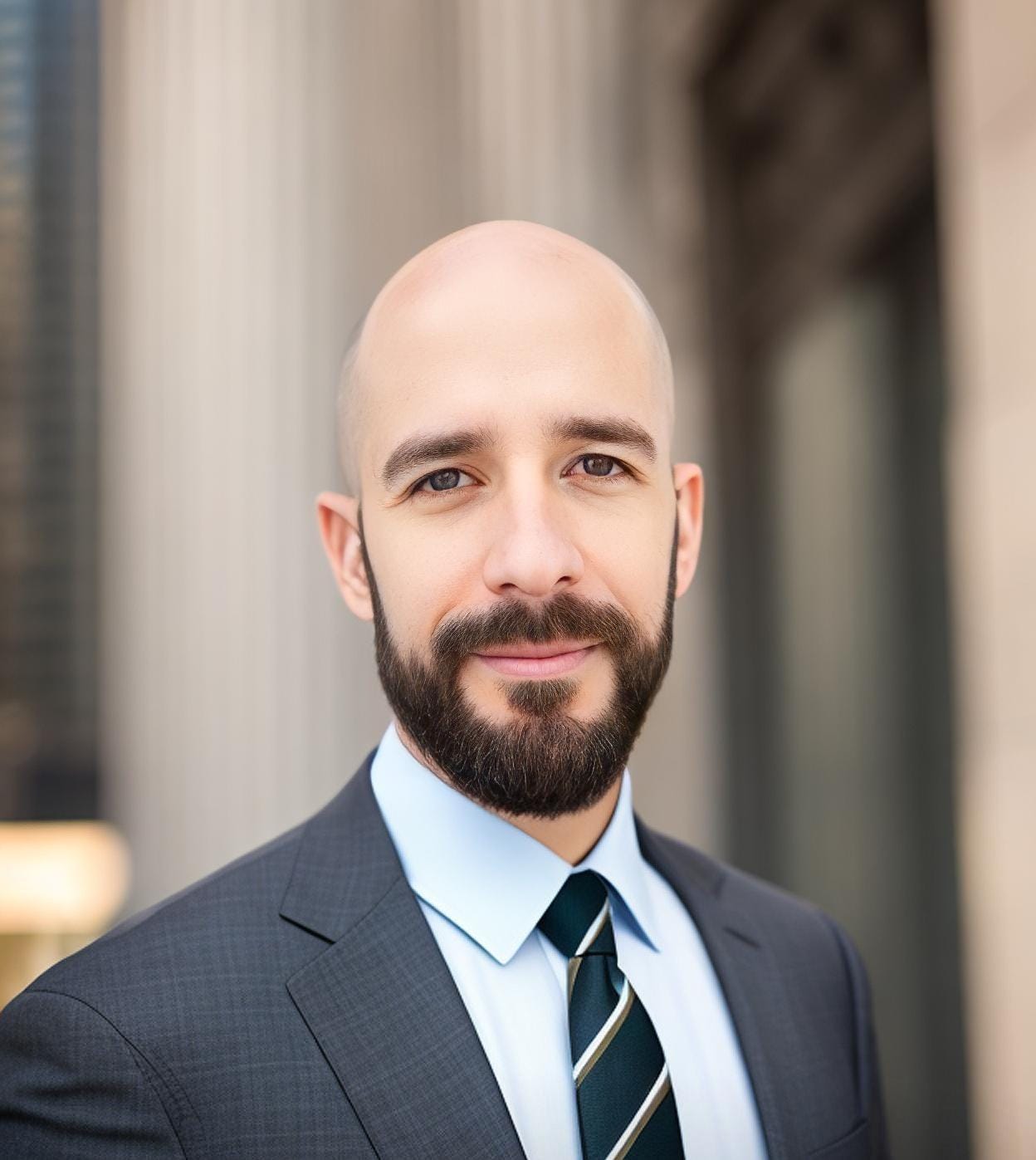
Host · Business Development Director, bioaccess®
Jesús E. Moreno is a business development director who provides efficient and reliable clinical research services across the Americas. With a passion for driving innovation in the healthcare sector, Jesús leverages his bilingual biomedical engineering background and his understanding of the unique challenges that Medtech startups face to provide valuable support and deliver accelerated clinical study results. Jesús profoundly understands the critical role that reliable and streamlined clinical research plays in the success of Medtech startups. He firmly believes that by offering cost-effective solutions without compromising quality, Medtech startups can achieve their clinical goals faster and make a meaningful impact in the healthcare industry. Jesús is passionate about supporting Medtech startups in their journey towards bringing innovative medical technologies to market. Jesús possesses the technical expertise to understand the complexities of medical devices and technologies. This knowledge enables him to identify tailored solutions that meet the specific needs of Medtech startups. Jesús has a bachelor's degree in biomedical engineering and a master's degree in electronics engineering.
What Trial Teams Miss When Science and Operations Work Separately


 RSS Feed