Kirk Zeller on Smarter Medtech Entry into Latin America

Many medtech companies still treat Latin America as an afterthought: a place to export later, through whichever distributor shows up first. In this episode, Julio Martinez-Clark speaks with Kirk Zeller of MedMarket Access, LLC about why that mindset is increasingly out of date.
What makes the conversation useful is that Zeller does not argue for the region on enthusiasm alone. He connects Latin America to practical decisions founders and commercial leaders already face: where to run first-in-human work, how to prioritize markets, when to use distributors, and how much control to keep as a company expands.
Latin America is no longer just a backup plan
Zeller’s first point is about timing. In his view, Latin America is drawing more serious attention from device companies than it did in the past, especially for early clinical work. As he puts it, “I think it's getting a lot more attention these days than it probably was in the past.”
He ties that shift to a broader change in the global market. In the conversation, he says the implementation of the EU MDR has raised barriers to commercialization in Europe. That matters because early clinical strategy and commercial strategy are often linked. If Europe becomes harder to use as the first stop, companies naturally start asking where else they can generate first-in-human experience and then turn that work into early commercial traction.
Zeller is not saying every company should automatically go to Latin America first. His point is narrower and more useful: companies should revisit assumptions they formed years ago. A region that may once have seemed peripheral can become strategically important when regulatory conditions change elsewhere.
Clinical quality is part of the case
The second idea is that Latin America should not be judged only on speed or cost. Zeller emphasizes physician quality. “I think you've got a lot of well-trained physicians,” he says, and he notes that many have trained with leading specialists and then returned to practice in their home countries.
That observation matters because weak clinical assumptions can distort market-entry decisions. If a company sees Latin America only as a lower-friction place to get cases done, it may miss what actually makes a first-in-human program credible: investigator quality, specialty expertise, and centers that can execute well.
Zeller also suggests there is a long-term commercial benefit when early work is done well in the region. He notes that there is often still a meaningful gap between commercialization in the U.S. and Europe versus Latin America. But if more companies do early work there and then continue through approval and launch, that gap can narrow over time.
For founders, the lesson is simple. When evaluating a country, do not stop at timelines and fees. Ask which physicians are doing the work, where they trained, and whether the company intends to build beyond the initial cases.
Distributor selection is where many companies create their own problems
The most concrete part of the episode is Zeller’s warning about opportunistic distributor deals. He contrasts deliberate market planning with the common habit of meeting a distributor at a global trade show, signing quickly, and letting that firm handle everything.
His preferred approach is more disciplined. Start with international market prioritization. Decide which region matters, then which countries within that region matter. Line up local regulatory and market access support. Where possible, pursue approvals in the company’s own name. Only then should distributor selection move to the front of the queue.
Why so much caution? Because a bad distributor choice does not usually fail quietly. If the distributor owns the registration, or becomes the sole keeper of the customer relationship, replacing that partner can mean restarting large parts of the process. It also creates confusion with physicians who already associated the product with the first commercial partner.
Zeller’s bluntest line on this is worth keeping in mind: “I don't think you can really do proper due diligence purely based on looking at paper.” In other words, a slide deck, a product roster, or a meeting at a conference is not enough. He argues that companies need local expertise, travel in the geography, and first-hand observation of how a distributor operates with physicians and key opinion leaders.
He is also skeptical of the one-contract solution for all of Latin America. A master distributor can look efficient from headquarters, but the region is not one market. The structure can add distance from the actual field team, reduce visibility, and make economics worse as more intermediaries take a share.
A distributor needs support, not abandonment
Zeller is just as clear about what happens after the contract is signed. Asked about hands-off management versus a stronger support model, he says, “I definitely prefer a hybrid approach.”
That preference comes from a practical reality: distributors represent many products at once. If a company is absent, its product can slide down the priority list. If the company is present, traveling with reps, supporting training, helping with KOL relationships, and showing up consistently, its chances improve.
He describes several ways to create that presence. A company can build a local office when the opportunity justifies it. If that is too heavy an investment, it can use a market access firm as a lighter first step to support conferences, training, and customer development. Either way, the principle is the same. The company should not assume that samples and remote training are enough.
This thinking also extends beyond pure selling. In the episode, Zeller says active company involvement can help when reimbursement authorities, hospital administrators, or other decision-makers shape demand. Some distributors are strong at that work; others are not. A manufacturer that stays engaged has a better chance of spotting gaps early.
Listen to the full conversation
The full episode goes further into pricing, importation, compliance, and the importance of updating old assumptions about both Asia and Latin America. If you are weighing first-in-human options or rethinking your distributor model, it is worth hearing Zeller explain the tradeoffs in his own words. You can listen on the episode page.
About Global Trial Accelerators™
Global Trial Accelerators™ is the podcast for MedTech, Biopharma and Radiopharma founders navigating first-in-human clinical trials. It is hosted by Jesús E. Moreno and produced by bioaccess®, a CRO purpose-built for first-in-human trials across the Americas.
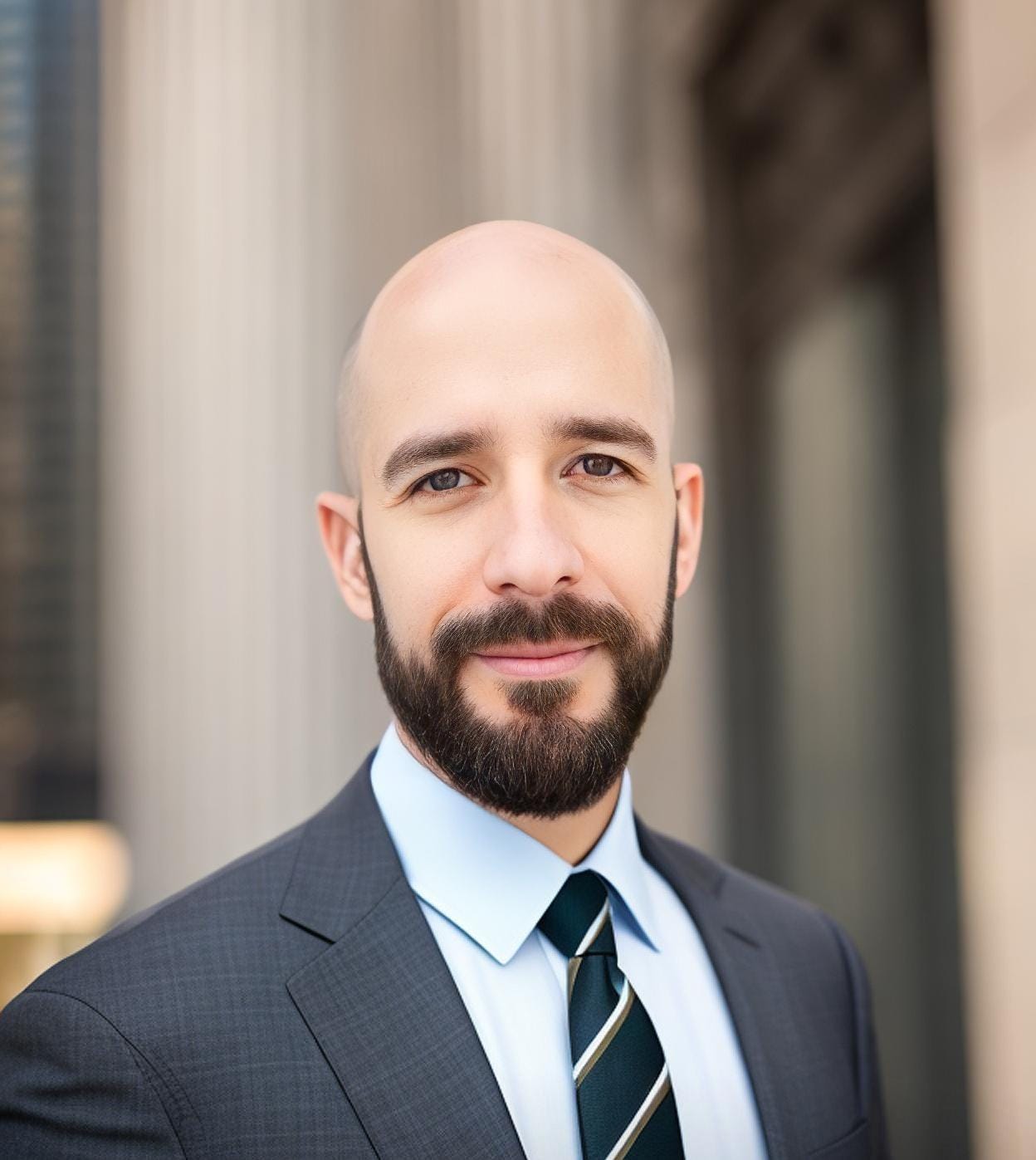
Host · Business Development Director, bioaccess®
Jesús E. Moreno is a business development director who provides efficient and reliable clinical research services across the Americas. With a passion for driving innovation in the healthcare sector, Jesús leverages his bilingual biomedical engineering background and his understanding of the unique challenges that Medtech startups face to provide valuable support and deliver accelerated clinical study results. Jesús profoundly understands the critical role that reliable and streamlined clinical research plays in the success of Medtech startups. He firmly believes that by offering cost-effective solutions without compromising quality, Medtech startups can achieve their clinical goals faster and make a meaningful impact in the healthcare industry. Jesús is passionate about supporting Medtech startups in their journey towards bringing innovative medical technologies to market. Jesús possesses the technical expertise to understand the complexities of medical devices and technologies. This knowledge enables him to identify tailored solutions that meet the specific needs of Medtech startups. Jesús has a bachelor's degree in biomedical engineering and a master's degree in electronics engineering.
What Trial Teams Miss When Science and Operations Work Separately


 RSS Feed