How MedTech Companies Enter Latin America Without Guesswork

Latin America is often discussed as if it were one market. In this episode, Alejandro Infante explains why that mindset creates bad decisions. Speaking with Julio Martinez-Clark, he draws on decades of operating experience at Abbott Laboratories, Hospira and Hill-Rom, and on his role at the time as President of Procursum Medical, to show what market entry really requires.
What makes the conversation useful is its practical framing. Infante does not treat expansion as a sales project alone. He treats it as a series of operating choices about structure, risk, regulation, pricing, and compliance. For any MedTech team thinking about Latin America, that is the right place to start.
Choose the operating model before you choose the countries
One of Infante’s clearest points is that entering Latin America starts with an organizational decision: will you build your own local operation or work through distributors? He describes that choice as strategic, not administrative.
When he was at Hospira, he helped set up direct operations in Mexico, Colombia, Chile, and Brazil. But he is also direct about the limits of that approach. "Unless you have a significant level of business, a significant chunk of business, it is very difficult to set up your own organization in Latin America." In other words, a direct presence is not just a sales office. It requires enough revenue and margin to support the broader corporate functions that multinational companies usually expect.
That makes distributors the more realistic path for many companies, especially those entering the region for the first time. But Infante’s point is not that one model is always better. It is that companies should be honest about scale, product complexity, and how much control they need before they commit to either route.
Distributor selection is really risk management
Infante describes the distributor landscape in Latin America as highly fragmented. In each country, he says, there may be a few large and professional players, some solid second-tier firms, and then many smaller distributors with widely varying capabilities. That means picking a distributor is not just about finding someone with customer relationships.
He advises companies to look at portfolio fit, geographic reach, financial resilience, customer concentration, supplier concentration, and the ability to handle practical responsibilities such as recalls, traceability, and quality systems. He also prefers distributors with complementary portfolios rather than ones that are spread so thin they cannot pay attention to a new line.
His advice on diligence is simple and demanding at the same time: "You have to talk to a lot of people, you have to ask for references and you have to do your own due diligence." Just as important, the work does not stop when the contract is signed. He stresses that manufacturers still need resources focused on day-to-day management of the relationship, visibility into end-customer needs, and quick problem solving when issues appear.
That is a useful correction for founders who think a distributor appointment ends the market-entry project. In Infante’s view, it starts a new phase that still requires active oversight.
Regulation and importation are local, not regional
Another lesson from the episode is that regulatory planning cannot be generalized across Latin America. Infante points to COFEPRIS in Mexico, ANVISA in Brazil, INVIMA in Colombia, and ANMAT in Argentina as examples of agencies with different processes and realities. He notes that Mexico has expedited procedures in some cases when a product already has FDA approval, while Brazil has long been known for registration delays, even if timing has improved.
His broader point is that market entry only works when local teams or local partners understand how to move registrations efficiently and keep them current. That same principle carries into importation. Duties vary by country. Mexico and Chile are relatively open in the examples he gives, while Brazil can add significant import costs. But tariffs are only one part of the story.
Infante also emphasizes documentation, export compliance, customs knowledge, and post-import traceability. The job is not finished when a device clears the port or airport. Companies still need to know where products are, how they are being handled, and whether the importer has the systems required to support quality and compliance.
Price, compliance, and patience shape the real opportunity
Infante makes a counterintuitive observation about pricing: many imported medical devices end up costing more in Latin America than in the US. Logistics, customs duties, and distributor margins all contribute. As he puts it, "You end up with a significant difference, price difference, versus the US or versus Europe."
That does not mean price sensitivity disappears. In fact, he describes a small premium segment, a larger budget-constrained segment, and a middle space where locally made products can compete on acceptable quality and more reasonable pricing. His conclusion is that companies cannot rely only on top-tier premium products, and they also should not expect old discontinued products to solve the problem. The market needs solutions designed for local budgets and needs.
He connects that economic reality to compliance. Because government and public institutions are often the main buyers, anti-corruption controls matter. Infante spends real time on the Foreign Corrupt Practices Act and warns companies against pretending distributor activity is someone else’s problem. "You can't turn a blind eye and sell to a distributor." If a company works through third parties, it still needs training, monitoring, documentation, and a willingness to act when something goes wrong.
His final message is that volatility is normal. Governments change, regulations change, and exchange rates move. Companies that stay in the region need a long-term mindset and the discipline to adjust without abandoning their strategy.
Listen to the episode
For leaders building a Latin America plan, this episode is a strong reminder that success depends less on ambition than on operating discipline. You can listen to the full conversation with Alejandro Infante on the episode page.
About Global Trial Accelerators™
Global Trial Accelerators™ is the podcast for MedTech, Biopharma and Radiopharma founders navigating first-in-human clinical trials. It is hosted by Jesús E. Moreno and produced by bioaccess®, a CRO purpose-built for first-in-human trials across the Americas.
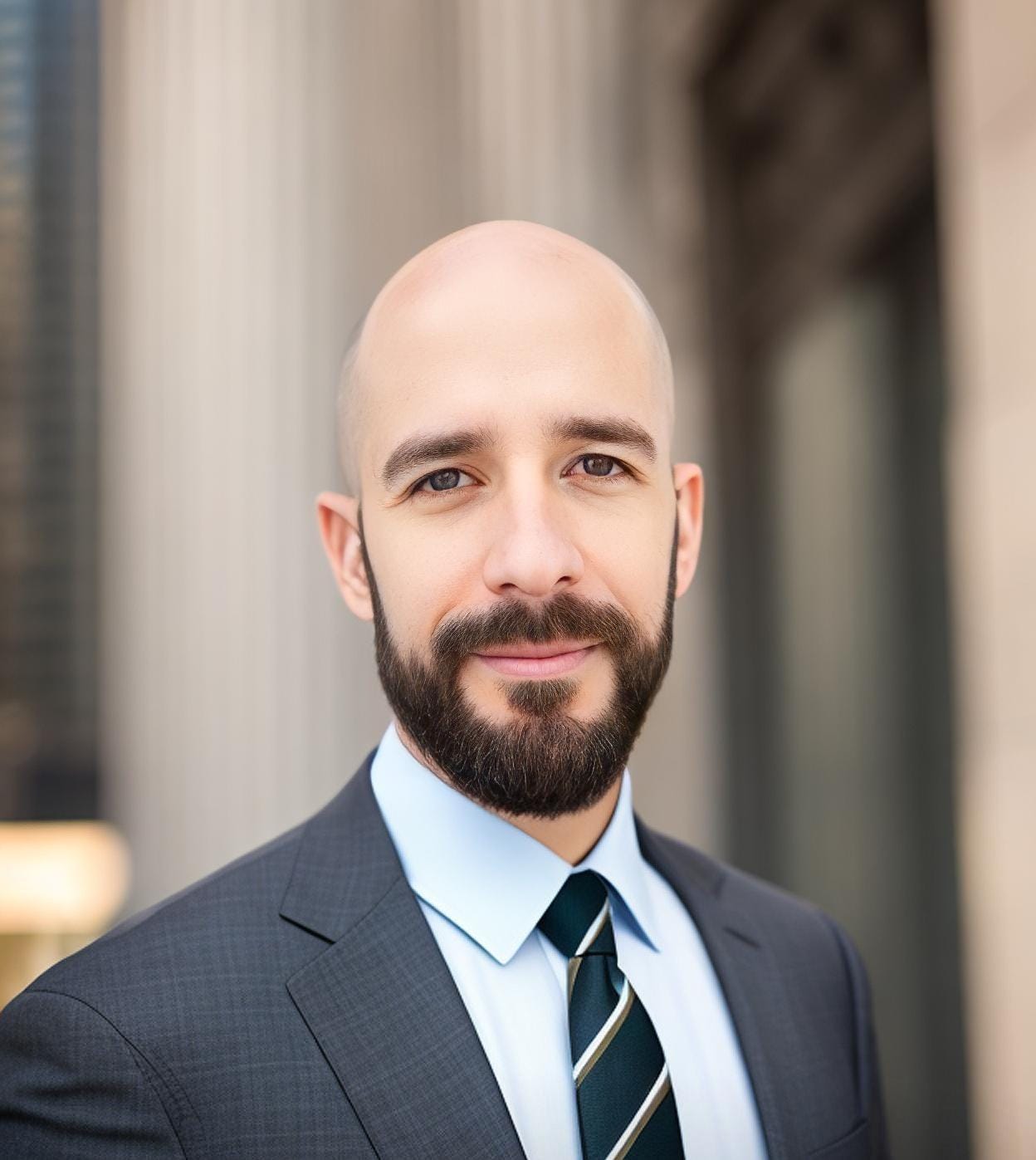
Host · Business Development Director, bioaccess®
Jesús E. Moreno is a business development director who provides efficient and reliable clinical research services across the Americas. With a passion for driving innovation in the healthcare sector, Jesús leverages his bilingual biomedical engineering background and his understanding of the unique challenges that Medtech startups face to provide valuable support and deliver accelerated clinical study results. Jesús profoundly understands the critical role that reliable and streamlined clinical research plays in the success of Medtech startups. He firmly believes that by offering cost-effective solutions without compromising quality, Medtech startups can achieve their clinical goals faster and make a meaningful impact in the healthcare industry. Jesús is passionate about supporting Medtech startups in their journey towards bringing innovative medical technologies to market. Jesús possesses the technical expertise to understand the complexities of medical devices and technologies. This knowledge enables him to identify tailored solutions that meet the specific needs of Medtech startups. Jesús has a bachelor's degree in biomedical engineering and a master's degree in electronics engineering.
What Trial Teams Miss When Science and Operations Work Separately


 RSS Feed