Gennaro Maida on the Ground Truth Problem in Wearable Clinical Data
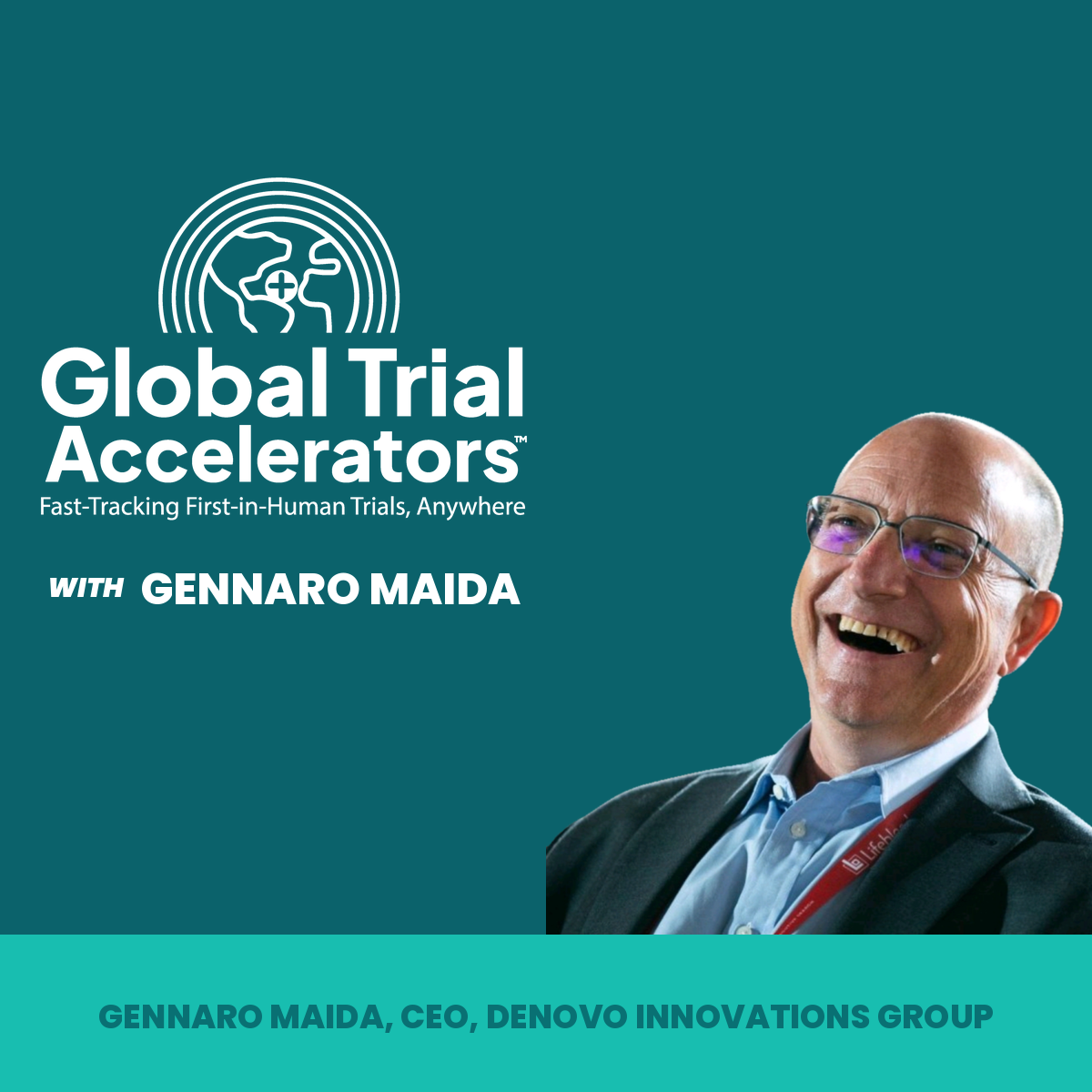
Every wearable on the market promises to measure something clinically meaningful: heart rate variability, oxygen saturation, sleep, arrhythmia risk. The harder question for a sponsor is whether that number will hold up as evidence in a clinical trial or a regulatory submission. In his conversation on the episode page, Gennaro Maida, CEO/CMIO of Denovo Innovations Group, Director of Clinical Products at Tactical Rehabilitation and a member of the American Heart Association's Health Tech Advisory Group, explains where that gap sits and how teams can close it.
Maida trained in biomedical engineering at Duke University and earned an MS in Medicine from Hahnemann University focused on cardiac surgery outcomes, then spent years in infrastructure, sensors and data science. That mix shows in how he talks. He treats signal processing, clinical medicine, data engineering and regulatory strategy as one problem, not four.
Know what is measured and what is inferred
Maida's central point is that most wearable data is not raw measurement. As he puts it, "the only actual real data is the original PPG signal that's coming from the actual red, green infrared sensors." Everything after that, including peak detection, waveform morphology and the rules for discarding bad readings, is an algorithmic layer, and each vendor builds it differently.
That matters for trial design. A sponsor needs to know which outputs are measured signals and which are estimates, and to choose devices accordingly. Maida's advice is to look at what you are actually trying to capture, whether that's heart rate variability, oxygen saturation or sleep, and pick devices that are validated for that specific biometric. Sometimes that means using two devices and comparing them.
He also separates two ideas that teams often blur: "clinically validated versus FDA approved? They're different things." A wearable can have a large body of peer-reviewed validation and still not be authorized for a particular use. Whether that data is acceptable in a given study is a regulatory question, not a marketing one.
Gather everything, and bring a gold standard
When asked what a founder with a promising wearable should fix before taking data to a sponsor or the FDA, Maida starts with collection: "Rule number one, gather everything. You can't go back and gather data you missed." A metric that isn't validated today may be cleared later, and if it was never recorded, that evidence is gone.
His second rule is to anchor the new device to a trusted reference. For heart rate variability derived from PPG, that means capturing an ECG where possible, because its sharp peaks make a clean comparison. For oxygen saturation or blood pressure, it means a clinically validated reference device. In his words, "find some way to get ground truth from a well-known device that's out there or a heavily validated device that you can base yours off of." Without that, the data is just sitting there with nothing to attach it to.
Provenance is the operating principle
Across his roles, Maida says he carries one principle into every project: "make sure everything has a provenance and is based in ground truth." He describes building AI systems that track where each piece of information came from, which version and date it reflects, and whether it has been superseded. Time turns out to be one of the hardest parts. Research evolves, and an AI system with access to everything can lean on outdated answers unless it is built to know what is current.
He extends the same thinking to research integrity with an idea he calls an "epistemic clean room." A human researcher can disclose a conflict and set commercial information aside. An AI system layered over both research and business data has no such instinct, so the architecture has to separate them on purpose.
Secure data capture that scales to multiple sites
On multi-site remote data capture, Maida is pragmatic. Smaller teams usually shouldn't build compliance infrastructure from scratch. Established clinical data platforms can carry much of the HIPAA, disaster-recovery and cybersecurity load, while the sponsor focuses on what is unique to its study. He also argues that with security vulnerabilities now surfacing daily, it is often simpler to start at a high security posture than to try to do the minimum.
For interoperability across health systems, he points to standards such as FHIR, SMART on FHIR and HL7, to integration vendors that act as a fast-forward button for startups, and to AI that can help with messy translation problems between systems, such as mismatched addresses, swapped dates and duplicate records.
Talk to the FDA early
Data collected in different settings or countries can still be useful, Maida says, but whether it can support a submission depends on how it was collected. Many teams align data collection with FDA expectations from the start, so they don't have to redo work later. His advice to startups is direct: "talk to the FDA early. Build that relationship." Pre-submission conversations let a team describe how its data was collected and hear whether it will work before committing to a path.
Looking ahead, he sees progress coming from several directions at once: regulatory tools such as predetermined change control plans for AI-enabled devices, more focused models trained on biometric signals, and digital-twin approaches that layer structure, electrophysiology and biochemistry.
Listen to the full conversation
What Maida offers is a disciplined way to think about digital evidence: separate what is measured from what is inferred, collect everything, compare against a gold standard, keep provenance on every data point, and bring regulators in early. If your team is building a study around wearable or sensor data, the full conversation is worth your time.
You can listen on the episode page.
About Global Trial Accelerators™
Global Trial Accelerators™ is a life-sciences podcast on first-in-human and early feasibility clinical trials in medtech, biotech/biopharma and radiopharma. It is hosted by Jesús E. Moreno and produced by bioaccess®, a CRO built for first-in-human and early feasibility trials that can activate and deploy clinical research resources on demand across the Americas, Canada included.
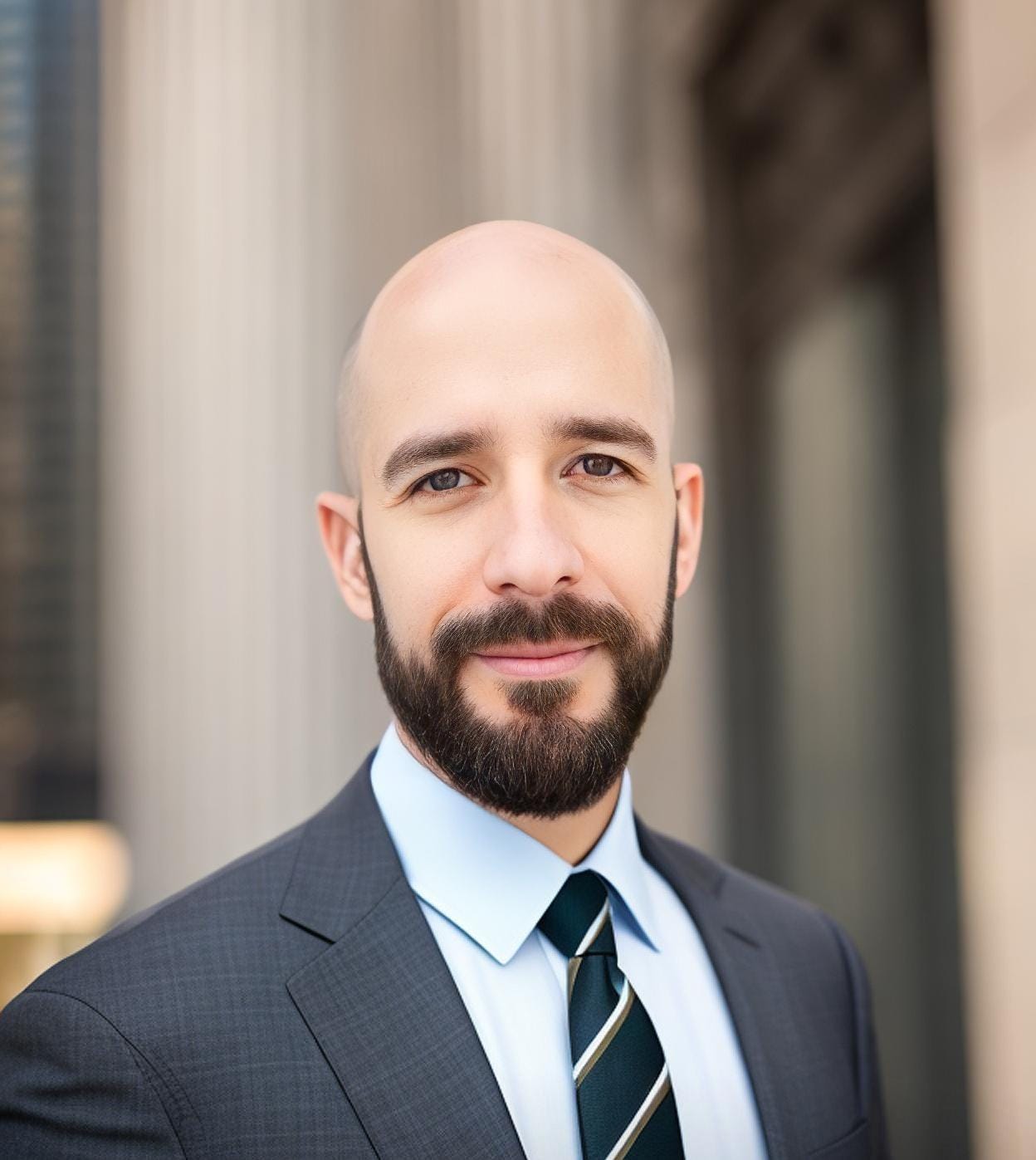
Host · Business Development Director, bioaccess®
Jesús E. Moreno is a business development director who provides efficient and reliable clinical research services across the Americas. With a passion for driving innovation in the healthcare sector, Jesús leverages his bilingual biomedical engineering background and his understanding of the unique challenges that Medtech startups face to provide valuable support and deliver accelerated clinical study results. Jesús profoundly understands the critical role that reliable and streamlined clinical research plays in the success of Medtech startups. He firmly believes that by offering cost-effective solutions without compromising quality, Medtech startups can achieve their clinical goals faster and make a meaningful impact in the healthcare industry. Jesús is passionate about supporting Medtech startups in their journey towards bringing innovative medical technologies to market. Jesús possesses the technical expertise to understand the complexities of medical devices and technologies. This knowledge enables him to identify tailored solutions that meet the specific needs of Medtech startups. Jesús has a bachelor's degree in biomedical engineering and a master's degree in electronics engineering.
What Trial Teams Miss When Science and Operations Work Separately


 RSS Feed