

 Apple Podcasts
 Spotify
 YouTube
  RSS Feed
 Sandi Schaible, Founder & President at Bonded in Science
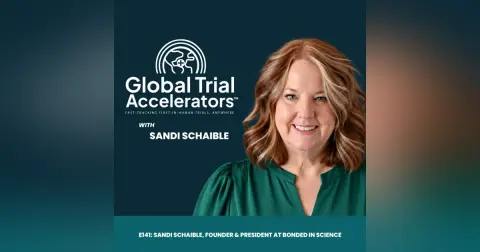
In this episode of the MedTech Podcast, we welcome Sandi Schaible, Founder of Bonded in Science and ISO TC 194 WG14/WG1 Expert. With over 25 years of experience, Sandi brings valuable insights into chemical characterization, regulatory strategy, and scientific leadership in the medical device industry.
Jesus Moreno (00:05.764)
Welcome back to Global Trials Accelerators, the podcast where we dismantle the barriers to clinical innovation and explore the strategies driving the next generation of life-saving therapies. In today's episode, we're going to talk about biocompatibility and how it used to be treated as a simple checklist. Run a standard battery of laboratory tests. Attach the report and submit.
However, in today's regulatory environment, that approach is breaking down fast. Between revised ISO tenety three guidance, regulatory agencies asking deeper questions about clinical characterization and global environment bans colliding directly with MedTech manufacturing, material safety has become one of the biggest friction points in medical device clearance. Our guest today has spent
Over three decades navigating that exact space. Sandy Shuse me. Scheidel. Scheidel. Sandy Scheidel. Excuse me. Shipley. Thank you. Sandy Shipley Founder and the president of Bonded in Science LLC, an independent regulatory science consultancy specialized in medical device biocompatibility, chemical characterization, and extractable and leachable compounds. Sandy previously served in senior laboratory leadership roles across the testing industry, and for over a decade, she has served as an expert delegate on.
ISO TC one ninety four the technical committee that writes the biocompatibility standards global manufacturers global manufacturers rely on.
Now, here is the critical distinction for every founder and executive listening today. In traditional medtech, most biocompatibility advice comes directly from consulting labs, creating an inherent conflict of interest, where more testing means more revenue for the lab. Because Bonded in Science is completely independent of and sells zero lab bench time, Sandy is here to
Today to share with us an unconflicted objective strategy for Biocomp. Sandy, welcome to Global Trials Accelerators. It's a pleasure to have you with us today.
Sandi schaible (03:01.666)
Thanks. It's incredible to enjoy. Thank you. It's I'm happy to be here.
Jesus Moreno (03:09.656)
We're happy to share this space with you. And I want to start looking looking at your journey. You spent years in senior laboratory leadership before founding Bonded in Science. I'm curious to learn what was the specific inflection point when you realized manufacturers needed strategic guidance from an advisor who wasn't also trying to sell them more lab bench time?
Sandi schaible (03:40.089)
So, you know, I think my pathway to independent consultancy has been building for a long time. I was gaining experience, but but my path in the back of my mind I was always sort of thinking that my path would lead me to independent consultancy. I've seen the standards change and evolve and become more complex.
and asking one person to know everything about what they need to bring a product to market is impossible in these days. sitting in the ISO standard committees, I have an insight to that and I can bring real guidance to those people who need that extra support.
being untethered from a laboratory now, I think brings confidence to customers who really want the right choice for them, not what's going, as you said, what's going to bring laboratory revenue to an organization. And it's really fun and fulfilling for me to be able to offer that to them.
Jesus Moreno (04:53.131)
That's wonderful. And and that independence creates a completely different dynamic with your clients, I would imagine. since since Bonded in Science is not tethered to that time lab time or lab in bench, excuse me, time in bench. I I would imagine that the conversations you have with MedTech executives have changed. And I'm I'm I'm wondering.
Do they ask different questions or do they find that or do you find yourself giving them different recommendations that would let's say not fall in line with traditional testing advice that you would find at a testing house?
Sandi schaible (05:40.887)
Yeah, that's a great question. You know, every device is different and and now with the changes to ISO ten three, the pathway isn't always the same. certainly when I worked in a laboratory, right? running a laboratory, there was motivation for me to sell test and close a deal. you know, I think customers recognize that conflict and some.
Sometimes they were skeptical about whether or not I was giving them advice that they could could take and was in their best benefit, or if I was pressured by by budgets and and revenue targets. But now I think they're more open to my advice. I think they have I can explain to them that there isn't just one pathway, that there's
multiple choices and it really sort of comes down to what your risk level is and how much risk you want to bear and and how quickly you want to get what what are your barriers, right? Are they are they deadlines? Are they cost? Are they
r regulatory regions of the world. so there's a lot of things that go into it and it's and it's really complex. so it's good to be able to offer them options and and help them guide them to success.
Jesus Moreno (07:19.062)
In talking about that that guidance, you've focused your your work with your clients around moving away from one and done submission mindset to a a more holistic, more full cycle view of of what biocompatibility.
looks like from initial concepts through post market and even to disposal. So can can you share with us a little bit of that framework? How do you how do you help them understand that more nuanced framework of a full life cycle versus one and done that sometimes is is you know the minimum starter standard to to meet regulatory compliance. But could lead to un
undesirable outcomes down down the down the line.
Sandi schaible (08:20.718)
certainly it's not just my perspective, it's really what the changes to part one dictate is a thought process that starts in selecting your materials and ends when the device is no longer commercially available. I've seen this in my experience why the standard has moved into that direction. we've worked
On projects in my past where the chemical characterization was the last thing that they needed to do to check the regulatory boxes and get approval. And something was in those devices that
caused caused the device to be pulled from the market last minute. I one particular case that comes to mind and I think is a is a good story for medical device manufacturers in general.
is we had a client that manufactured a pediatric mask and this mask had little cartoon characters printed on it. it was obviously for pediatric patients and they were immune compromised. and and the
regulator, I don't remember if it was the FDA or if it was the EU, but regardless, the the they said we want to see some chemical characterization on this. So it was the last thing they had to do. Everything else was done. It would it look all looked good. They were ready to go, just this one little checkbox left to do. And we tested the mask and we found toxic levels of lead.
Sandi schaible (10:16.504)
coming from coming from the colorance in the characters. Now this this customer was surprised and and I was sort of surprised because I've seen these kinds of things before. but they didn't anticipate lead. Their their bill of materials didn't
specified that there was lead but lead had crept into the formulation or of their colorance and it was enough to cause them to pull that device from the market before before it even got approved. so so I think that alone is the story that you just don't know what you're gonna see and so
So understanding not only what you expect to see in your materials, but what you actually can see in your materials and in your device is really important. And to learn that early on in your divine design phase is much easier to accept than to have put in the time and effort and money to get it all the way to that end stage and then find out that.
you have to go back and redesign.
Jesus Moreno (11:41.549)
And that's that's a perfect segue to to this follow up. well ISO ten nine ninety three has been pushing the industry away from the box checking, to use common phraseology, and towards a true risk based biological evaluation plan. And as as we saw in this shall we say, case study of what could happen with with a manufacturer that didn't
mm made a or or maybe they did, but they they were almost at market and they realized there was an issue with the materials they chose. that's tragic that that that not choosing the correct materials from day zero resulted in a catastrophic delay or in this case cancellation of of of market entry.
What what do you suggest w what are your vo your words of advice for CEOs and and you know startups in terms of that important step of identifying the right materials? How do you go about finding that that answer the right way?
Sandi schaible (13:06.262)
Right. So, you know, again, I think it really all also sort of depends on the device, the r and where the risks are in those devices. but but evaluating your materials critically, making those choices, really understanding where you're sourcing them from, what's their history of use, right? Have they been used in the medical device industry for a long time? Do they have
a long safety record of use. Are they novel materials? Are you using materials in novel ways? These are all good questions to ask. And the further you get from materials with safe history of use and in specific applications that that are tangent to yours into novel materials and novel applications.
or maybe sources of those materials that aren't are are new or new to you, the more scrutiny you should put on those materials.
I'm not necessarily advocating that you need to do a full battery of chemical characterization on every single material that you want to evaluate, but you should be looking at them critically. And and and if you think that you're taking on some new risks that that you weren't weren't familiar with before, maybe do some initial screening or
Ask some more additional information out of your vendors. See what information they have on characterization of these materials and and their processes to try to avoid that the the that exact same story on your own device. It's you know we
Sandi schaible (15:04.34)
One thing I think people don't realize with chemical characterization, it's not really about the things that you expect to see because because if if they if they were purposely put in there and they weren't safe, then nobody would buy them, right? It's the things that c creep into your processes, it's the the impurities in the packaging of the materials, it's your processing.
It's carryover from other processes that creep into your device. And nine times out of ten, when when there's an issue in the toxicological risk assessment, it's because of one of these things that creeped into a process and and nobody knew it existed until it was too late.
Jesus Moreno (16:00.675)
And that's very important what you what you highlight there because this risk based mindset is now getting stronger in industry and in the regulatory arena, but it also is in a head on collision trajectory with some traditionally accepted and and established
materials in particular around PFAS and the forever chemicals. The regulatory push to restrict PFAS threatens clinical critical med tech materials that are essential and and are being used today in in a broad broad spectrum of applications from minimal invasive interventions to prosthetics and long term implants.
so so as as you say, like that risk-based mindset and doing due diligence to understand the the materials you choose is critical. But in the same way, eve there's materials that have been used for quite some time and and they're starting to not be accepted.
Where are the technical gaps in that chemical characterization and non-targeted testing that make this collision so difficult to resolve cleanly? Since we need to be sure that you know it's it's biocompatible and safe, but at the same time we need to be able to use something to to solve the the production
Sandi schaible (17:53.462)
Jesus Moreno (17:56.323)
Difficulties.
Sandi schaible (17:57.549)
Yeah, so on the analytical side, the unfortunate part that people of chemical characterization that people need to be aware of is it's a screening test, right? We're we were looking for things, everything that could possibly be there at every potential level. but it's not it's not perfect science and and especially those cohorts of concern like
PFAS where they have a low margin of safety and you need to have highly sensitive and specific methods to detect them.
Sometimes it's just pure luck that they can be detected in a screening study. And really the the way to concretely understand whether or not they're they're present in your device or not is to to do a targeted method for those exact things that you need to look for at really, really low levels. Some analytical laboratories offer these these methods, but there is no standardized
method yet coming that right regulators can rely on right so so that's one challenge i i think the maybe the good news for pfos right now is that the fda has put out a statement saying that they don't see any reason to limit their use that they generally regard them them as safe and materials that have that
long history of use. I think the European market maybe is a little bit more of a question mark and and if we start to see them reduce what what they'll accept I think it'll come out of the European market first. But it's a challenge because these these materials the the that that are so persistent are are favorable to use in devices for those
Sandi schaible (20:13.68)
Those very same properties, right? They're inert, they don't break down, they they they have properties that make them very desirable for medical devices. And nobody has found like for like replacements that aren't
hazardous to to health. So it's that risk risk benefit scenario that that device manufacturers need to consider, that regulators need to consider because because there is no alternative right now and and I d I just don't see a alternative coming down the path.
so we'll it'll be interesting to see where where things go with with PFOS and and materials that are made with those forever chemicals.
Jesus Moreno (21:13.398)
N definitely a hot topic of conversation. And you and you pinpoint once again a a very important point here, which is on top of the environmental shift that we've seen in regards to those forever chemicals, there's the the difficulty the sponsors finding themselves in between the requirements from the FDA and the EU MDR.
where the EU enforces IASO standards rigidly or more rigidly than the FDA. and FDA applies, as you mentioned already, a more tailored risk adjusted posture. But that that means that entrepreneurs and sponsors are left with with this question: what is the executive strategy we should follow?
for building a single biocompatibility submission package that satisfies both regimens without having to duplicate efforts. d what worse words of advice do you have for for that particular you know challenge?
Sandi schaible (22:29.24)
Yeah, it's a very important, it's a very important thing to consider. and and knowing what what special things you need to do for EUMDR versus FDA is really important and maybe that can flex your strategy. ten years ago, ten years ago before EU MDR, I think the common pathway would have been go to Europe.
make get your approval, make some money, then come to to the US and do the additional testing. and and with EU MDR, we started to see a shift where people thought that was going to be harder, especially I think with the backlog with notified bodies. But now with the change of part one, I think it gets even more complex.
I the things that stand out to me is is to your point, the FDA is really looking for a risk-based strategy. they also well, we'll go to to Europe first, right? Europe's big push now is is to leverage non animal testing whenever possible, right? And so
So I think that's that that pathway is a fairly good pathway, pretty pretty straightforward. however, then you go to the FDA and they haven't quite embraced all of the new alternative methods that the EU has and will favor animal testing over those new methods. and and so
If you do animal testing and go to Europe, then Europe's gonna ask you why you did animal testing and and so but yet you need it for the FDA. So your strategy really gets complex. And and I think it's it's it's worthwhile to talk through that before you start that pathway and and whether or not you know it's dependent upon what
Sandi schaible (24:54.092)
what you need to do and the runway you need for your device and whether or not you're gonna go into both markets or if you're only gonna go into one market. But they're d they they're definitely different. They're not completely different and people get through both markets just fine, but your your strategy needs careful consideration and and I and I'd love to give you that magic bullet, but I think again, it kind of really depends upon
upon your device and the testing that's that's at minimum is needed and and and what's your market strategy.
Jesus Moreno (25:32.94)
And and you are you are building that magical bullet with bonded in science and and the academy by bonded in science. We we'll cover that in in a little bit, but I I wanna add a another layer of of difficulty to this to this already complex topic, which is what happens when the global supply chains are
Sandi schaible (25:38.774)
Yeah.
Jesus Moreno (26:01.461)
strained and manufacturers are forced to swap materials on a short notice. What is the hidden biological evaluation hurdle like? How how do I how do they decide what what to do when they're you know they're looking at timelines of six months or or less and they have to make a production run for
a considerable amount of units and and they don't have the time or the resources to you know sit down and evaluate those those alternatives. So sponsors are routinely having to to you know balance the budget versus the safety of their product and the regulatory compliance when replacing
materials that are no longer available for supply chain constraints. Is there something to be done here? Is is there a minimum standard we we could point to that satisfies you know finding that that balance between those those conflicting forces?
Sandi schaible (27:21.686)
Yeah.
fortunately or unfortunately we got a lot of practice with that with COVID. when when supply chains were were really taxed and we saw a lot of customers come to us with different materials and and trying to justify a plan. I I you know I think the good news in all of that is especially in in the US the FDA is
Is really good at evaluating material equivalents. So that can definitely be a strategy, whether that's a paper assessment, because you've got materials that are essentially like for like and just a different manufacturer.
Or your manufacturer changed up your formulation, but they have specific details on that. And and a a chemist like myself and paired with a toxicologist can probably sort out whether or not that change increases your risk and needs further characterization or not.
And and even if you have to do testing, there's pathways and and and part one has a whole section on on bioequivalents that that you can leverage to to be able to do that paper assessment or do limited testing and then bridge that testing. So a a a a common approach outside of
Sandi schaible (29:01.23)
of a paper assessment would be to do chemical characterization and then use that chemical characterization to bridge repeating a lot of those biological tests that you would normally have to do with the materials change.
Jesus Moreno (29:19.226)
And once again, looking at at this from the life cycle approach, and not only the life cycle of of the product itself, but the life cycle of bringing technology to market. The do you see that the that the requirement should be the same or perhaps not, depending on where in the develop
development process the technology is. If if this is if we're talking about a first in human trial, does the ethic consider to to you know meet the requirements from the ethics board to do this first run at at the technology and see seeing how it performs effici efficacy, safety. is is the degree of characterization
the same should be the same as if it's about to go into market or if we're talking about a PMA or a 510K. Is should there be a different standard along the different stages of the life cycle of a technology or should we have one standard and then have everybody meet that and and then we we know that we've made it?
Sandi schaible (30:48.118)
Yeah, I I think that it's less about the standard and more about the risks of the device, which leans back into part part one. And and really the more risk that you have around your device and and it's not necessarily about the risks of the device itself. It's more about the risks of the information that you have to be able to make informed decisions. So
The less you know about your materials and and the impact of those materials on patient safety, the more testing you're likely to to need to do, which falls back to know your materials early, like and and hand and hang on to that information because you're gonna need it throughout the whole that.
Jesus Moreno (31:36.674)
Mm. Mm-hmm.
Sandi schaible (31:44.911)
whole process. But but but one thing part one does specifically state and or not yeah part one part eight but at the FDA that IDEs are in scope for 10993. So if you're if you're doing an IDE then you need to consider part one as part of your strategy.
Jesus Moreno (32:13.74)
And speaking of of standards and and keeping them in mind, over a decade you've served at the ISO C T C one ninety four.
Jesus Moreno (32:30.308)
committee working directly with with standardizing excuse me working on standardizing chemical characterization and biological evaluation terminology and and standards. what what motivated you to move towards standard development and and can you peel the veil for us a little bit and and let us know if if the voice of industry is really being heard
In those discussions.
Sandi schaible (33:03.69)
so your last part of the question, absolutely. absolutely. The standard development is a collaboration between consultants like myself, laboratories that do the testing, the manufacturers and industry, and the regulators too, like the FDA. and and I guess if I'm gonna make a plug here, I would say to
to device manufacturers if you're not in standards development, if you're not part of of your your standards bodies group.
and you're actively involved in the process of biocompatibility, or somebody in your organization is, you really should apply to be a member worldwide, right? For the US, it's Amy is the standards body that represents the US. the advantage to it is you get to hear and see.
How the standards are being made, even if you don't actively contribute, even if you never say a word in a meeting, just go going to the meetings while standards are being considered and up for revision, and while they're being revised, you hear what everybody in else in the room is talking about, what the challenges are, what the concerns are, you know,
what a change might what kind of change that might have on the on the industry as a whole. And you can learn a lot. I think while we do our best to write standards that are clear for everybody, they're written for everybody around the world in all different languages, and things can get lost in that translation literally.
Sandi schaible (35:11.302)
and and it and you can never write in the conversations that were had and the and the reasons why we put something into the standard, you know, what the what the FDA said that that caused them to say we really need this additional requirement written into the standard because because we see this in the field and it's a gap.
so I would highly encourage people to check it out and and consider participating at at some level. It takes it can take very minimal effort to do that, but what you get out of it is really incredible. The information you get, you get a peek at the standards, why they're being developed, so you know what's coming, you know why it's coming. so it's well worth.
Yeah.
Jesus Moreno (36:08.78)
In talking about that knowledge gap
Sandi schaible (36:14.166)
Mm.
Jesus Moreno (36:14.572)
addressing the the knowledge gap. You recently launched the Academy by Bonded in Science. And there's a gap in the medtech industry. what convinced you that one on one consulting wasn't enough to solve that biocompatibility education crisis? And and how does the academy answer that need?
Sandi schaible (36:19.864)
Yeah.
Sandi schaible (36:42.174)
I firmly believe you need to meet people where they are. And everybody is at a different spot and everybody has different priorities. Some companies can hire multiple consultants and SMEs to help them support through. Some of them have tighter budgets or don't have access to those types of people or don't have the time to help somebody.
Or work with somebody that can help them get up to speed. So Bonded in Science, the Academy was created for that gap. So I'm really trying to meet people where they are, whether they're just starting out or they've got the basics and they need to go to the next level. They can learn on their time and learn what they want on their time. So their deeper dive.
In specific topics so they can learn what they need to do or what they need when they need it, right? so I'm I'm really excited. I felt I saw the gap. I would go to conferences and and
Conferences were filled with really smart scientists talking about the next big thing and and really, really technical and high level. And the people that were in the room trying to learn what extractable leechables was were completely lost because the conversation was way beyond what they needed and there just wasn't access to that information generally.
out out in the universe. So I've had a lot of really good feedback about it up front and and it's we're just starting out and and building piece by piece, but I I'm I'm really hoping to educate people and make them feel empowered to make make the right decisions for their their devices and and and for their education.
Jesus Moreno (38:57.45)
That's a lofty goal. And it as you as you are able to sit at the table where ISO standards are drafted, you also understand the gap between what the science scientists write and how reviewers interpret it. from that perspective, can you can you help us the layman people?
Sandi schaible (38:59.235)
Okay.
Sandi schaible (39:14.861)
Yes.
Jesus Moreno (39:24.058)
Come up with a framework for translating complex chemical characterization data into a more clear persuasive safety narrative that an FDA reviewer would would look in a positive light. What would you say is is the key framework to keep in mind when when having to do that translation between data and narrative for the FDA?
Sandi schaible (39:54.307)
Yeah, I think that but the the key to success in that is to tell the story, right? Have and and I think part one sort of setting up to support that narrative that you tell the story, right? Talk about the materials, talk about the testing and why why why did you pick those materials? Why did you pick this testing? What are your risks? What are
What are the risks to patient safety, which is all what it's all about in the end, anyways? so I think a good submission tells the story. And I think part one is pushing people.
to think about how they're gonna tell that story. So I I my guess is that the the best submissions, the most successful submissions will be able to tell that story completely and really, really well.
it's not about submissions aren't about a stack of highly technical tests that you did and a pass and fail result. They're really truly about the story, about the device and and and how it's ultimately safe for human use.
Jesus Moreno (41:15.096)
Sandy, in in closing, looking across the entire biocompatibility landscape today, what would you say is the single regulatory or analytical shift that will force MedTech manufacturers to adapt the fastest over the next let's say five years?
Sandi schaible (41:37.507)
That I i without a doubt it's it's the change to part one. I originally when and I was was part of the part of the working group and and watching that standard develop. but after and I and I originally thought this really isn't a big shift from the previo previous revision. We
We made that change at that point in time in in 2018 with the fifth revision to move away from the checklist. So that's when it actually started. Moving away from the checklist actually happened in 2018. but it
But it never really completely took. people were still comfortable and in that checklist mentality and and the standard didn't force them to really change their waves. but but this one is a big shift. There's there's new concepts in there. I think the contact day and intermittent use and bioaccumulation, these these terms change what
your device category could be and and integrating with ISO four nine seven fourteen nine seven one with the risk management framework is really going to force manufacturers to think about risk management through the life cycle from
From material selection to an end of end of commercial life for these devices. and I think it's gonna be a challenge to adopt. I human nature, we're we're we like human nature and scientific nature, we like to know what the answer is, be sure of the answer, and do it right. And part one is gonna take us out of that comfort zone. It's gonna make us
Sandi schaible (43:41.689)
kind of think subjectively and critically about our materials and our devices and how they're used and how long they're used and who they're used for to build that story. And I and and I think it's going to be really challenging for the the industry to adapt to. But I think it's good. I think the lessons we've learned from
product recalls in in the past several years taught us a lot about what we weren't thinking about when we thought when when when we were doing the checklist approach.
Jesus Moreno (44:27.332)
Sandy, that's wonderful. Thank you for sharing with us this information. And to me, the the core message of today's conversation is clear. biocompatibility is not a box you check. It's at especially not at the end of development. It's an ongoing risk management discipline. Getting independent, unconflicted strategic advice early on can be the difference between a smooth regulatory.
clearance and a multi-million dollar clinical delay. Thank you so much for sharing your experience with us today. And yeah, we we really appreciate your insights.
Sandi schaible (45:11.0)
Thank you so much.
Jesus Moreno (45:13.888)
And to our audience, thank you for tuning in to Global Trials Accelerators. If this episode helped you rethink your material safety selection or regulatory strategy, share it with a colleague, founder, or regulatory lead. Subscribe wherever you listen to podcasts, and we'll see you next time. Until then, keep accelerating.