

 Apple Podcasts

 Spotify

 YouTube
 RSS Feed
Michael Drues, President at Vascular Sciences
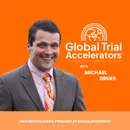
In this episode, we welcome Dr. Michael Drues, President of Vascular Sciences, a consulting, education, and training company specializing in medical devices, pharmaceuticals, and biotechnology.
Dr. Drues holds a Ph.D. in Biomedical Engineering from Iowa State University and has extensive experience supporting organizations ranging from startups to Fortune 100 companies. His expertise includes medical device development, FDA regulatory strategy, clinical trial design, combination products, and healthcare technology commercialization.
Throughout his career, he has collaborated with leading regulatory agencies and organizations, including the FDA, Health Canada, the U.S. and European Patent Offices, and CMS. He is also an internationally recognized speaker and Adjunct Professor, teaching graduate-level courses in regulatory affairs, biomedical engineering, biotechnology, and medical technology.
Join us as we highlight Dr. Drues' expertise in medical innovation, regulatory science, and the challenges of bringing new healthcare technologies to market.
Jesus Moreno: Welcome back to Global Trials Accelerators, the podcast where we dismantle the barriers to clinical innovation and explore the strategies driving the next generation of life-saving therapies. Here is a fact that catches almost everyone outside med tech by surprise. Unlike pharmaceuticals, where every new drug must undergo a rigorous human trial, the vast majority of medical devices on the market today never goes through a clinical trial at all.
The fundamental difference reshapes how device sponsors must think about evidence, risk, and regulatory strategy. And when you step into the world of combinational products where a device, drug, or biologic are merged into one single therapeutic system, the regulatory and clinical rules become [00:01:00] infinitely more complex.
Our guest today has spent more than three decades helping companies navigate that exact complexity. Tho-Dr. Michael Drewes is the president of Vascular Science, an independent regulatory and quality consultancy working across medical devices, pharmaceuticals, biotechnology companies ranging from agile startups to Fortune 100 leaders. Dr. Drewes works regularly as a consultant with the FDA, Health Canada, the US and Europe Patent Office, and CMS. He teaches graduate-level courses in regulatory affairs and combinational products and reaches thousands of industry executives each month through his Guerrilla Regulatory Strategy column and regular industry commentary.
Michael, welcome to Global Trials Accelerators. It is a pleasure to have you with us today.
MIchael Drues: Thank you, Jesus. It's a pleasure for [00:02:00] me to be here and, uh, to talking about these important topics with you and your audience
Jesus Moreno: Yes, sir. And it's a pleasure to have you to explore this, this counterintuitive reality. Uh, most medical devices never see a clinical trial before reaching the market. When a founder or a clinical lead is, uh, developing a new Class two, Class three device, how do you determine whether a clinical trial is actually necessary or if a benchtop test animal model or even predictive comparison are enough to satisfy the regulatory requirements?
MIchael Drues: Great question, Jesus. And, uh, once again, thanks for the opportunity to have this discussion with you and your audience. So obviously, there are a number of important differences between the medical device world versus drugs and biologics, and you just pointed out one of several of them. [00:03:00] Here's an interesting statistic for you, and that is here in the United States, greater than 95% by volume of the medical devices that we use today in 2026, greater than 95% of them have never been tested in a clinical trial.
As you mentioned, in the drug world, that would be unheard of to bring a drug onto the market without any clinical data. But in the medical device world, uh, it happens all the time. Now, although that stat-statistic, uh, that I shared with you is factually correct, there is, uh, there are one or two caveats I have to put after it.
Uh, and that is, uh, there are a number of reasons why a company may do a clinical trial. FDA or regulatory is only one of them. So don't assume, and I see people make this mistake all the time, don't assume that just because one of your competitors for-- did a clinical trial, they did it for [00:04:00] regulatory or FDA purposes.
They may have done it for reimbursement or health economic purposes. They may have done it for, um, physician, uh, adoption purposes. There's a whole bunch of, of reasons why that have not- nothing necessarily to do with the FDA. And further, and I see people make this mistake all the time as well, uh, don't assume that just because your competitor who might have a similar device as you, even if it's a 510substantially equivalent device, don't assume if they did a clinical trial, then you must do a clinical trial.
Uh, that is often the case, but it's not always the case. As I often like to say, Jesus, uh, average regulatory professionals know the rules. The best ones know the exceptions, and there are a ton of exceptions. Um, before I continue on, any comments on any of what I just [00:05:00] said?
Jesus Moreno: No, doctor, I think that's, that's a wonderful place to start, uh, drawing that, that line, that distinction between what a dr-drug trial looks like and what a device, uh, trial looks like. And, and what are some of those, um, critical differences that a, a drug-trained executive might overlook coming from, from that world of, uh, pharmaceutical?
Um, and maybe we can talk ab-about sample size, uh, or double blind or some, some of the technical aspects of, of how do you design the trial when you're dealing with a medical device.
MIchael Drues: I'm happy to address all of those points, Jesus, but, uh, let me, uh, uh, get to those in just a moment. I just want to share a couple more pieces of advice, uh, with regard to your first question. , Another of the, uh, very, very significant differences between medical devices versus [00:06:00] drugs, perhaps from a regulatory perspective, the single most significant difference is where we set the bar in terms of safety and efficacy.
In other words, in the drug world, as probably many of your audience knows, we require substantial evidence of safety and efficacy, whereas in the medical device world, we require reasonable evidence of safety and efficacy. Now, if you-- I don't mean you personally, but if, if people think that, uh, the only difference between substantial versus reasonable is semantics, they really do not understand the world in which we live, quite frankly.
So the example that I like to use is, um, uh, if you remember several years ago when O.J. Simpson got in trouble the first time, I don't r- I don't mean the subsequent times after that. Uh, why was O.J. Simpson found guilty of the charges in the civil court, whereas not guilty of [00:07:00] exactly the same charges in the criminal court?
And the reason is, in criminal law, we set the bar higher. We need, we, uh, need to have substantial evidence of guilt or innocence. Whereas in the civil court, we need only reasonable, uh, uh, evidence of guilt or innocence. Um, so that is probably the biggest difference, and you mentioned combination products.
We'll, pardon me, we'll get into this more in a moment. But that's particularly challenging when it comes to combination products, because if you have a combination product that involves a drug and a biologic, no device component, for example, a monoclonal antibody hooked onto a chemotherapeutic. From a regulatory perspective, that's literally a no-brainer because on both sides of the equation, we require substantial evidence.
But for a combination product that involves a device, a drug-eluting stent, for example, on the device side, we [00:08:00] require, uh, reasonable evidence, whereas on the drug side, we, we require substantial evidence. So where is the balance? Where is, you know, where do we, um, uh, um, establish the pivot point, the fulcrum?
That's up to us, as we'll, we'll talk about before, uh, or, or later, rather. Um, okay. Now fast-forward to your, the second part of your question in terms of, uh, power, uh, sample size, and so on. So relatively speaking, clinical trials for medical devices, uh, uh, involve far fewer number of patients than a clinical trial of drugs.
Uh, in the drug world, as you know, it's not uncommon to have hundreds, thousands, sometimes even tens of thousands of patients in a clinical trial. Whereas in the medical device world, that is literally unheard of Um, most medical device clinical trials, and remember, we're [00:09:00] only talking about a very, very small fraction of the medical device world to begin with, uh, that in- that involves clinical trials.
But the ones that do, we're talking about literally a handful of patients, maybe a few, maybe a dozen, maybe a couple of dozen. In rare circumstances, it might be a couple of hundred, but those are unusual circumstances. Um, in terms of, uh, sham medical devices or in pharmaceuticals, what we call placebos, these are possible, but it's not a common strategy.
My favorite example, for exa- for, uh, for instance, is to implant a pacemaker into a patient that's either turned off or the pacemaker does not contain a battery. Believe it or not, Jesus, although there are ethical, you know, challenges with that, those kinds of trials can be done in the medical device world.
However, the more common scenario is to use [00:10:00] an alternative design, which again, this is a big difference between the drug world. We typically do not do this in drugs. In medical devices, and I'm gonna go back a couple of, uh, uh, decades, uh, when, uh, when, um, uh, coronary angioplasty first started becoming common, people wanted to know, uh, you know, how good, how safe, how effective it was.
Well, it would be pretty hard to do a placebo using a, a, a, an angioplasty catheter. So instead, we do a-- we use an alternative design. We compare it to something else. In this case, we compare it to, uh, a CABG, a coronary artery bypass graft, or a cardio bypass, uh, surgery, a co- coronary artery bypass surgery.
So basically, the idea is you design your inclusion and exclusion criteria such that a patient that, that meets all of these cri- criteria, they would be a candidate either for bypass or for [00:11:00] angioplasty, either one, and then you literally flip a coin, and some number of the patients get a bypass, and some number of them get an angioplasty, and then you compare the results.
So even though there are differences, uh, between medical devices versus drugs, and we're only highlighting just a, a, a few of them thus far, those are all solvable problems. Um, but the first thing that has to happen is we have to think, and we have to think differently. Does that make sense?
Jesus Moreno: Absolutely, Doctor. It, it really does, uh, tie a lot of different, um, shall we say, myths that might exist around the differences between the two types of trials. But from your perspective, from your experience, what would you say is the single biggest operational or strategic mistake a drug trial executive or a traditional, uh, trained drug trial [00:12:00] executive makes when they take the wheel of a medical device clinical program?
MIchael Drues: Well, let me, let me give you two examples, and if they don't address your question, feel free to ask it again. First of all, another mechanistic difference that I should point out to our audience between drug versus device clinical trials. In the drug world, ep- probably everybody knows, we divide the, the drug trial into phases.
Phase one, phase two, phase three, and, and so on. In the medical device world, we don't have anything like that. As a matter of fact, when I do sometimes hear people talk about medical device clinical trials, right away I know they don't know what the hell they're talking about, because in the medical device world, we, we don't do that.
We use a different way, uh, to do it, which I won't get into right here. And once again, referring to combination products, uh, that presents a huge problem as well, because, uh, I'll go back to the, to the drug-eluting stent [00:13:00] example. So we have a drug-eluting stent, a device/drug combination. On the drug side, we have phase one, phase two, phase three.
On the device side, we do not. So how do you design a clinical trial, uh, with two drastically different trial, uh, designs or, or methodologies? One has phases, the other has d- uh, doesn't. By the way, one of the reasons why I'm using the drug-eluting stent as an example is it's probably the best known example of a combination product, number one.
And number two, in the interest of full disclosure, I was the principal architect of the regulatory strategy for the first couple of drug-eluting stents that came onto the market, and there were nobody else's footsteps to follow. Nobody had done this before. So we, meaning myself and the company, had to figure out a way to do this, a way that made sense, and then we had to take it to the FDA and sell it to them.
And the one [00:14:00] last thing that I would point out, Jesus, with regard to the drug-eluting stent, the first drug-eluting stent guidance document that FDA published was not, did not come out until six years after the first drug-eluting stent was approved. Let me say that one more time. The first drug-eluting stent guidance was not published by the FDA until six years after we got the first drug-eluting stent approved.
So when you're working in a new area, in other words, when you're not following in somebody else's footsteps, uh, that could be a challenge. Although I love it personally when I, you know, am in the first to do things as opposed to, you know, all of the me too, you know, products that we have, not just in devices, but in, in drugs as well.
Okay. That's, uh, the one example. The second example, uh, maybe more of an operational, uh, uh, difference is that, uh, [00:15:00] unlike the drug world, the safety and efficacy of many medical device is a very strong function of the skill level of the user. Once again, I'll say that one more time. Unlike the drug world, the safety and efficacy of a medical device is a very strong function, or often is a very strong function of the, uh, skill level of the user.
In other words, simply put, I can take one catheter and put it in one physician's hands and get wonderful results. I can take the same catheter and put it in another physician's hands and get abysmal results. So the safety and efficacy of a device is often a function of the skill level of the user. In the drug world, this doesn't occur.
In other words, I can give you a pill, or somebody else can give you a pill, and you're going to s- respond to that pill or you're not, but it has nothing to do with the skill level that I have, uh, you know, in giving it to you. And so This leads us to a common practice in the medical device industry, which quite frankly I'm embarrassed about, and that is [00:16:00] something I call cherry-picking of the physicians.
In other words, when a company identifies, uh, clinicians to participate in their device clinical trial, they'll typically want to identify the people that have the most hands-on experience with either that type of device or similar devices. And therefore, your results of your clinical trial are quite frankly biased because you're, you're overestimating the, uh, safety and efficacy because you're taking, you know, doctors that have already used similar devices.
So I have advocated, uh, for many, many years, and we still haven't done this in the regulation, um, because the medical device industry is adamantly against it for obvious reasons. But I have advocated that we put into the GCPs, the good clinical practices for devices, because this is not a drug u- issue, Jesus.
This doesn't show up anywhere in the GCPs, that we require a some [00:17:00] number of what I like to call average docs in our clinical trial. Now, obviously, nobody wants to be referred to as an average doc. Somebody can clean up the verbiage on that, but some number of average docs. Industry is a- is against it. Why?
Because they would argue that that would bring the, the efficacy of results of our clinical trials, uh, down. I would, you know, counter by saying yes, that's probably true, but I would also argue that that's gonna make the results of the clinical trial more, more realistic. And now you get into the age-old philosophical question, and that is should any test that you do, whether it's a clinical trial, whether it's a bench top or an animal test, a computational test, what-- should any, uh, test that you do be required to be realistic?
Because let's be honest, Jesus, most of the testing that we do, and this is very, very true in usability testing, most of the testing that we do is just not realistic of the real world. If you'd like, I could go a tiny bit further down the [00:18:00] usability path and share with you an example if you think that that would be of interest.
Jesus Moreno: I think that would be of interest, doctor. Uh, but before we, we go down that, the tangent, I am curious to, to hear from your perspective and you being the first, uh, one of the first ones to , trailblaze that, uh, path for combinational products. Um, s- from, from that ex- initial experience of drug-eluting stent to how the FDA determines the primary mode of action today, uh, what changes have you seen, and why is that so critical to how the designation dictates the rest of your regulatory roadmap?
If you can help us understand a little bit of what the changes have-- what changes have you seen and why the designation of primary mode of action is so critical.
MIchael Drues: Yeah, great question. And [00:19:00] so let, let me, uh, let's peel back the onion a little bit on the concept of primary mode of action or PMOA. Um, this is a very, very controversial concept. Um, but in essence, what it means is you've got a combination product, it might have a device and/or a drug and/or a biologic.
What is the single most important component of that product? So I'll give you just two examples. One, the drug-eluting stent. We argued, and I was one of the key people that made this argument for the first time at the FDA, we argued that the primary mode of action, the most important part of the drug-eluting stent was the stent itself.
That is, it mechanically held open the artery. Uh, and then the secondary, uh, the... Sorry, the drug was the secondary action. In other words, it kind of, uh, uh, helped keep the artery open [00:20:00] over a period of time. Depending on the drug, it would, uh, inhibit, uh, restenosis, inflammation, vascular remodeling, thrombosis, or, you know, a whole bunch of different things.
So we made the argument, and by the way, we made this argument successfully for a whole bunch of reasons, that the PMOA of the drug-eluting stent was device, and then the, uh, drug was the, the secondary, uh, uh, um, uh, most important thing. If that argument went the other way, uh, it, it-- By the way, the reason why PMOA is important is because the PMOA of the product determines who at the FDA is the lead center, who is sitting at the head of the table calling the shots.
Uh, if the, uh, PMOA for the drug-eluting stent is device, that means that CDRH is sitting at the head of the table calling the shots. CDER is still there, but they're not in tro- but they're not in charge. However, Jesus, if [00:21:00] the argument went the other way, and at the time I was kind of giving the company almost 50/50 odds because I wasn't sure if we were gonna be successful making this argument or not.
If the DES, uh, PMOA was determined to be drug, many people, uh, would say it would take many more years or even decades than it actually did to get the first drug-eluting stent onto the market. So that's one reason, uh, why PMOA is important. Now let's just flip over to another example, a transdermal patch, or for that matter, a prefilled syringe or a, um, bronchio inhaler.
All three of those products are all PMOA equals drug. Why? Because let's just take a prefilled syringe The drug that you're injecting into the depa-- into the patient, that's the thing that ultimately is doing whatever it is that, you know, is supposed to be doing, the therapeutic benefit. [00:22:00] The syringe or the patch or the inhaler is nothing more than the delivery system that we use to get the drug or the biologic into the patient.
So of course, as a PhD in biomedical engineering, I'm not gonna say the delivery system is not important. Of course, it is important. But relatively speaking, the drug or biologic that you're putting into the patient is the more important of the two. Um, now our last comment about, uh, uh, PMOA and its controversy.
We're still-- we are using PMOA here in the United States. However, um, I think you mentioned in the introduction, uh, that I work as a regulatory consultant for Health Canada, including in the area of combination products. Uh, Health Canada is not keen on the concept of primary mode of action. And, uh, they s- they, they asked me to help them because I was not keen on it either, even though I use it all the time here in the US.[00:23:00]
I think it's an antiquated concept. Several years ago, the Office of Combination Products, um, spent, uh, I think a couple of years coming up with a better definition of PMOA, and when it was finally published in the Federal Register, I think it was some 18 pages long. So if you need 18 pages to define anything, maybe that's part of the problem.
You know, Einstein, very smart guy. Einstein said, "If you can't explain something simply, you don't understand it well enough." Um, but the reason why is it's w- that it's controversial is it's one thing to talk about the PMOA of a relatively simple product like a prefilled syringe or a transdermal patch.
It's quite another thing to talk about much, much more complicated combination products like, for example, a tissue engineered organ or, you know, uh, a product that we're using in, uh, biomedical nanotechnology. Both technologies I've been involved with for a long time. Consider this as an example. [00:24:00] What is the primary mode of action of a tissue engineered heart?
The primary mode of action of a tissue engineered heart. Well, it's almost an oxymoron even to ask that question, and yet from a regulatory perspective, uh, it's, uh, it- it- it's the very first question that we're supposed to ask. So when, um, uh, the Office of Combination Products at FDA came up with this new definition, on one hand I said, you know, "Kudos to you for trying to improve this," but on the other hand, shame on you for perpetuating this concept because it's really like rearranging the deck chairs on the Titanic.
No matter what you do, no matter how you arrange the chairs, sooner or later, the, the, the, the ship is going down, right? Now, to FDA's, um, defense, it's not really FDA that is at fault here, is it? It's Congress that's at fault here. They need to change the emphasis on [00:25:00] PMOA. Well, as everybody knows, with, you know, all the craziness going on in Washington, uh, I don't think that-- I don't see that happening anytime soon.
So the unfortunate reality is because of, um, the inconsistencies, if you will, in the combination product world especially, it's really holding us back. In other words, if there's not a well-established, clear-cut pathway for a company to get through the FDA and onto the market, then most companies are not even gonna try, and that's really unfortunate.
It really is. It, it, it, it, it, it... As a professional biomedical engineer, it makes my blood pressure go, you know, skyrocket when I look at technologies that are not being advanced as, as quickly as I think they could be, or technologies that are not being advanced, uh, at all for non-technological reasons, whether they be regulatory reasons or health economic reasons, or clinical adoption reasons or whatever.
But [00:26:00] unfortunately, Jesus, those things happen more often than some people might like to think.
Jesus Moreno: Doctor, that, that's a great exposition of, of a critical, um, obstacle the, the industry has to overcome. I guess the follow-up to that is what can sponsors do to, uh, position them- themselves in the best, uh, possible way to, uh, not get tangled in, in trying to marry those two simultaneously opposite philosophies, the drug pathway and the, um, let's say device, uh, perspectives?
MIchael Drues: Well, once again, Jesus, great question, and let me illustrate with one of my common practices. Once again, I don't know if this is going to exactly answer your question, so if it doesn't, then feel free to ask a follow-up. So as I started to explain, uh, a few moments ago, most [00:27:00] companies, when there is a ambiguous or nebulous or unknown regulatory pathway, they don't want to be the first to take a new product or a new technology to the FDA for all the obvious reasons.
Me being the contrarian that I am, I love to be the first through the doors at the FDA with something new, something that they have never seen before. Why? Because if I'm working on a me too, and by the way, uh, the vast majority of what we do in this industry in devices and drugs is nothing more than me toos.
It's not necessarily a bad thing, but that's just a, a fact of our industry. If I'm working on a me too, then a- a- and I want to do something, uh, you know, the same or similar to what the people did before me, then that's a no-brainer. I just go into the FDA and I say, "Hey, I'm gonna do the same as what the people did before me."
End of discussion. Don't let the door hit you in the you know what on the way out. But if I want to do something novel, something different, something that has never been done before, [00:28:00] now I can-- it gives me, 'cause I, I look at it as the, uh, glass is half full rather than that glass is half empty. I look at it as an opportunity for me to get the FDA to, to, to think the way I want them to think.
In other words, if I, uh, want to do something different than, uh, what the people did before me, then I have to say to the FDA why what they did is not appropriate or maybe even not possible, and what I want to do is better. Don't get me wrong, I've been successful both ways, but given a choice, I would much prefer to not have the baggage of the people that did before me and start out with a, a blank slate, a blank canvas.
Um, and by the way, one other thing that I'll mention, uh, uh, an a- an advantage of, you know, starting out with a, uh, a blank pathway, a blank canvas, is something I call competitive regulatory strategy. In other words, if you, um, [00:29:00] convince FDA to do-- to bring your product on the market a certain way Or to do some, you know, testing a certain way, and FDA likes that, and they puts that into, uh, a guidance document for future products that are similar to that.
Now, what have you done? Now you've just made it more difficult, maybe not impossible, but more difficult for your competition to follow, follow in your footsteps. And so this is something that I call competitive regulatory strategy. Let's be honest, Jesus, most people look at the regulatory process going through the FDA as nothing more than a set of hoops, of obstacles that I have to jump through in order to get my product onto the market.
But I'm sorry, I do not look at it that way at all. If I need to jump through these hoops to get my product onto the market, so be it. But what can I do in order to position these hoops to make it f- more difficult, again, not impossible, but more difficult for my competitors to follow in my footsteps.
[00:30:00] Competitive regulatory strategy. Very, very powerful, and yet most people, uh, have never heard of or let alone think in those terms. Using your regulatory strategy is a, is a competitive weapon, a tactical weapon against your competition. Something to think about.
Jesus Moreno: Is that related at all to that-- this, uh, term you've coined, guerrilla regulatory strategy?
MIchael Drues: I suppose so. Yeah. I suppose so. Uh, in the interest of full disclosure, uh, as you mentioned in my, in my bio, I do, uh, webinars and podcasts, uh, for a whole bunch of different organs, a whole bunch of different organizations. Um, one of the organizations that I started with, uh, y- uh, many years ago, I think they came up with that phrase, "guerrilla regulatory strategy," but I kinda like it.
Uh, you know, regulatory people, unfortunately, um, and again, I'm stereotyping here, there are obviously exceptions, but in [00:31:00] general, most regulatory folks are some of the most, um, cautious, risk-averse people that you'll ever meet. As a matter of fact, some of them, I'm amazed that they even get out of bed in the morning.
It doesn't have to be that way. You can be aggressive, even when it comes to the FDA. You can be aggressive. Obviously, as my wife says, you need to pick your battles. Some people... Uh, sorry, some battles are worth fighting over, some are not. But regulatory folks don't have to be these passive, little weak, you know, wimps.
Um, they should, you know, express their opinions
Jesus Moreno: And what would be, uh, from a tactical or a practical perspective, how does that guerrilla regulatory strategy play out? Uh, what creative approaches do you usually, uh, apply when, when designing a trial, keeping that in [00:32:00] mind, that, that strategic or philosophical standpoint?
MIchael Drues: Great question. So let me, um, use one of the, uh, concepts that we just talked about earlier on our conference-- uh, conversation to illustrate, and that is PMOA, primary mode of action. So if you're working on a relatively well-established combination product, once again, I'll use drug-eluting stent. Because the drug-eluting stent has already been, uh, the PMOA has already been established to be device, then chances are any new drug-eluting stent is probably also going to be a device, and the likelihood of that changing is not gonna be very high, although there are situations where it can and will change.
But for the most part, it's not gonna change. On the other hand, a pre-filled syringe, as we talked about there, uh, PMOA is drug, and the likelihood of that changing is not very significant. However, let's say that you're working on a drug-eluting stent or a, um, [00:33:00] uh, a pre-filled syringe, or indeed some totally different kind of combination product that FDA has never seen before, and as a result, the PMOA is not been established.
Everything else being equal, it is a very significant advantage to try to influence the p-- the FDA, specifically the Office of Combination Products, to get your product regulated with the . PMOA of device. Why? Because without getting into a lot of deal-- uh, detail, CDRH is much easier, not easy, but much easier to deal with than CDER.
One of the surgeons that I like to work with, when he refers to FDA, especially CDER, he likes to say, "Why be difficult when with just a little bit more effort you can be impossible?" And so, you know, again, I don't want to imply that CDRH is easy, but relatively speaking, they are much easier, certainly less burdensome than CDER.
So try to get the, um, [00:34:00] PMOA established, uh, as a, um, as a device if you can. And let me finally, uh, take that one step further Even if your combination product does not contain an obvious drug-- a device component, let's say it's a, uh, drug biologic combo product, like for example, a monoclonal antibody tied to a the- chemotherapeutic, still try to argue that this is PMOA of device.
Even though there's not an obvious device component, still try. Why do I say that, Jesus? Because if you, uh, if you lose that argument, and probably you'll lose that argument, but if you lose that argument, what have you lost? Nothing. But if you happen to win, you have accomplished a huge goal, a huge, um, goal, and that is to get CDRH as the lead center calling the shots.
And I can tell you, um, because I was one-- the person that did [00:35:00] this, we took a drug biologic combination product, and we successfully argued at FDA that the primary mode of action was device. Let me say that one more time. We took a drug biologic combination product where there was no obvious medical device component whatsoever, and we argued that successfully that the PMOA was device.
Obviously, uh, a lot of people both outside the FDA as well as inside the FDA laughed at us when we tried to make that argument, but at the end of the day, we were successful
Jesus Moreno: I'm intrigued. Uh, what type of device w- was that?
MIchael Drues: Well, it didn't have a device component, but we had to-- I have to be a little careful what I say here because this is obviously a proprietary regulatory strategy. But we had, we, we essentially argued that the, um... [00:36:00] People are familiar with, with, um, uh, uh, uh, ADCs, uh, antibody, uh, uh, what is it? Antibody, um, uh, drug...
Sorry. Uh, yeah, antibody drug con-
Jesus Moreno: coating implants
MIchael Drues: No, no. Antibody, uh, drug conjugates. It's basically, it's a combination of a, of a, of an a-antibody, a biologic with a drug. So basically, we had to argue that the antibody was essentially a syringe because it targeted the therapy. Uh, and we did actually the same thing, uh, not just with a, with a drug, we did it with a biologic, we did it with a, uh, with a gene, uh, as well.
But we had to make the metaphorical argument that the antibody was, uh, was offen- was ostensibly acting as a, as a, as a prefilled syringe. Um, and again, because this was, was and still is extremely uncommon, and as a result led to a very, very significant [00:37:00] advantage to the company, um, I have to be a little careful, you know, what else I say about it
Jesus Moreno: well, I was, I was curious to, to learn a little bit more about how you achieved or how did you successfully argued before the FDA that a device that was combinational in nature, but primarily, uh, pharmaceutical was accepted or was, uh, deemed, uh,
DOA
POA, the medical device because of the arguments you presented even, even though they were, you know, uh, controversial initially?
MIchael Drues: Well, just to be clear, if you're referring to the last example, uh, of the drug, uh, biologic combination. So that was it. There was a portion of the product that was a drug. There was a portion of a product, the product that was a biologic. There was no medical device in there in any way, shape, or form. [00:38:00] Uh, but in essence, the way we did it, and again, I'm hesitant to share in great detail, but in general, we made sort of the metaphorical, almost anecdotal argument that the targeted nature of the sur-- of the antibody was effectively functioning like a syringe.
And a syringe, obviously, is a medical device. And so that is, you know, the essence. Of course, you know, there was a million details that went in to support that argument, but that was the essence of the argument. Um, but I'll be honest with you, uh, Jesus, most companies, uh, don't want to take that risk for one of a couple of reasons.
Uh, one is, uh, it's i-i-if you, if you're not successful, now you've just wasted a bunch of time and money pursuing a path that's taken you in the wrong direction. And the other reason is, um, [00:39:00] at the end of the day, it might be faster and safer and cheaper to take the conventional path. That is, do what everybody else has done, even though in some cases it might not make sense.
So bottom line, Jesus, my most important job as a regulatory consultant is to make sure that the company knows all of their different options and the advantages and disadvantages to each. Uh, in other words, we can do option one, and here are the advantages and disadvantages, option two, and here are the advantages and disadvantages, option three, and so on and so on.
And then we as a company decide which option is best for that particular situation. Uh, and I guarantee, Jesus, that in one set of circumstances, one company might choose one option, whereas in another set of circ-- sorry, in an, uh, whereas, uh, in [00:40:00] exactly the same circumstances, another company might choose a completely different option.
A lot of people think that the world of regulatory affairs is black and white, true or false, you know, right or wrong. I don't see it that way at all. I see an infinite number of shades of gray, and it's within those shades of gray that gives me the opportunity to do what I think is necessary. And one other, um, point I want to make, uh, Jesus, and I think this is an important point.
I don't want our mis-- uh, our audience to, uh, to, to, uh, misunderstand my, my message here. I am not advocating taking shortcuts. I am not advocating not doing certain things like, like clinical testing, uh, and, and, and so on. I'm simply advocating what do-- what makes sense, what makes sense. And unfortunately, you know, in my 30-plus years of working in this industry, I see a [00:41:00] lot of people, uh, that do, uh, at least to me as a professional biomedical engineer, things that make absolutely no sense.
But they do it anyway.
Jesus Moreno: Part of human nature, I suppose
MIchael Drues: I suppose I suppose so. Maybe that's part of the problem, Jesus. Maybe we need to get human beings out of the loop, like with artificial intelligence.
Jesus Moreno: And, and that's certainly coming. That's certainly coming Uh, doctor, and I wanna ask you a, a follow-up question or, or a f-
um, let's say the hypothetical next step in this, in this, uh, guerrilla strategy for, uh, regulatory affairs. So let's say you, you've successfully argued that the PMOA is, is the vice. The next step would be, um, early feasibility and first-in-human trials.[00:42:00]
Uh, but there's, there's a pivotal or, or crucial thing to sort or navigate around at this stage, and it-- and that is how can a clinical team structure, uh, the data gathering in such a way that it maximizes clinical insight without overcommitting to a rigorous endpoint that could be-- that could backfire during a pivotal trial further down the line?
MIchael Drues: down the line?
Yeah. Uh, y- yet again, Jesus, great question. You're asking some really, really good questions. To quote one of the characters from the Bugs Bunny cartoon, Elmer Fudd: "Be very, very careful. Be very, very careful." And once again, not to beat a dead horse, but I'll use the drug-eluting stent as an example. When we brought the first drug-eluting stent, actually the first couple drug-eluting stents through the FDA and onto the market, I was able to successfully [00:43:00] argue that, uh, that the PMOA was device, not drug.
One of the risk mitigations that we used to make that argument successful was that the first several generations, and even still to this day, of drug-eluting stents are using either existing drugs or, or derivatives of existing drugs. We were not using a new drug, a new molecular entity. Believe me, I really wanted to use a new me- molecular entity.
We had at that time, this was probably about maybe 20 years ago now, we had at that time some pretty good-looking candidates that would've potentially been better than, uh, paclitaxel and sirolimus and the other kinds of drugs that we, uh, had been using then. Uh, but the company felt the risk of PMOA going in the opposite direction of drug was too great with an NME, and therefore [00:44:00] they decided to use a, a, uh, an existing drug.
Well, we could have argued, and once again, that, um, uh, I gave this as an option to the company. We could have argued that the stent is well-established technology. The drug that we're putting on the stent is well-established technology. Therefore, when we combine them, there's really nothing new here, and therefore no clinical trial is necessary.
In other words, theoretically speaking, we could have gotten a drug-eluting stent, the first couple, onto the market with no clinical data. Now, it was not a strategy that I advocated to the company, although I did give them the option, and here's why. Because even though my friends at CDRH would probably have no problem with no clinical trial, because remember, CDRH is the universe where clinical trials are the exception rather than the world-- [00:45:00] the, the rule.
The reality is, I don't think there was a snowball's chance here in Southern California that CDER was going to allow the drug-eluting stent onto the market without any clinical data. Even though they were not the lead center, they were not calling the shots, I was concerned that they would be able to raise enough noise, so to speak.
Uh, and so I said, "Okay, let's throw the FDA a bone. Let's do a very, very limited clinical trial." And when I say limited, I'm talking about we're very, very sec-- um, careful about our endpoints. For example, I don't want any long-term endpoints on safety and efficacy. Ideally, I want the endpoints to be able to be measured in hours or days or maybe at most a couple of weeks or a month.
I don't want to get sucked into six-month or 12-month or three-year endpoints, not because I'm trying to take a shortcut, but because if FDA has concerns [00:46:00] about the stent or the drug working over that period of time, we already have a ton of that data from the individual products, from the monotherapies, right?
So again, I'm not advocating taking shortcuts. I'm simply saying, let's do what makes sense. If it makes sense to do a clinical trial, let's do one. If we don't, if, if we're not going to gain any new information by doing a clinical trial, then why are we wasting our time and money doing it? When I see a company, and I was talking to one of my customers just the other day about this, they are-- uh, we're getting ready to do a pre-sub with the FDA, and one of the things that they're pitching is a clinical trial.
And I didn't say that you needed to do a clinical trial or you didn't, but I said, hypothetically speaking If you didn't do a clinical trial, what data, what information would you be missing that you couldn't already collect or have from your benchtop, you know, animal whatever? They basically said nothing.
[00:47:00] So if I... So I said, "Well, if you're not gonna gain in- information, then why the heck spend the time and the money doing the clinical trial?" I don't care if FDA says, "Do a clinical trial." There's gotta be a reason for it. You know, ask FDA, "Okay, we will agree to discuss with you the possibility of doing a clinical trial."
And again, please notice I'm parsing my words here very, very carefully, Jesus. I'm not just saying to the FDA that we will do a clinical trial. I'm saying we're happy to discuss it with you. However, before we begin that discussion, just so that we're all on the same page, can you please explain to me in some detail what information that you expect to gain from the clinical trial that we don't already have from some other source?
And if they come up with a reason, you know, some information, then shame on me because I'm not doing my job. But if they come back and say, "Well, [00:48:00] we're the FDA, we can ask you to do anything that we want," uh, which I've seen them do, by the way, uh, I say, "I'm sorry, that doesn't cut it with me." There's gotta be a reason for what they-- we do.
And just because something is written in the CFR or a guidance, or just because, you know, FDA says that you have to do something, uh, in my opinion, that's not a good justification for doing it. Alternatively, not doing it as well. There are many situations where I will recommend that the company do certain testing that FDA does not require, that their competitors have not done.
Why? Because I believe, as a professional biomedical engineer, it's the right thing to do. And once again, Jesus, I'll give you a quick example. One thing that we didn't mention in my bio, uh, at the beginning is in addition to my regulatory and quality and, uh, uh, biomedical engineering consulting, I also spend a significant part of my time working as an expert witness [00:49:00] in medical device and combination product, product liability cases.
And one of the things that I like about working with my attorney friends is they don't limit me to what FDA may or may not have required. In other words, they wanna know from me, Mike Drews, as a professional biomedical engineer, did the company do what they should have done? Regardless of whether it was required by the FDA or not, did the company do, uh, what they should have done?
One other, uh, uh, thing that I would add, uh, Jesus, is when a company gets a 510or a De Novo or a PMA or an NDA or a BLA, when a company gets, uh, ISO certified or a CE mark or whatever it is, that is the academic equivalent of being a C student. That is in the academic equivalent of being a C student. That just means that you're passing.
It doesn't mean that you're, uh, necessarily making a safe and effective product. It [00:50:00] certainly does not mean necessarily that you're making a good product. How many products have come onto the market in the past that have met the regulatory requirements at the time, that have gone on to cause harm, and in some cases even kill lots of people?
So getting, you know, clearance or approval or whatever f- you, you're talking about, uh, you know, with the FDA, that's the academic equivalent of being a C student. How many people in our industry, Jesus, how many people do you think look at it that way?
Jesus Moreno: Not, not many I would, I would think. Not many
MIchael Drues: I, I would agree with you, not many. You know, one, one last thing that I'll, I'll-- story I'll tell is I have a-- probably one of the most common questions that I get from companies, uh, they'll come to me and they'll say, "Mike, you work with lots of different companies. You also work as a consultant for the FDA.
If we came to the FDA with our new widget, with our new product, with our new whatever it is, what do you think that FDA would want to see in [00:51:00] terms of bench-top animal clinical testing, yada, yada, yada?" And I say to them, "Look, I understand why you're asking me that question, and I understand that that's a very important question to you, but let's, let's look at this question from a totally different perspective.
Let's pretend for a moment that the FDA does not exist. Let's just take FDA completely out of the equation. Sooner or later, a family member, a friend, maybe yourself, maybe in my case, my, uh, 10-year-old grandson might be on the receiving end of my medical device or combo product or drug. When that day occurs, what would I want to see, Mike?
What would you want to see, Jesus, in terms of, uh, bench-top animal clinical testing, uh, in order to convince yourself that this product is okay to use in your spouse, in yourself, or maybe even in your grandchild? Then and [00:52:00] only then should we have-- go to the FDA and have a conversation about doing what makes sense."
And that is generally my approach, Jesus, but unfortunately, as you might guess, it's not a very common approach. It's the ultimate, you know, would you swallow the pill yourself test.
Jesus Moreno: Mm-hmm. And that makes total sense. It's very-- It's a very practical and experiential test, uh, that I think should, uh, orient the way we, we think about proving efficacy and safety, not only medical devices, but healthcare in general
MIchael Drues: general. Yep. And you know what? Just, just, just, um, going back to my product liability example. So if I s- if a c- if a, if a product causes harm to a, to a patient and the company gets sued, and undoubtedly they will get sued, no question about it, uh, and the [00:53:00] opposing coun- and, and I say, "Well, the company have sh- uh, should have done this particular test, and they didn't.
I saw no evidence of them doing that." And opposing counsel asks me, "Dr. Drewes, was that test required by the FDA?" And I said, "No." And opposing counsel follows up and says, "Well, why should they do the test if it's not required by the FDA?" And I say, "Very simple, because the company should be a, uh, expert on their product, not the FDA.
The company should know, uh, and understand their product infinitely better than the FDA. And if the, uh, the company doesn't know that they should have done this test even though it was not required by the FDA, then I'm sorry, the company and the people in it should not be in this business." And usually that causes the judge or the jury to, uh, to, to, to perk up, and now you start hearing ka-ching, ka-ching, ka-ching.
Jesus Moreno: Interesting. Dr. Mike, uh, in [00:54:00] wrapping, if you were sitting down today with a med tech CEO or VP of clinical affairs planning a device or combination product trial for 2027, what are the two or three non-negotiable rules they must follow to avoid costly regulatory delays further down the line?
MIchael Drues: Great way to, to end our discussion, Jesus.
Thank you. By the way, I found it interesting you used the phrase non-negotiable rules, because in my world, everything is negotiable. But anyway, uh, before I give you those, those couple of points, just one last thing that I wanted to quickly share, um, and this is not something that I'm particularly proud of about our industry, but we have to acknowledge not just what we do well, but what we don't do well.
Just last month, as of this recording, in September of 2026, we talked a lot about clinical trials, uh, in our discussion, um, uh, not so much about post-market [00:55:00] clinical trials, but about clinical trials in general. Just last month, in 2026, FDA, uh, p- uh, uh, announced a study where, uh, hundreds of cases, some almost 600 FDA-mandated post-market studies of 350 medical device and drugs were either overdue or simply not done or not completed.
In other words, these were studies that were, quote-unquote, "required" by the FDA. The company agreed to do them, and for whatever reasons, they, they didn't finish them, or in some cases, they didn't start them at all. Kind of begs the question, you know, what does required mean? You know, if we have these companies that are not doing these things, uh, that's a problem.
So I happened to do a webinar recently on, uh, management responsibility. At the end [00:56:00] of the day, I think the senior management of those companies should be held, uh, responsible to not do something that is quote-unquote, "required," unless, you know, admittedly there's justification for it, and in some cases there might be, but not in the vast majority.
So I just wanted to throw that statistic out there, Jesus, because it's not something that everybody is aware of. And like I said, you know, I'm very happy to talk about the things that we do well industry, industry. I'm very, very proud of the, in general, the products that we've developed and the number of people that we've helped.
But to be so naive is to think that we haven't run into problems along the way and we've done everything perfect. Um, I'm sorry, I just did, I did not fall off the turnip truck yesterday. And I believe the solution to most com- problems is more communication, not less. So back to your original question, I would leave our audience with just a couple of thoughts.
First of all, just because you, uh, people did things a certain [00:57:00] way in the past, like clinical trial design and so on and so on, doesn't necessarily mean we should continue to do them today, or doesn't necessarily mean that you should do them that way If it makes sense to do what the people did before you, then terrific, no problem.
And I'll go in there and I'll say to the FDA, "We're doing nothing more than what the folks did before me." End of discussion. Don't let the door hit you in the you-know-what on the way out. But if I want to do something different because I think it's better or more appropriate or wherever, now it's my job to go to the FDA and to sell that to them.
And you basically say, "I under- I understand that in the past most people did it this way. In this-- in our particular case, it's not appropriate or maybe it's not possible for us to do it that way, and here's, uh, the way that we're, we're gonna do it instead." Uh, if, um, uh, it, it... A lot of people, especially in the [00:58:00] Are you back?
Okay. Yeah, let me just- Yeah, yeah. Let-- okay, good. Let me just finish up with my, my last thought. Hopefully, you'll be able to break the, the previous section at a, at a, at a good point. Um, should I just make my last point and then we can wrap this up?
Jesus Moreno: Yes, sir. That sounds good
MIchael Drues: Yes, sir. That sounds good. Okay. The last piece of advice, whether you wanna [00:59:00] call it a, a non-negotiating, uh- Mm-hmm Item or not, I'll leave that up to the audience to decide. The last piece of advice is communicate with the FDA, and don't be afraid to communicate with the FDA. In the drug world, we have a lot of check-in points where companies are required to communicate with the FDA, but in the medical device world, we really don't.
As a matter of fact, um, pre-IND meetings are required in the drug world, usually several meetings, but pre-submission meetings in the medical device world are not. The only time a meeting with the FDA is required in the device world is if you need to submit what's called an investigational device exemption or IDE.
But that is only for the small number of devices that, uh, that need a clinical trial. Remember, as we talked about at the beginning of this conversation, Jesus, the vast majority of devices do not require clinical [01:00:00] data, therefore they are what we call IDE exempt. And any medical device company can bring a medical device, uh, to the FDA with no prior communication whatsoever.
In other words, their submission, their 510, their De Novo, whatever it is, their submission is their first and only dec- uh, um, um, submission. In my opinion, that's usually not a good approach. I'll share with you one quick statistic. Uh, I said, uh, 95% by volume of devices that we use in the US are not tested in a clinical trial because the vast majority of them are 510s.
Well, here's an interesting statistic for you. About 70% of 510s are rejected first time out of the box. About 70%. And in the PMA world, it's even worse. In the PMA world, about 85% of PMAs are rejected first time out of the box. They result in [01:01:00] what we call major deficiency letters. I think those statistics are embarrassing as an industry, to be honest.
I mean, we have devolved, not evolved, but devolved to the point where we're essentially treating the FDA as our elementary school teacher. "Here's my homework assignment. Will you please mark it up and grade it and give it back to me?" And I'm sorry, Jesus, but in my opinion anyway, that is not the way this game is supposed to be played.
And when I started in this business 30 years ago, that was not the way that this game was played. We didn't have this, you make a submission, FDA comes back with an additional information request, and back and forth, and back and forth. It's nonsense. It's a total ridic- ridiculous. You know, I set the bar very high.
I look at it this way. If I get one question back from the FDA, I, uh, uh, upon a submission, I view that as a failure. 100% failure. I work really hard [01:02:00] by communicating with the FDA in advance. I work really hard to get all of the questions answered in advance of the submission. That way, uh, once we make the submission, assuming that the data shows what we, what we're hoping that it shows, now it's just, it makes it through the FDA system and everybody, uh, signs their John Hancock and we're done.
But this nonsense of back and forth and back and forth, it's nuts. So I'm a huge advocate of communicating early and communicating often with the FDA. I will communicate with the FDA a heck of a lot more, uh, frequently than any regulation or guidance will ever re- uh, require me to do. But, and this is my last point, Jesus, there is a caveat, and this is one of my most famous or perhaps infamous, uh, um, uh, taglines.
Uh, and that is tell don't ask, lead don't follow. Please don't go to the FDA and [01:03:00] ask them a question like, "Do I need to do a clinical trial for my new product? And if so, how big is it gonna be?" What do you think they're gonna say? They're gonna say, "Of course you're gonna do a clinical trial, and we want you to use 100,000 patients."
Right? That's FDA's job. So instead, go to the FDA and say, "Here's my product, here's my device," whatever it is. Uh, "Here is our regulatory strategy, here is our testing matrix, and we are gonna do a clinical trial and here are the reasons why, and this is the clinical trial design." And, oh, uh, sorry. "Or we're not going to do a clinical trial, and here are the reasons why," and, and, and, and so on and so on.
And then FDA is gonna say one of two things. They're gonna say, "Okay, Mike, that sounds great. We look forward to seeing your, your submission, uh, you know, a few months down the road." Or they'll say, "Hold on, Mike, we don't quite see it that way," and that's when the poker game begins. And so, you know, um, uh, if I walk into a meeting with the FDA, if they know something that I don't [01:04:00] know, I'm not doing my job.
I pride myself on knowing at least as much, hopefully more, than the FDA does, because if they know more than I do, I am at a strategic disadvantage, and I don't wanna be in that position. Something to think about. Maybe those are examples of what you referred to earlier, Jesus, as guerrilla regulatory strategy. I
Jesus Moreno: I believe they, they would be yes, sir. And thank you, Dr. Michael, for, for this, uh, conversation. Uh, to me, the takeaway of our, our conversation is clear medical device and combinational product clinical trials cannot be run on autopilot or using a pharmaceutical template. It needs to be a designed, uh, trial that requires understanding the unique mechanisms of the device evidence
establishing proactive regulatory strategies.
Uh, building
MIchael Drues: I could not agree more with-- I
that satisfy [01:05:00] regulatory
regulatory payers
and clinical alike
I could not agree more with you, Jesus. And, uh, I would just, you know, point out that I love your phrase, uh, "run on autopilot." You know, coming from a ba- a medical background, I used to teach, uh, medical school back in the day.
If, God forbid, you needed surgery, would you want your surgeon running on autopilot?
Definitely not
Or maybe with AI.
Jesus Moreno: Still no So, Doctor, thank you for sharing your deep experience and insights with us today.
MIchael Drues: If you have any
Jesus Moreno: if you have any, uh, words in closing, uh, we, we do appreciate your time and sharing with us all this, uh, sensible yet controversial, um, ideas and, and thoughts that you've presented
MIchael Drues: I like that. Sensible [01:06:00] yet controversial. And remember, once upon a time, the vast majority of people thought that the Earth was flat.
And so to even exis- suggest maybe the Earth is not flat, that was considered very controversial
Jesus Moreno: Indeed
MIchael Drues: Okay.
Jesus Moreno: our audience, thank you for tuning in to Global Trials Accelerators
if this episode challenged how you view your clinical trial and regulatory roadmap, share it with a colleague, founder, or regulatory lead. Subscribe wherever you listen to our podcast, and we'll see you next episode. Until next time, keep accelerating