Apple Podcasts

 Spotify

 YouTube
 RSS Feed
Jonathan Rourke, Co-Founder & CEO, MitraSpan
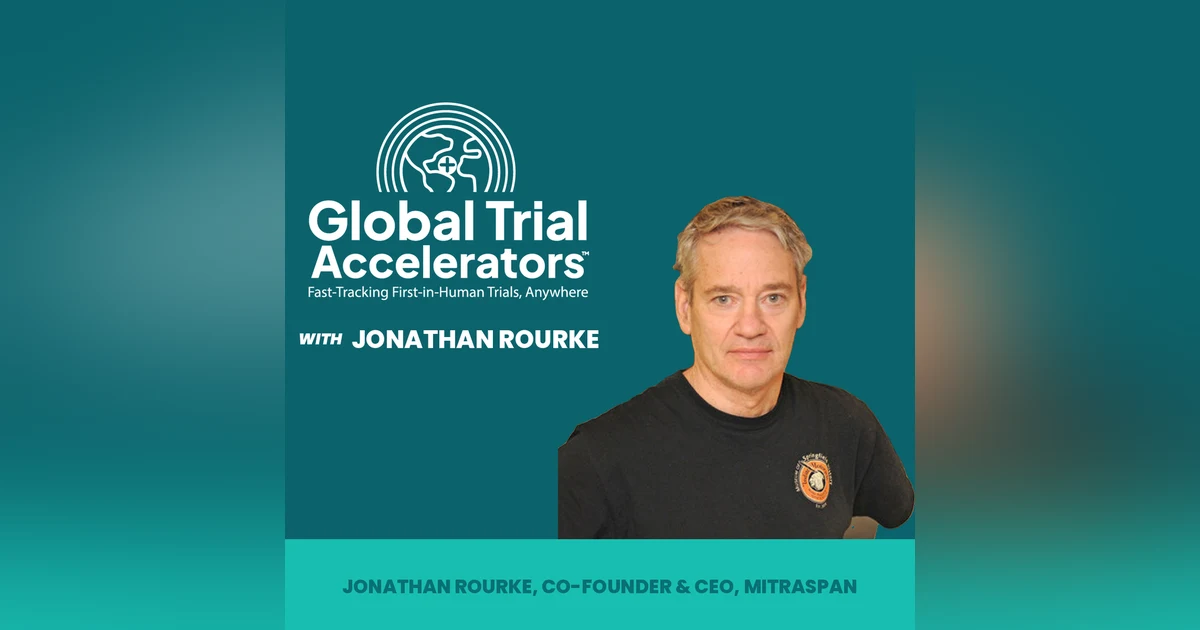
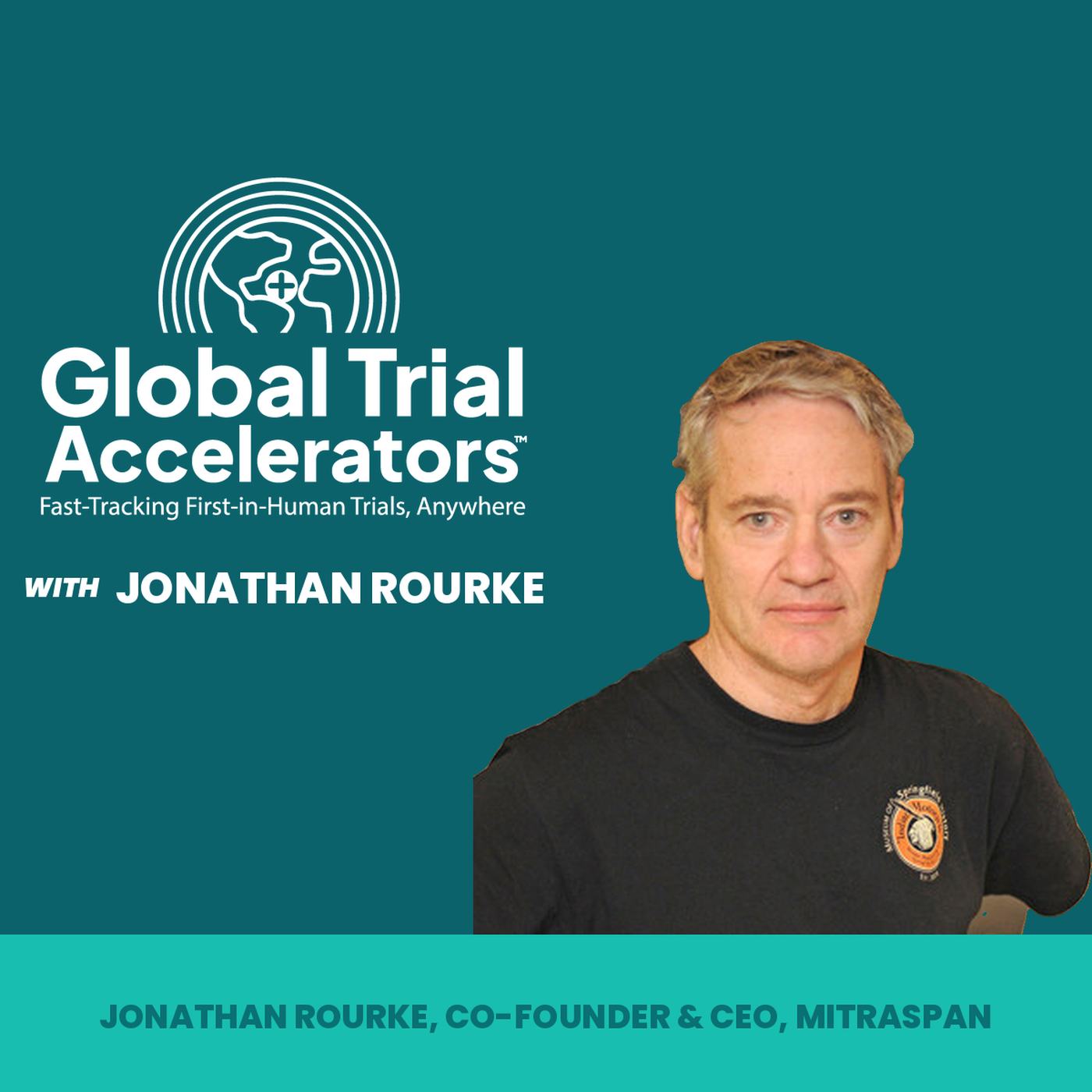
Jonathan (Jon) is co-founder & CEO at MitraSpan —a medical device development company that is exploring minimally invasive mitral valve repair techniques for treating type IIIb functional mitral regurgitation in heart failure patients.
Jon's career in medical devices and cardiology began in 1991 in the ultrasound imaging business at Hewlett-Packard Medical Products (now owned by Philips). He worked on engineering challenges related to manufacturing high-frequency ultrasound transducers for both TTE and TEE devices. In 1995, he led the IVUS catheter program, a joint venture first with Boston Scientific and later Guidant. This business was later spun out to Volcano and then recently acquired back by Philips. In 1999, Jon moved to the venture-backed startup world where he has remained for now 20 years first as VP of R&D at Endotex where he focused on the development of a carotid stent. He led this program through successful feasibility studies and pivotal study launch. Following that and FDA-PMA approval, Endotex was acquired by BSX. In 2001, Jon joined TransMedics as VP of R&D and lead development efforts through the successful completion of the first full venture round. Transmedics recently filed for an IPO and is a pioneering company focused on the normothermic, sanguineous, functional preservation of organs for transplantation.
Since 2002, Jon has led a succession of development and clinical trial efforts in the structural heart and mitral repair fields. First, at Viacor he served as both VP of R&D and CEO; and later at Harpoon, he helped arrange for the spinout of IP and the securement of initial program funding. Now, at MitraSpan he continues to innovate on potential breakthrough structural techniques.
Julio Martínez: Welcome to the LATAM Medtech Leaders Podcast. This is a weekly conversation with medtech leaders who have succeeded in Latin America. Today our guest is Jon Rourke. Hey Jon, It's great to have you on the show today.
Jon Rourke: Thanks, Julio. Good to have you.
Julio Martínez: Excellent. Well listeners, John is the co-founder& CEO at MitraSpan—a medical device development company that is exploring minimally invasive mitral valve repair techniques for treating type IIIb functional mitral regurgitation in heart failure patients. Since 2002, Jon has led a succession of development and clinical trial efforts in the structural heart and mitral repair fields. First, at Viacor he served as both VP of R&D and CEO; and later at Harpoon, he helped arrange for the spinout of IP and the securement of initial program funding. Now, at MitraSpan he continues to innovate on potential breakthrough structural techniques. Jon's academic credentials include B.S. and M.S. degrees in Mechanical and Electrical Engineering from Worcester Tech and MIT respectively. So, John is a truly a privilege to have you here on the show today. You and I work in Colombia a few years ago, like what, five, seven years ago?
Jon Rourke: No, not that many, but yeah, just about five years ago, I first met Pedro in Miami and I thought he was a baseball player. Pedro Martínez is my favorite Red Sox player so when I heard he had moved into cardiology, I...
Julio Martínez: Well, for the listeners, Pedro Martínez-Clark is my brother. He's a Harvard trained interventional cardiologist and he has a medical practice in Miami. And by the time he met Jon, he was a professor at the University of Miami. And uh, that's how we all got involved with clinical research in Latin America. So Jon, let's start the show by asking you a general question about your story and your journey to Latin America. How do you get involved with the region?
Jon Rourke: Well, I started out as an engineer focused on making things and once through a few stops and I ended up working on Uli Packard medical products, which are for those who remember that was a very big and still is a very big player in medical devices for major activity being cardiac ultrasound. And as things happened, I became involved with first with tee probes, which were a huge success in the nineties really changed cardiac surgery. But then I ended up heading up the IVUS Catheter program that you'll attack or IVUS imaging. And at the end of the nineties I think people who know that HP sold their medical business to a succession of companies, they IVUS ended up getting sold to volcano and the whole medical business ended up getting sold to Philips. And at that point in time, I joined a startup that I had met through the IVUS business called Endotechs, which was a carotid stent development program, which included a lot of former IVUS people for strange reasons And in that era, Argentina was one of the real leaders in both cardiac stenting and carotid stenting.
They had a number of the important players, one proti and Hugo lung Darrow. And so I first did clinical work round in 1999 and 2000 in Argentina and then in Chili and carotid stenting. And I found it a magnificent experience, very different from anything I had done up until then. And I really both enjoyed it and saw the, you know, it's a very different approach to medicine than you get, you know, up until that point, my exposure had been strictly major u s research centers where things are done a certain way and it was quite different to be in a South American clinic with run by a world ranked clinician, which was our experience in both Argentina and Chile. And then from there I went through, as you mentioned earlier, I worked for a time on transplantation for a company called Trans medics And then from there got involved in the, what has been the structural now booming structural Hartfield first on a coronary sinus program called viacore.
And then for a time I work with Dr Gammy in Baltimore on Harpoon, which was a coral replacement effort. And then from there we've been working on a spanning method of repairing the Mitral Valve, something originally conceived by among others, Craig Miller at Stanford. I mean that is to tempt to repair the mitral valve by suturing directly across the orifice of the valve, which gives you a tremendous control of anterior posterior dilation. But of course raises complicated anchoring and suturing issues. And so to this day I continue to, uh, plug in the field.
Julio Martínez: Excellent. Jon. Hey, by the way, I met Bill Neeland in Colombia at Harpoon. He traveled to meet a candidate investigator that we found for him a couple of years ago.
Jon Rourke: Yeah. Cause he's onto a new endeavor now, isn't it?
Julio Martínez: Yeah, I know. He called me a few days ago because he has a new technology that he wants to also test in Colombia.
Jon Rourke: Bill came in at Harpoon after, at the time I was working on Harpoon. Harpoon consisted of the very brilliant and passionate Jim Gammy and some very clever idea. And during the period of time I worked with them, we were concerned with how to secure the intellectual property from the university into an independent corporation so that he could raise funding and I worked with them to the point where we had independent external funding and licenses to the patents and a free path ahead. But I had other proposals in the space that I chose to pursue those, but I remain a huge fan of both the clinicians and the a work they're doing. They're very focused. Dr Gammy himself, I think you could argue he's the finest coral replacement clinician in the u s one thing I always noticed is who's held in high esteem in private by other surgeons and I can safely report that he's held in the highest esteem by his peers when they're speaking off the record.
That's something I'm always looking for, not necessarily who has the biggest name on the podium or whatever. There's some people that have achieved gloss without substance.
Julio Martínez: Yeah, that's what I heard as well. All right John, so let's move on to my next question. What's your overall perception of Latin America as a place to conduct first in human clinical research?
Jon Rourke: My experiences focused on three countries and three different devices and I found it enormously a favorable in my mind what for very specific reasons. In other words, I don't think it's all things to all people, but I'm very in favor of it, particularly in the we're particular sweet spot of early feasibility where I think South America is at its very best and it's the situations where you can find alignment. It's a breed of clinician that I think South America uniquely created. And this is where everybody certainly knows about Favaloro and I think it's a kind of clinician they have, not that all clinicians don't have a sense of service, but I see in South America, you walk in the clinic with a pair of us eyes and you realize these clinicians have an unlimited number of patients that are dependent on them in a way that they can't just throw a hissy fit and goes, you know the way you can, when you live in Boston, you don't like doctor a, you go to doctor B, your doctor see your doctor e and when you see a South American clinics serving a much more complex population, it's a more in need population is a big part of what's in the lobby of that hospital.
And think the clinicians have this passion and commitment to service that you just feel in your bones when you're around them. And so the ones that work in that environment and at the same time choose to take a leadership role in pushing new therapies. They're very special people and it's greatly rewarding to work with them. And I think they have a skillset that develops on a different parameters than in some of the more westernized settings. And that's kind of the first thing I think of when I think of a South American clinic.
Julio Martínez: In what specific countries have you being involved in?
Jon Rourke: Argentina, Chile and Colombia.
Julio Martínez: Excellent. All right, so let's get a little deeper into some of the experiences you've had and if you could also provide tips or best practices to listeners, it'd be fantastic, Jon. So let's talk about the selection of a principle investigator. I mean, how do you go about it, and was usually the process that you have for that?
Jon Rourke: Yeah, and I would say it's selection of a principle investigator, word of mouth, reputation. And then than than I have to say to a lesser extent publications, but word of mouth and personal recommendations. You know, certainly that's how in the period of time when I got started in Argentina, the clinicians there were just at the forefront of the thing that particularly stenting and embolic protection, they were real leaders. So I think that, I think this is where I'm speaking back to you. You would know, I think my advice for anybody, you want to talk to people who have actual experience in the country, in the center with the clinicians you're considering so that you can feel out whether this is a good match for what you're trying to do. Because as we know, there's such a wide range of situations. Am I trying on a new vascular closure device, my trying on a new guidewire, my trying out a new stent.
Am I trying out a new val? Each level of the game creates, I've never had the experience. For instance, I'm sure it goes on, but going to South America to enroll people in like a say a closure device study. Well I can't really give you a lot insight there. Things where operative excellence are really not a big factor where you're really just looking for enrollment, data integrity and regulatory process, quality process, that kind of thing. I've always been involved in settings where operative excellence was of paramount importance. So anything I'm saying is speaking only to that realm. When I'm saying early feasibility, I'm talking about early feasibility on things where you're depending upon the operative team to be world-class.
Julio Martínez: Okay. I'm curious why you laugh about publications a little earlier. Why you think,
Jon Rourke: well, I think I've worked with people in South American clinics that I just hold in the highest regard. We certainly among us engineers in the field, there's always the cut to the chase question of would I recommend this clinician for a family member? But what engineers ask each other is, yeah, yeah, if my mother needed the procedure, are we going to this guy? And that's our immutable question. And when you're asking that question, I don't care if he's got 1100 publications, I care. I was the person needs, you're going to come out. And I worked with clinicians in South America that I just haven't seen a big footprint, um, in the literature and yet for early feasibility work, they were spectacular. And I know then and they're very, very highly regarded guys in the clinic. By the way. This is true. I think this true in every country and everywhere, there is a lot of talent out there that doesn't appear.
I mean the journals,
Julio Martínez: I agree with that statement in, I've seen it in Columbia as well. The thing is that the way hospitals or facilities working South America, it's kind of different from the way they work in the US most of facilities, at least in Colombia, they do not have full time stuff. I mean they don't have full time specialists, so especially our subcontractors and they work in three, four or five different facilities at the same time in they are not so much involved with the academic world or the research world per se. I mean there are operating, they are doing procedures and they are very skillful while they do and you cannot really judge how skillful a physician in Latin America is by the number of publications because you're not going to see a high number of public cases because you don't see many innovations coming out of Latin America for economic reasons. And we can name 20 other reasons, but it's a good point that you're bringing up about the publication a matter.
Jon Rourke: I don't know what you would say, but I think a factor is, I'm going back to my first bracing experiences in Argentina. I think a big factor is as those fellows look at their hours of the day, if you look at how they're spending their hours, they is 24 hours in the day versus someone at a major u s research hospital. Those guys in the clinics in South America have a greater, a far greater burden of just patients that have to be seen. And I think that that comes at the expense of a shelf full of publications and research that's done for more either statistical or regulatory endpoints points rather than, it's one thing to be doing early feasibility work and breakthrough work and trying to get new therapies into the clinic for grossly underserved needs and it's quite another thing to be, it's a necessary thing, but to be doing large population based research where you're really trying to tease out the other end of the research, the population level stuff where I'm really trying to determine the broad based indications and guidelines and things like that.
It's something that rich countries get to worry about. It's the nature of progress and you know, the country is rich enough and far enough along they get to worry about these small differences. If you look at the where tabby is now and we're deciding, you know, he'll look at the event rates and the inclusions that were things that are under study and were studying things, it would have an undreamed of 20 years ago in terms of progress.
Julio Martínez: All right Jon. So let's talk about how to select a contract research organization in these countries. I mean, have you been involved with the selection process? Have you worked with the partner, a CRO in these countries?
Jon Rourke: Oh yeah. Every country I've ever worked in, I think this transcends even Latin America, you are always well served to have the right local knowledge on your team and the difference between having the right local knowledge and having substandard local knowledge will become clear to you. You need guidance in these settings. Certainly the experience you and I have had together in Columbia, I just remembered in terms of a, I'll just speak to will, how you are able to help us. Just the logistics of getting devices into the country on every study is different and every device is different and lead times are different and I felt as though we did really well having your guys advising us on getting in and out of the country with the equipment because as you remember we had to, you know, everybody is doing a real study. There's the commercial devices that you're just purchasing and bringing into the country.
Use in your study. Then there's your research devices. Then there's your research equipment. You know there's big suitcases full of stuff and you've got to get it into the country in a timely fashion. That requires expert advice because there's not one answer. There's an answer for the research devices and there's other answers for other things. Particularly when time is critical. You know, you're trying to schedule a research case now what you're going to be ready on a given day to do a case and it's not going to do to have most of what you need there. You need everything there. That's one of the really, for those who haven't done it, it may sound mundane, but it is really not mundane to get the armamentarium required onto the site.
Julio Martínez: Totally. Yeah. One thing that he's particular about, at least in Colombia where my experience in clinical research is it's in fact Jon, that hospitals do not get involved with regulatory approval processes or submissions. They don't get involved with importation paperwork, anything related to the operational or administrative stuff of the study. They just concentrate on recruiting patients and performing the procedures. So it's kind of mandatory to seek local help for the administrative and regulatory importation activities that need to happen alongside the clinical activities.
Jon Rourke: Yeah, absolutely. You're exactly right. I think again, that was a lot of these things. I was back just to my first experience. Certainly I look at starting in Argentina, you realize that within the four walls of the hospital, the major clinicians have a pretty wide ranging free hand. But that's all they do. Their zone is in the hospital and then as you described everything that's outside of the hospital and gets you to the doorway you need outside help on. And I think that's been pretty consistently my experience, the leading, the important principal investigators can usually gain ethics committee approval either from the site or from the regulatory people, but everything else is up to the company and their representatives.
Julio Martínez: Yeah. Okay. So what about your experience with regulatory approvals in these countries at Jon? What's your perception of the submission process? I mean, was it fast for easy? Was it difficult, convoluted? Was there corruption involved? I mean, what's your take on all this?
Jon Rourke: I would call Colombia reasonable and quirky, but you better have some local guidance. You know the words without. I think that your inputs to our team and then we had a good team a knew how to do regulatory submissions in a number of countries. I would say Columbia came in on the more reasonable end of the spectrum, but you know with some head scratchers, head scratchers, but not things where you just throw up your hands in despair. It was more, if you remember on the second and third go rounds. We had a few times where we had to go a few extra months working out small points. It was neither unduly burdensome nor unduly quirky and I don't think of the regulatory process as being a dominant driver for someone considering working in Columbia. I think to me you'd be considering the other factors I described earlier, well what are you testing? What kind of trial do you want to run and therefore do I gain specific advantages and I think the middle tier of difficulty and cardiovascular devices, things where you're going to want a highly skilled investigator but also be able to augment with some US help.
That's a sweet spot for Columbia in the regulatory process. Not something to be terribly worried about.
Julio Martínez: Very good. All right. What about the managing of the study, Jon? What's your experience or what's your perception about the way you interactions with this side with the staff or with your CRO in country?
Jon Rourke: I think you must have a well connected local cro support of the center that is known to the center. I think your first decision criteria is going to be center and investigator driven and then whoever you're working with, you want them to be able to congenially support the center, but expect that the center is not going to have enough research staff on their own to take care of this study and you're for sure going to want a well-qualified cro to come in and help out the center in terms of completing the study execution. You know the kind of studies I've been involved and we do an echo follow up and cath follow up and things like that. Significant follow up. You want to provide the center with support the center as good peoples and the center wants to help from my experience, but if you were to attempt to try to do it based on the center only, you would almost certainly come to grieve, but the center will work well with, you know if you make the investment in providing the proper cro support, you'll do well.
Julio Martínez: Excellent. All right. Jon, what about shipping and importation of investigational medical devices into a country, in Latin America. What's your experience with that?
Jon Rourke: I would say if it wasn't for your guidance, we would have failed in Colombia.
Julio Martínez: Thank you.
Jon Rourke: My feeling with Columbia was if I just looked at the regs because it's a two sided thing, you have to be in line with us expectations and in line with Columbia and expectations and on the US side I think we were fine. We had our ducks in a row, but then on the Colombian side, your guidance was essential, but to me it was just a mixture of planned shipments and as we were calling them, emergency shipments, you know, short horizon shipments and you just want to get in sync with doing it. Things where you have the lead time, get them on site ahead of time and then do emergency in hand carry stuff on an as needed basis.
Julio Martínez: Okay. Make sense. All right. What about the quality of the clinical data that you gather from Colombia or elsewhere in Latin America? What's your perception of the quality of that?
Jon Rourke: I think the data's fine with the caveat I said earlier, you just want to make sure that you combined together by knowing who they are, you to know who your clinical coordinator at the site is and you want to know your cro personally and make sure that those two are hooked up together. They're put together and they understand what they have to execute, but then from there, no problem. Again for the kind of data on the cardiovascular data now I think mostly things like echo data and CT and x-ray and blood test and you know these are well understood things and and well executed and the timeliness and completeness is going to come down to your cro. Getting in touch with the hospital a day in advance. Yeah. Okay, I'm coming over tomorrow. We're following up on patient number. You know patients see four, seven one is going to get followed up on tomorrow. Right. Your range that the patient's going to be there and just the usual hard stuff.
Getting the patient to the hospital and that means sometimes arranging for the transportation of the patient, whatever the case may be and you need people that are on the ball on the details.
Julio Martínez: Okay. Very good. All right, Jon, what about hospital fees or cost savings? What's your overall perception of the savings seeing in a country like Colombia?
Jon Rourke: I'll put my CEO hat on. Colombia is very much in, at least for cardiovascular studies. It's an ever changing test, but Colombia is in right in the middle in the competitive metal. As we know, there are a lot of factors in evaluating the costs of doing a study in a center in a country. And so I can't hair split on the matter, but costs was not a decisive factor, that's for sure. Not even a tertiary factor compared to the other alternatives that I've have experience with.
Julio Martínez: Okay. Good, Jon. I have two items that they like to talk about; one is that something that you and I discussed before we started the episode privately is the fact that it's sponsor can own the lap. That's an expression that I use in our conversation in a country like Colombia. Can you elaborate on the advantages of having a team of physicians and engineers from the US coming to a lab in Colombia facility and a hospital in Colombia and pretty much operate and do whatever needs to be done to get their data that they need?
Jon Rourke: Sure. And, and I should say that that's the experience I started with in Argentina to an even more profound sense than what I saw in Colombia. And I think it's the nearly ideal way to work. First of all, as we contemplate doing the case, you know of what our experience together was and that is, first I met with Pedro and then Pedro and our us clinicians did animal studies together and then I, with my clinical team visited Colombia and we just watched cases in your center and then we stepwise built up a synthetic team of clinicians from multiple centers support people from multiple centers. If you remember the whole exercise thing, we had obviously had special exercise study needs and we were able to set all those things up without dealing with superseding bureaucracy, getting in the way, the way there would be in any other settings either in terms of restricting the formation of the clinical team or restricting the support activities of the study.
You know, I think it's an ideal setting and it goes to the sense of the clinic being clinician driven. The ownership is a fact, but I don't know. So what I associate with classic South American Clinic
Julio Martínez: Okay. Very good. And the other topic I also wanting to talk about, John is the first thing human trial environment in the United States is my understanding that things have gotten a little issue in the u s to conduct first in human trials, but as steel companies are looking at countries like Colombia for their first in human trials. Why do you think is that the, why is it gotten better in the u s easier foster in the u s to conduct trials and why? Obviously with companies looking at other countries for those,
Jon Rourke: yeah, we've kind of walked through it's old long history of it used to be pretty good. And if you go back to the 1960s, the US was the place for first in human work and then, you know, by the late nineties. Okay. Then in the two thousands, it was terrible. Just the FDA was really taking a very restrictive look at first in human studies. But then, you know, cooler heads prevailed since about 2012, 2013. We've had a very, um, constructive approach with the early feasibility studies and breakthrough studies. But still, I think the factors in the US are still considerable hurdle to start in the u s and if you can start six or 12 months sooner in South America, then you would start in the u s I think it's something to contemplate depending on the nature of the study, the nature of the method or device under investigation. I think the other thing we had talked about was the crossover realm of things that are across over device, between a structural interventional device and a surgical device.
I think that's a particular place where South America can play a major role because I think that if you're going to do a study that's only going to last for an interim phase while you do a hybrid procedure, hybrid surgical interventional procedure, that could be just more challenging than it's worth to try to explain that into protocol in the u s um, and it might be just more straightforward to assemble your team in South America and work through that kind of work before you get a little more buttoned down and then do a US study.
Julio Martínez: Okay. Jon, could you please quickly talk about patient recruitment in the US for first in human trials and getting the attention of facilities in the u s or study coordinators in the US as well?
Jon Rourke: Yeah, I think depending on the field now, it can be a challenge. There are barriers that come with trying to explain studies and recruit patients. I'm hard pressed to simplify an answer though. Uh, the most important answer is it's situational specific. Depends on the device. It depends on the operator. It depends on the disease state, the patient's options, but overall recruitment is probably almost always going to be somewhat less challenging in South America. Then it's going to be in the United States as a probably be the most general thing I could say.
Julio Martínez: Okay, that's fair enough. Yeah, and also the fact that in the u s senators are usually busier way B's here and there probably 20 startups running at the same time in a center in South America probably you find and basically get or that is doing procedures or like clinic where yours is the only study that he's running so you're going to have his own devoted attention to your project.
Jon Rourke: Absolutely. That's a very good point. Big Research. Hospitals have a lot of research going on and yeah, I think the a lot of times is just, it's not as though the patients aren't there to be recruited, but rather the in hospital clinical staff have a tremendous burden on them. I think there's a lot more in house ownership of studies at the centers, an expectation that at the major centers, the in hospital people will own the study much more so than you might find in as we were talking earlier in South America, I think there's a more of an opportunity for a fluid assembly of both out of hospital and in hospital people. Whereas in the U s big center studies you have large teams of clinical people dedicated in the hospital, but large numbers of studies competing for their attention and they're not so flexible about dealing with outside staff and Crox.
Julio Martínez: Very good. Excellent point. All right, John, um, before we close the show today, do you have knowledge or have you notified any major trends happening anywhere in the world, dad or relevant to Latin America in light of our discussion today, for example, you MDR, something like that.
Speaker 3: I didn't understand. What was the acronym you just said?
Speaker 2: EUMDR, the medical device regulation.
Jon Rourke: Oh yeah, yeah. Oh absolutely. Before you said that, that's what I was going to say. I think that things are slowing down in Europe for complicated reasons and of course Europe is not Europe. There's still multiple paths there. But yeah, I think that the European situation is moving back closer to what it was two decades ago, which is slower and more challenging and more expensive. And that's an opportunity for South American centers to fill the void. Yeah. I think for whatever reason the Europeans are, I think as part of the whole European Union thing, they're just getting a little more particular about what they allow to happen and how the, how they allow it to happen is more barriers.
Julio Martínez: Yeah. Everything really started because of the pip scandal out of France. The company that was making the breast implants and the European Commission decided to make their regulations a lot stricter. So clinical research is a major, major factor now in all devices. Even products that were not considered devices before the new medical device regulation on their, the directive now are considered, are officially devices. So you have all these 95 bodies BC with work and if you went to get a an inspection, you probably have to wait a year or so to get one. So it's really, really getting challenging in Europe. So it looks like Latin America would benefit from having European companies or u s companies to come and do their first in human trials because also the time before or US startup companies in their commercialization plans. What's your first, right?
Jon Rourke: Yeah, Europe first beginning in the 1990s that wasn't true. But then as you moved into the two thousands boy, Europe really took the lead. Cause also some countries, as you probably remember are Argentina was really leading with a lot of first in human work and then things got more challenging there and things change.
Julio Martínez: Yeah, things change. The only constant is change. I don't know who said it, but it's very accurate.
Jon Rourke: Yeah. The only constant is change. Yeah. I have to say that would be a, if you could do one thing, if you're looking specifically at Columbia, it's a small enough country where if you could get the government people in the hospital, people to take a long view of we're going to establish supportive norms and stick with them so people will know what they're going to get. People that are considering doing a study this year, next year, the year after that, it won't be a surprise every year what they're dealing. That would be a real plus.
Julio Martínez: That's what I'm trying to accomplish. That's my goal every single day. Believe me.
Jon Rourke: I think that for the companies, that's the hardest thing where you're working and then you see these just wherever you are, the changes come along and always right after the changes come in, there's a period of time where everything slows down. While the companies and the notified bodies figure out what the changes mean and figure out how to deal with them and then things usually over time start getting better again, but wouldn't it be better if we could just have a stable way of doing things?
Julio Martínez: Predictability. I think that's a word here. Yeah. Make things simple and predictable. Yeah.
Jon Rourke: Yeah. I long for that day, you know, underneath that having been testing devices now for her word is 24 25 years. I think the underlying ethics and morals of studies haven't changed and the motivations, the motivations of ethical clinicians haven't changed. I realized that we have to be processes have to prevent against the unethical and the illegal, but most people aren't doing unethical and illegal things. They're trying to do the right thing and we want the processes to be fair and transparent and straightforward for people that are trying to do the right thing and develop things that are going to help patients and not just keep moving the goalposts gratuitously.
Julio Martínez: Totally. Yeah. All right, Jon, before we close the show today are, do you have any final thoughts, store listeners? In other words, what will you say to the CEO of small startup company that is looking a destination to do their first human trial?
Jon Rourke: I would say for sure talk to people who've been there. Done that. Either yourself or in other words, that the best thing is if as you're considering these things, if you've done it yourself before, but always be looking to talk to people who've been there and done that and be open minded about their new alternatives. And as you and I both know, I've had very favorable experiences in Columbia and a number of other countries and uh, be open minded about it.
Julio Martínez: Very good, excellent. John, thank you so much as being a delightful conversation for me and I am sure listeners will find some good insights in your comments so I truly look forward to keeping in touch and thank you.
Jon Rourke: Thank you, Julio. Good luck.