Apple Podcasts

 Spotify

 YouTube
 RSS Feed
Sarfaraz Niazi, Professor, Pharmaceutical Sciences
Today’s guest is Dr. Sarfaraz K. Niazi, a globally recognized biopharmaceutical scientist, regulatory advisor, prolific author, and inventor. Dr. Niazi works closely with regulatory authorities to streamline guidelines and help companies comply in bringing biotherapeutic products to market—including biosimilars, gene therapies, mRNA vaccines, and advanced protein delivery systems. He has published hundreds of books and scientific papers, sharing both the science and the a...
Today’s guest is Dr. Sarfaraz K. Niazi, a globally recognized biopharmaceutical scientist, regulatory advisor, prolific author, and inventor. Dr. Niazi works closely with regulatory authorities to streamline guidelines and help companies comply in bringing biotherapeutic products to market—including biosimilars, gene therapies, mRNA vaccines, and advanced protein delivery systems.
He has published hundreds of books and scientific papers, sharing both the science and the art of making life-saving treatments accessible to patients. With over 100 U.S. biotechnology patents—all offered royalty-free—Dr. Niazi is a true advocate for innovation and global health equity.
Julio G. Martinez-Clark: Welcome back to another episode of the Global Trial Accelerators podcast. Today we have Dr. Sarfaraz Niazi, a prominent Pakistani-American academic scientist, inventor, entrepreneur, and author, best known for his pioneering work in biopharmaceutical manufacturing and the biosimilars industry. So Sarfaraz is really a privilege to have you here.
Sarfaraz Niazi: Well, I want to thank you. I don't know how many people get a chance to talk about themselves and who they are, but that is a part of being privileged and thank you for giving me the chance. It sort of refreshes your own mind. Okay. So it's a therapeutic value. So I'm going to use it for that reason. Okay. Excellent. Anyway, I got my Master's in PhD in Pharmaceutical Sciences, Chicago, and I was 22 years old then. And at 27, okay, I became a full professor with tenure at University of Illinois, which was not a good idea, okay, because then you get disappointed in what you do and what you want to do. But I was always interested in inventing. So even at that stage, okay, I invented probably the first drug for weight loss. And the way it worked was very simple. Okay. You coat the intestine with a fluorocarbon so the food won't go in there. Oh, I got the patent. But then a lot of people got very upset with me. I was in the, not a quite cover story, but a Time Magazine and New York Times. They say the world is starving and you are trying to stop the food from going, you know. I said, well, you know, we just have to do what you have to do. But now, these GLP-1s are, I call them the Bollywood and Hollywood medicines. Okay. It is, you know, everybody's using it to lose weight. Anyway, so I got tenured and everything. Then I literally got bored, okay, because then I left and joined Abbott Laboratories. And how it happened was nice. You know, I was in a dinner, which they gave it to their fellows. They called Volwiler Fellows, who are lifetime employees and all the [unclear: perks] things. Okay. So there was a young president of Abbott International who asked me, okay, do you want to join and work for us? And I looked down upon him. I says, me? Academicians, professor going down?
Julio G. Martinez-Clark: Yeah, going down, going to the industry in your opinion was going down.
Sarfaraz Niazi: So I asked him, okay, I said, why would I do this? And this man, I think he was in early 40s then, okay. And this was a long before the Godfather movie came, okay. He says, I'm going to make you an offer you can't refuse. Yes. I said, go ahead. He said, here's the deal, okay. You do what you like and like what you do. All right. I said, all right. Now this is too good. Okay. So I became international developer of new products for Abbott. One of the products that I made was a mosquito repellent. Okay. And Abbott says, what are you talking about? Okay. We are a pharma company. Okay. I said, yeah, you are selling vitamin C and erythromycin. Okay. And now that product is one of the best selling products in South Asia, in Asia.
Julio G. Martinez-Clark: Really?
Sarfaraz Niazi: They will give a longer acting. All the military uniform, everybody has to carry that. Okay. Anyway, I got a lot of products approved by and then I became the fellow also at Abbott. And then in the early nineties, I saw the world changing around. Okay. I saw that now we coming back to the pharmacy inside our body, which I call it open 24 seven. Okay. And I said, you know what? This is going to be the future. So I quit my job at Abbott. Second time, my wife says, you don't like when you have security. Okay. And I said, well, let's do this. Okay. And then I joined in Trieste, ICGEB, which is a UN operation for developing technology. The chief was a Brazilian guy, but fantastic man. Okay. So we developed many of these biosimilar products long before even the term was created, which I also did. Okay. And then I got this technology and I gave it to many developing countries. And then I came back to US and set up my own company.
Julio G. Martinez-Clark: Okay.
Sarfaraz Niazi: The first biosimilar company in US um,
Julio G. Martinez-Clark: there was a therapeutic proteins. Yes. Yes.
Sarfaraz Niazi: And, you know, uh, that was one experience I can write the whole book on when you go out to raise money. Okay. So there are two people who you meet. Okay. One is called Dr. No. He says that's not going to work. He's the perfect record of success. Okay. Because nothing fails in nothing. And then there's a Dr. But. Obviously, if the sky falls apart, then what? Okay. But I was very lucky to find people. Okay. Who gave me more than $500 million to do it.
Julio G. Martinez-Clark: Wow.
Sarfaraz Niazi: And I set up the full manufacturing in Chicago, right across from, um, uh, one of the baseball stadiums in South side of Chicago. And I got, um, a few products approved by FDA, but for doing it, okay, I needed a different technology because the building I got had is a lower ceiling that will not accommodate the commercial bioreactor. Okay. So I went to Home Depot and I bought all the parts literally plastic bag and a rocker and everything and made my own bioreactor.
Julio G. Martinez-Clark: Oh my God.
Sarfaraz Niazi: The first product I got approved is in my bioreactor.
Julio G. Martinez-Clark: Wow.
Julio G. Martinez-Clark: And you also got a patent for that bioreactor.
Sarfaraz Niazi: I got it. I got 200 patents. Yeah. Right now I have more than 200 US patents, which involve bioreactors, wine making, and all kinds of things. Okay. But I got so excited with the invention part of it. Okay. But it worked out. And I found that every time you do something out of line from what the industry does. So I had about 300 people working and most of them will say, no, Dr. Niazi, it's not going to work. Okay. There were traditional scientists, including when I filed my application, you know, I, I had no plan of doing clinical efficacy testing. Okay. And the scientists I had, he said, no, no, no, you got it. You cannot go to FDA and say this. I said, you know what? I have no problem being rejected. Okay. You do. So I went there and literally the sentence I spoke was, and I have no plans of doing any efficacy study because I think it's not needed. And secondly, I can't afford it. And if he says, okay, I got approved. So that was the first time FDA has ever approved a biosimilar without requiring. Now, it doesn't mean I didn't do testing in healthy subjects. Okay. I did comparison, which is you call bioequivalence testing, which was simple, but efficacy testing was not necessary. Okay.
Julio G. Martinez-Clark: But you challenged the system, you challenged the FDA.
Sarfaraz Niazi: Oh, no, I just said, you know, approve it. Okay. FDA is very good in accepting challenges and coming back. Every time I have a meeting with FDA, I may have two or three people. Okay. They may have 20, 30 people online and everybody wanted to know. But then what I found that there is a huge huge opposition to getting the price, the cost of development reduced. And you know where it's coming from. Okay. And everybody will say that, no, no, we have to see the data and patience. We have to do it. So the cost of developing biosimilars was over a hundred million dollars a piece. Wow. This was estimated published by many companies. And I said, you know, that's what is going to cost. Okay. There will be no affordable drugs. Okay. Exactly. Yeah. And so that's exactly what happened, you know, out of the 200 molecules, 100 of them. [inaudible] You get a lot of scrutiny before you get published. And I was very fortunate. I got published in Science. I got published in some of the major journals. And I was questioning, never talking about cost. Never. I was only talking about the science and the mathematics of it. So let me give you an example. One paper I published said that if a new drug approval required, say, 500 patients, a biosimilar would require a million patients to do the same thing because you are looking at something which is exactly same. All right. Now, it's not like having placebo effect. So, but FDA agreed. FDA conducted their own studies and say, yes, you're right. Okay. Fortunately, I was the editor of their paper. So I was very happy. Okay. But still, you go to clinicians and you go to big pharma. They said, oh, I still want to see data in patients. So there was a one lecture I gave. I said, you know, let me give you two clinicians because they don't understand science. I said, let me give you an idea. Okay. So you go to a jewelry shop and buy a diamond, three carat diamond. Yeah. All right. You paid for it. But before you give it to your girlfriend, okay, you want to put it on a bathroom scale to make sure it's three carat. Yes. Yeah. Do you get it? No. So I published about more than 12, 15 papers on the scientific part of it. There were many issues with the guidelines. I can go on hours and hours of the guidelines came. I don't want to waste your time. Okay. I think we should get to something more exciting. Okay. So I was able to convince EMA and MHRA and everybody has agreed that today you don't have to do efficacy testing if there are what you call the pharmacodynamic parameters available. But I'm taking it to a very different level. Okay. My level is, hey, listen, I've already figured out this is the same molecule, right? I've already figured out it is the same concentration in the blood. Yes. Why would you think that it will have a different effect? Exactly. Yeah. And then there was a big issue raised by Big Pharma about immunogenicity. So I published a paper. I said there are more people immunogenic to milk than there will ever be to drugs. Okay. I think we should ban the milk. Okay. If you really want to. Yeah, exactly. Exactly. You know, it should be approved by FDA. So FDA removed the FDA issued a guideline. They said no testing for immunogenicity. Interesting. Because I told them every protein drug is supposed to be immunogenic. You're putting a foreign protein made by different method. But there are two kinds of immunogenicity. One is going to kill you. Okay. We don't want that. Other might affect your half life or disposition. But if that is not happening, okay, why are you concerned with it? Yeah. So FDA issued a guideline removing it. So you see it slowly. There were seven or eight things were changed. Okay. One of them was testing in animals. All right. Now animals are a long history of it. Okay. But protein drugs act by a different mechanism, which is called receptor binding. Okay. They're not acting like a chemical, but they bind to receptor. Okay. Now animals don't have those receptors. So if you give to a rat some [unclear: ad lib], we said, you know, that was a good breakfast. Give me some more. And companies are doing clinical testing of biosimilar, sorry, animal testing. One company, very big one submitted 17 studies to FDA and FDA refused to see all of them. Okay. So to do that, okay, I first published a letter in Science magazine, which is very difficult to publish. Yeah. Then I went to US Senate. Okay. And I found two senators willing to do this. We got the bill approved to remove animal testing for biological drugs. And when the former president signed the bill at the time of signing in White House, he says, I don't know about animals, but it's going to make Professor Niazi very happy. So no more. And this was very idiotic, literally. And it is a part of the mindset. Okay. They know tested animals testing. Now comes the human testing. Okay. Last four, five years, every has published many papers. And then I published papers talking about why, what we call this comparative efficacy testing. And the comparison can be with a placebo. That's where I wrote some of the most significant papers, at least in my opinion. Yeah. But I talked about, so let me give you example. There was a drug called [unclear: sildenafil citrate], which was developed for hypertension. Yes. And there was a [unclear: trial] going on in France. When the trial ended, the patient would not return the samples.
Julio G. Martinez-Clark: Oh, yes.
Sarfaraz Niazi: And so they said, what's your goal? Well, this is causing erection. Yes, exactly. Okay. Oh, very good. Let's do this study. So they did a clinical trial against a placebo. Placebo means no drug. Yeah. People in placebo had 40% response because they thought this will help them. So I said placebo is not the right way to go, especially for drugs like a painkillers or where your mind is involved. Yeah. There are diseases which are purely, I mean, if you talk about cancer treatment or some other, they are nothing to do. But a lot of diseases have mind control. Yeah. So I wrote papers on how mind works. Okay. So then there's a placebo. But in my paper, which was an immediate journal. Okay. I shifted in the scientific paper into a different discussion, which I had a difficulty accepting by [unclear: peers]. I said it is the placebo that makes you believe in God. Why if I am in trouble, okay, I hand over this to God and I'm feeling good. It is the dopamine and other chemicals in the brain that are causing it. And it is for this reason that today, 80% of the world believes in a super power of God. It's a placebo effect. At the same time, there is a nocebo effect, which means what will harm you. And that brings the war. That brings all everything that goes on in human life. Okay. Hating others and fighting others. Everything is because of nocebo effect. Okay. So in this paper, I said, let's find out drugs that we can give it to people so they will never fight and we will have a utopia. They published it and I got so many criticisms. But that is the fact, okay, is that we get so used to the traditional thinking. We find it easy just to continue with that. Clinical efficacy testing is going to change significantly. The real testing is what happens in the real use. Yes. I'll give you one example. Okay. The COVID vaccine. Okay. It's based on mRNA, which is something else I'm doing. Yeah. It was fine. Okay. In 2000 subjects. Okay.
Julio G. Martinez-Clark: And by the way, you are the CEO of RNA Therapeutics.
Sarfaraz Niazi: Yes. I'm making RNA vaccines and all of them. Yeah. And then came out, they call an anti-vaccine team, okay. They said, well, there were so many, seven people were affected. They had a heart attack who took the vaccine. I said, my dear, if you give a glass of water to two billion people, there will be 2,000 people who would have died of heart attack, okay. All right. It is the number of exposures you have, okay. So there is a lot of misconceptions I'm trying to resolve, but FDA is on my side, okay. They publish papers. So they're called real-time studies, okay. You approve a study of a drug if it's safe and effective proven, but the real data matters, okay, what patients give you in all different environments. That's what makes the difference.
Julio G. Martinez-Clark: Yeah, real world data, yeah.
Sarfaraz Niazi: Yeah, exactly. I don't know if that will become a reality or not soon, because the conflicts of interest that we have today have nothing to do with science. It has all had to do with politics and financing.
Julio G. Martinez-Clark: Yeah, exactly.
Sarfaraz Niazi: Big Pharma does not want any change. Sure. Okay. Not at all, okay. If it costs two billion dollars, which it does right now, they're happy. So that 99% of other companies who could have made it would not be in the game. Yeah. But I'm not in it to save money and that I want to make sure. I want to bring rationality to how the drugs are judged, okay, and how the drugs are approved. And in that case, okay, I have gone through many new ways of developing drugs, okay. I have gone through questioning. I'll give you one good example, okay. There is a 2024. There was a Nobel Prize given to a fellow. I call a Chicago kid. He got his PhD in chemistry from University of Chicago. And then he went to work for a small company called Google. Then he asked for money to create a computer program to predict the structure of proteins. Well, he got Nobel Prize.
Julio G. Martinez-Clark: Wow, really?
Sarfaraz Niazi: So I wrote to the Nobel committee. Okay. I said, I have tested this concept. So let me explain to you one thing. The structure of protein is not a fixed structure. What Jumper is doing, that's the guy's name Jumper is doing. He is telling you the structure based on the knowledge of frozen structures which has nothing to do with what is the structure at the site of action. Okay. So I wrote a very long paper after doing the testing. Four journals rejected it. You say, how can you question a Nobel Prize? How can you question, you know, I said, here's my, look at my, but a very big journal at Elsevier that publishes, they said, okay, let's do it, okay. They publish it. And in this paper, I have clearly challenging the Nobel committee. Interesting. I got email from three Nobel laureates. Okay. And many people telling me that I have the courage to say these things. Okay. It cannot work. Then I went into the AI part of it, which John Jumper is using. Okay. What is AI? Okay. I published six papers on AI, how to use it for drug development. And I said, the term is wrong. There's nothing artificial about it. It is adaptive intelligence, not artificial intelligence. And then the most shocking paper that I think I could do was, it's still, it's not approved for publication, but it's almost there. I went through a lot of projections and mathematical work to show that someday, because human brain has a way of thinking, which is going back to the placebos. Okay. I said, someday, the computers will be able to have the same emotional responses as humans have. Three, so I went to a major journal, major, I only go to my journals. Okay. Three reviewers came out. One says outright rejection. Others said, revise it as much as you can. It might make sense. Okay. Third one says, I'm writing you for Nobel Prize. So now I'm revising this paper. Now, here's the part of it. Same thing. Okay. Human brain. I was the first one to say that it is not possible to AI to be human. Okay. But now I'm finding out how I'm doing it on the basis of quantum mechanics. So will you, you had some time, you sit down and talk to yourself. Okay. Who are you talking to? I resolved it. You know, there is a, there is a quantum basis of you. So you are here and you are there. Yeah. And my argument was now we're getting into quantum computing. Okay. Yes. So we could have a computer talking to itself. What should I do? How should I decide? And I said someday it will be able to do that. And then it can play many different roles. Many different roles. Okay. So that I'm, I'm confident like I was before this paper will get accepted, but it will stir up huge debate. Huge debate. Okay. Is computer going to replace human minds? Exactly. My, my idea, my conclusion is the human brain weighs about less than a pound and it uses the electricity of a 30 watt bulb. Okay. To perform the same function, you need trillion trillion watts of energy and you need at one trillion pounds of a machine to do it. That's a great analogy. You have to condense it to make it work. Okay. But be ready for changes. So I'm going to stop here because I think I spoke too long and I get excited about talking to people. Okay. So I just go into it.
Julio G. Martinez-Clark: But it's fascinating. So for us, unfortunately, yes, we only have half an hour. So, but it looks like I can speak with you for four hours. We can have like three parts, three series or three episodes or something.
Sarfaraz Niazi: Well, I learned myself by talking about it. Okay. Because it comes to an idea. Okay. Why would you accept a statement I'm making? Yeah. As a teacher all my life. Okay. I have a teaching for my students. I had about 50 PhD students. I said, if you cannot make your students understand and the problem is with you, not them. Okay. Teachers are, if you're not a teacher, you read the book, you read the Heisenberg was my favorite man. In my other office, I have pictures of 1927 meeting in which half of the people were quantum mechanics people. Okay. So Heisenberg had an equation that worked beautifully, uncertainty, but he couldn't figure out why it works. Before that, the equation was not complete. So it was a 1922 or three. So he took, he was in late thirties a professor in Germany. Yes. So he said, I'm not coming back to work until I resolve it. So he went to a remote Island in Germany. Really? And he said, I'm going to sit down there. And he took his girlfriend with him. Two of them.
Julio G. Martinez-Clark: Two of them. Yes. Is that true?
Sarfaraz Niazi: He took two girlfriends there. And he sat down for three months. And then he says, Eureka moment, I got it. It's working. And no one has been able to challenge that equation. It's called the principle of uncertainty. Okay. Yeah. It says that you can either tell where it is or what is its energy, but not both the same time. And this equation is so interesting that you cannot, I mean 100 years have gone, people must have twisted it anyway. So I published your paper on that 100 year celebration of Heisenberg. And I think these are the, I think, I stimulate your mind to think about it. How can somebody come up with Einstein coming up with these theories and so on. But anyway, it was a delight to see you and talk to you. Thank you, Sarfaraz. My listeners will also keep their mind open and creative. You got a great machine inside, my friend. You have to make the best use of it.
Julio G. Martinez-Clark: Yes, Sarfaraz, it was a privilege to have you here. I hope we keep in touch. I mean, your work is fascinating. Just starting to kind of grasp the magnitude of your work. And as I said at the beginning of the call, I'm privileged to be in contact with you. And I look forward to hopefully another episode. Absolutely.
Sarfaraz Niazi: There are so many topics. We can talk about science topics, politics. I have papers on religion, which nobody likes.
Julio G. Martinez-Clark: And poetry, right? You're a poet as well.
Sarfaraz Niazi: Yeah, I did the translation of the Persian poem. You did. I saw that. Which is the largest book. But we have poetry. That's the one. And someday we can talk about my best friend, the almighty God. Okay.
Julio G. Martinez-Clark: [unclear: Your] best friend. All right.
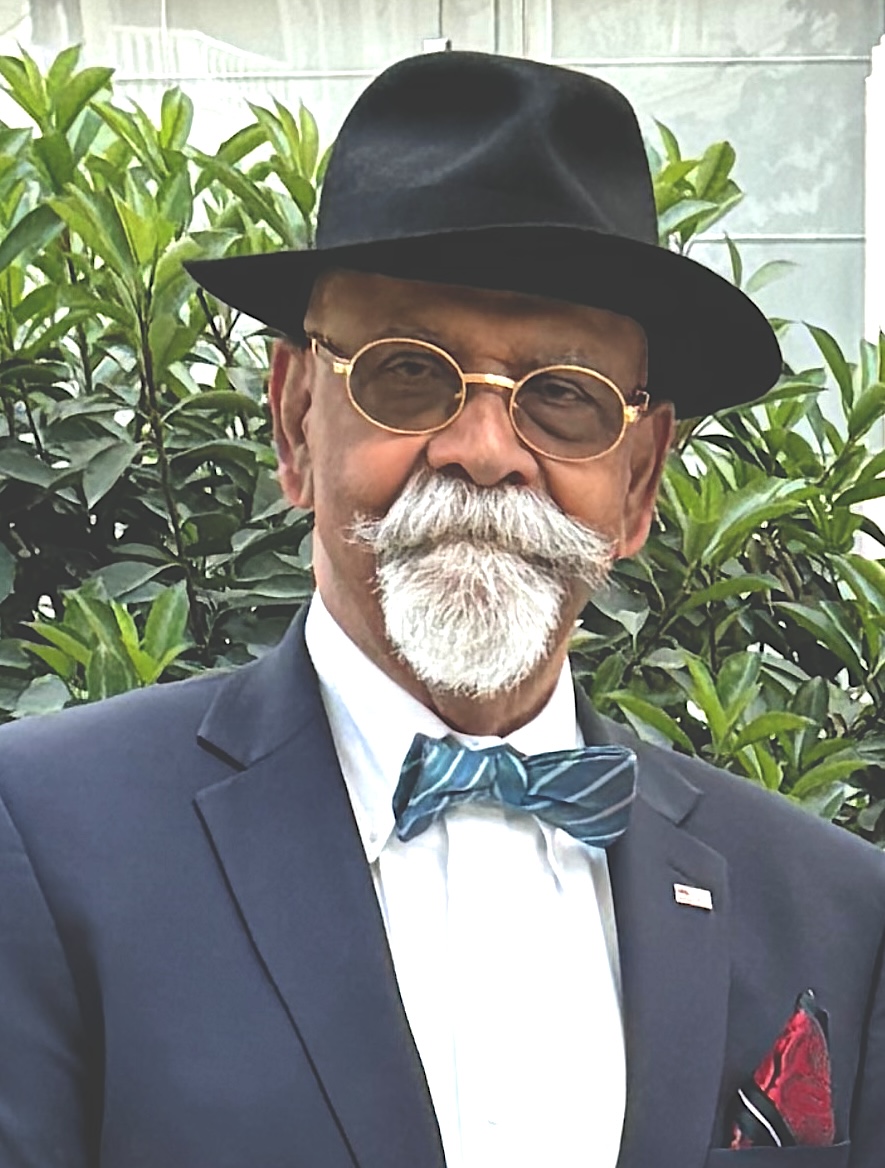
Author/Professor/CEO
# Sarfaraz K. Niazi: A Trailblazer in Biosimilars and Biopharmaceuticals
Dr. Sarfaraz K. Niazi is a distinguished pharmaceutical scientist, entrepreneur, and inventor who has revolutionized the biosimilar industry and established himself as one of the most influential figures in biopharmaceutical development. Born on July 10, 1949, in Lucknow, India, Niazi's journey from a pharmacy student to a globally recognized expert demonstrates his exceptional commitment to making life-saving medications accessible worldwide.
## **Educational Foundation**
Niazi's academic journey began at the University of Karachi, where he earned his Bachelor of Science degree in pharmacy in 1969. Following his family's migration to the United States in 1970, he pursued advanced studies at Washington State University, obtaining his Master of Science degree in pharmaceutical sciences in 1971. He completed his doctorate in pharmaceutical sciences at the University of Illinois at Chicago in 1974, establishing the foundation for his groundbreaking career.
## **Career Highlights**
### **Academic Excellence**
From 1972 to 1988, Niazi served as faculty at the University of Illinois at Chicago College of Pharmacy, progressing from instructor to tenured associate professor. He currently holds adjunct professor positions at both the University of Illinois and the University of Houston, continuing to share his expertise with the next generation of pharmaceutical scientists.
### **Industry Leadership**
Niazi's corporate career included… Read More