The Future of Cancer Immunotherapy: A Conversation with Daniel S. Chen
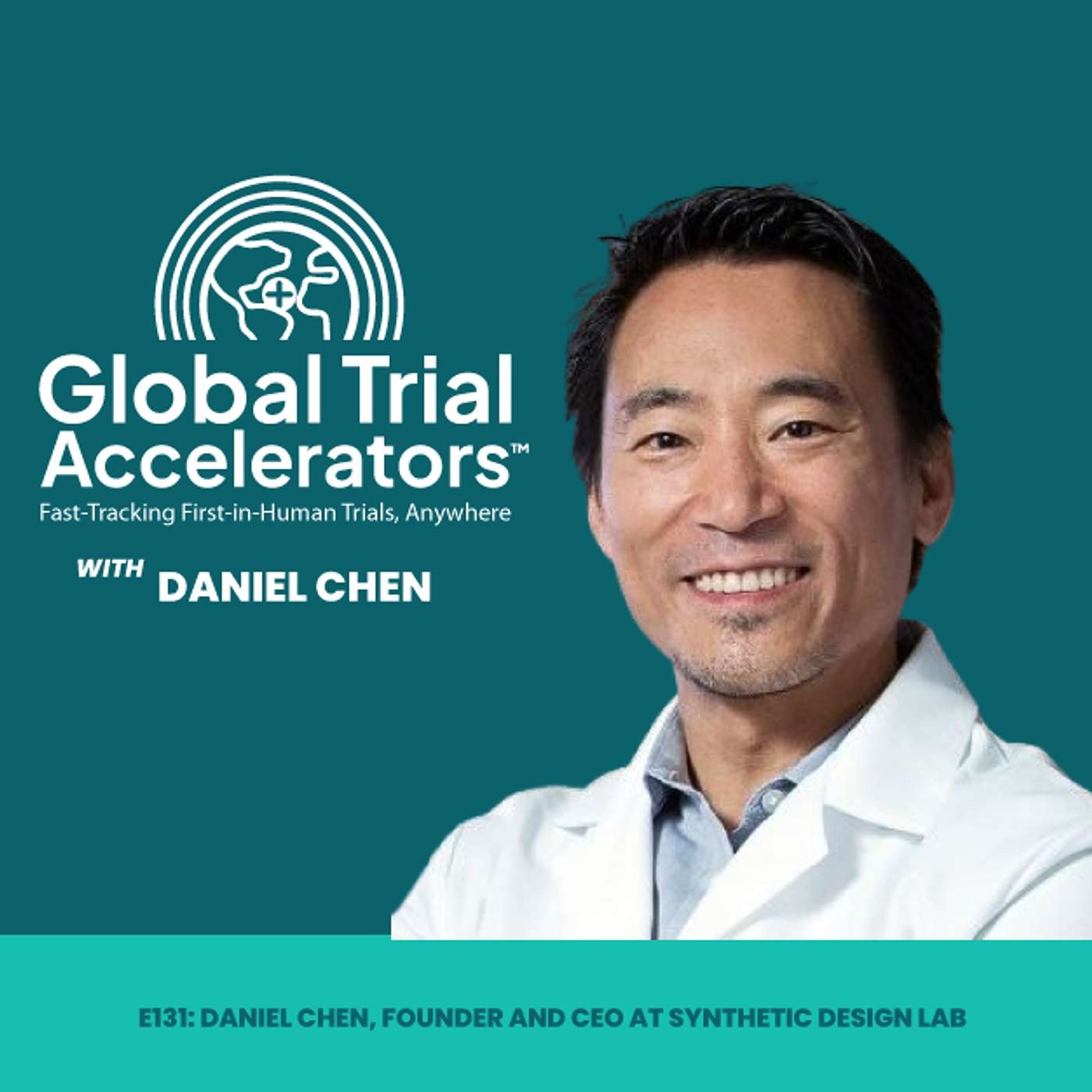
Welcome back to the podcast companion blog, where we dive deeper into the conversations that are shaping the future of clinical research, biotechnology, and patient care. If you tuned in to our latest episode, you know we had the absolute privilege of sitting down with a true luminary in the oncology space. In this post, we are expanding on the incredible insights shared by Dr. Daniel S. Chen, MD, PhD, Founder and CEO of Synthetic Design Lab and the former Global Head of Cancer Immunotherapy Development at Genentech/Roche. If you haven't listened to the conversation yet, you can catch the full interview by checking out our episode on Daniel Chen, Founder and CEO at Synthetic Design Lab. Today, we will explore the evolution of immunotherapy development, look closely at the story behind breakthrough therapies like atezolizumab, understand the mechanics of the cancer-immunity cycle, and peer into the horizon of next-generation oncology innovation.
Introduction to the Evolution of Cancer Immunotherapy
For decades, the standard pillars of cancer treatment were straightforward yet brutal: surgery, radiation, and chemotherapy. While these methods have saved countless lives, they often come with severe systemic toxicities because they do not selectively target malignant cells alone. They target rapidly dividing cells indiscriminately. However, the dawn of cancer immunotherapy completely revolutionized our approach to oncology. Instead of attacking the tumor directly with external toxins or physical forces, immunotherapy harnesses the patient's own immune system to recognize, hunt down, and destroy cancer cells.
The journey of immunotherapy from a fringe scientific hypothesis to the cornerstone of modern cancer care is one of the most remarkable stories in modern medicine. Early pioneers faced immense skepticism. The prevailing dogma was that cancer cells were essentially self, meaning the immune system would be inherently blind to them or tolerant of their presence. Furthermore, researchers had to overcome the reality that tumors actively create an immunosuppressive microenvironment to evade detection. Breaking through these barriers required a paradigm shift in how we view the relationship between immunology and oncology. As we discussed on the podcast, this evolution required visionary leaders who were willing to challenge conventional wisdom and bridge the gap between basic immunology and clinical trial execution.
Meet Dr. Daniel S. Chen: From Genentech to Synthetic Design Lab
To truly understand how far the field has come, it helps to look at the career of someone who was in the trenches during its most critical growth phase. Dr. Daniel S. Chen is a physician-scientist whose career has been defined by a relentless pursuit of translational innovation. During his tenure as the Global Head of Cancer Immunotherapy Development at Genentech/Roche, Dr. Chen played a pivotal role in shaping the modern landscape of immuno-oncology. Under his scientific and strategic leadership, numerous molecules moved from bench research into human clinical trials, ultimately changing the standard of care for patients suffering from some of the most difficult-to-treat malignancies.
After decades at the cutting edge of large-scale biotech drug development, Dr. Chen transitioned into a new chapter by founding the Synthetic Design Lab. In this role, he continues to push the boundaries of what is possible in biotechnology. Rather than relying solely on traditional trial-and-error discovery methods, Synthetic Design Lab focuses on engineering better, smarter therapeutic candidates from the ground up. Dr. Chen’s unique perspective—spanning big pharma leadership to nimble biotech entrepreneurship—offers a masterclass in how scientific rigor must be paired with strategic trial design to bring life-saving therapies to patients faster than ever before.
The Story Behind Atezolizumab and Breakthrough Therapies
One of the hallmark achievements of Dr. Chen’s career at Genentech was his involvement in the development of atezolizumab, a monoclonal antibody that targets programmed death-ligand 1 (PD-L1). To appreciate the magnitude of this breakthrough, we have to look back at the mechanisms of immune evasion utilized by tumors. Cancer cells often express PD-L1 on their surface, which binds to the PD-1 receptor on T-cells. This interaction acts as an "off switch" or checkpoint, effectively neutralizing the T-cell and preventing it from attacking the tumor.
Atezolizumab was designed to block this interaction, reactivating the patient's T-cells so they could resume their attack on the cancer cells. However, bringing a drug like atezolizumab from a theoretical molecular concept to an FDA-approved blockbuster therapy was no simple feat. It required innovative clinical trial designs that could identify which patients were most likely to respond, particularly by measuring PD-L1 expression levels in tumor-infiltrating immune cells.
During our podcast conversation, Dr. Chen shared fascinating behind-the-scenes stories about the hurdles the team faced. Developing checkpoint inhibitors meant rewriting the rulebooks for clinical trials. Traditional oncology trials measured tumor shrinkage rapidly following cytotoxic chemotherapy. Immunotherapies, however, often exhibit different kinetics; patients might experience pseudo-progression before their immune systems successfully mount a sustained response and shrink the tumor. Navigating these complexities required visionary regulatory strategies, biomarker validation, and an unwavering belief in the underlying biological mechanism.
Understanding the Cancer-Immunity Cycle
A central framework of Dr. Chen’s scientific philosophy—and a major topic of our podcast discussion—is the Cancer-Immunity Cycle. Originally conceptualized by Dr. Chen and his collaborator Dr. Ira Mellman, this model provides a comprehensive roadmap for understanding how the immune system interacts with cancer and, crucially, where those interactions break down.
The cycle can be broken down into seven distinct, sequential steps:
- Step 1: Release of cancer cell antigens. Genetic mutations in cancer cells produce unique neoantigens that can be recognized as foreign by the immune system.
- Step 2: Cancer antigen presentation. Antigen-presenting cells, such as dendritic cells, capture these antigens and present them to T-cells.
- Step 3: Priming and activation. In the lymph nodes, antigen-presenting cells prime T-cells to recognize the specific cancer antigens.
- Step 4: Trafficking of immune cells to tumors. Activated T-cells travel through the bloodstream to reach the tumor site.
- Step 5: Infiltration of immune cells into tumors. T-cells penetrate the tumor microenvironment.
- Step 6: Recognition of cancer cells by T-cells. T-cells specifically bind to cancer cells displaying the target antigen.
- Step 7: Killing of cancer cells. The T-cells induce apoptosis (programmed cell death) in the malignant cells, releasing more antigens and repeating the cycle.
As Dr. Chen explains, cancer is essentially a master of evasion, and it can disrupt any single step of this cycle. Some tumors fail to release adequate neoantigens (making them "cold" tumors), while others block T-cell infiltration or upregulate checkpoint proteins like PD-L1 to halt the process at step six or seven. Understanding this cycle is not just an academic exercise; it dictates therapeutic design. If a tumor fails at step three, a vaccine or co-stimulatory agonist might be needed. If it fails at step six, a checkpoint inhibitor like atezolizumab is the logical intervention. This mechanistic clarity is transforming oncology into a truly precision-driven science.
Translational Science: Bridging Discovery and Patient Impact
Translational science is often described as the bridge between basic laboratory research and clinical application, but as any drug developer will tell you, it is a bridge fraught with peril. Many brilliant scientific discoveries die in the "valley of death" between preclinical animal models and human clinical trials. Why? Because biological systems are unimaginably complex, and mice are not men.
Dr. Daniel S. Chen has built his career on mastering translational science. During our interview, we discussed the critical importance of reverse translation—learning from clinical trial failures and successes to inform back-end laboratory hypotheses. When a drug fails in a phase II trial, it is not just a commercial setback; it is a treasure trove of biological data. Analyzing patient tissue biopsies, blood biomarkers, and genomic sequencing from clinical trial participants allows scientists to understand *why* a drug worked for one patient and failed for another.
This iterative loop between the clinic and the bench is what accelerates innovation. It allows biopharma companies to design smarter clinical trials, select better patient populations using advanced companion diagnostics, and ultimately reduce the staggering costs and timelines associated with drug development. For companies looking to run efficient first-in-human trials, embracing this translational mindset from day one is no longer optional—it is a prerequisite for success.
The Future of Oncology Innovation
As we look to the future, what is next for cancer immunotherapy? We are moving well beyond monotherapies targeting single checkpoints. The next frontier involves rational combination therapies, multi-specific antibodies, cellular therapies like CAR-T and TCR-engineered T-cells, and cancer vaccines powered by mRNA technology.
Furthermore, artificial intelligence and machine learning are beginning to play a massive role in drug discovery and trial design. By analyzing vast multi-omic datasets, algorithms can predict neoantigens, model protein-protein interactions, and identify patient subpopulations with unprecedented accuracy. Dr. Chen’s work at Synthetic Design Lab is a testament to this forward-looking ethos—synthesizing biological insights with computational tools to design therapies that are more potent, safer, and tailored to the individual patient.
However, innovation in the lab is only half the battle. Bringing these complex therapies to patients requires streamlined clinical trial infrastructure, supportive regulatory pathways, and global collaboration. Whether it is conducting first-in-human trials in emerging biotech hubs or navigating market access across diverse international landscapes, the operational side of drug development must evolve in lockstep with the science.
Conclusion: Accelerating the Path Forward in Clinical Trials
The journey of cancer immunotherapy from an improbable scientific theory to a life-saving reality is one of the greatest triumphs of modern medicine. Through the dedication of visionary leaders like Dr. Daniel S. Chen, we have learned that curing cancer will not come from a single magic bullet, but from a deep, mechanistic understanding of the cancer-immunity cycle, rigorous translational science, and innovative clinical trial execution.
As we continue our work in the clinical research community, the lessons imparted by Dr. Chen serve as a powerful reminder: we must remain curious, embrace failure as data, and always keep the patient at the center of every scientific endeavor. To hear this incredible conversation in full and gain even more deep-dive insights into the mind of a biotech pioneer, be sure to listen to our complete podcast episode. You can access the interview directly by visiting Daniel Chen, Founder and CEO at Synthetic Design Lab. Thank you for reading, and stay tuned for more conversations that are accelerating the future of clinical trials!


 RSS Feed