What Hearing Care Growth in Latin America Really Depends On

In this episode, Julio Martinez-Clark speaks with Robert M. Traynor about hearing care in Latin America from the perspective of a clinician, educator, and longtime industry consultant. The conversation is nominally about audiology, but the lessons travel well beyond hearing devices.
Traynor’s core point is simple: market demand is not enough. A region can have clear clinical need and still underperform if products remain too expensive, trained providers are concentrated in large cities, stigma keeps patients away, or distributors cannot support the device after it is sold. For founders and commercial leaders, that makes this episode less about hearing aids alone and more about how medical technology actually reaches patients.
Demand is real, but it has to be understood in context
Traynor starts with the epidemiology. Citing figures from the National Institute on Deafness and Other Communication Disorders, he notes that disabling hearing loss rises sharply with age in the United States: 2% of adults 45 to 54, 8.5% of adults 55 to 64, 25% of adults 65 to 74, and 50% of people 75 and older. His point is not just that hearing loss is common. It is that age-linked demand is predictable.
He then extends that logic to Latin America, arguing that rates may be higher in less developed settings because people may have had less access to medical care earlier in life. He also points to long-range growth: roughly 2.7 million hearing-impaired individuals in Latin America in 2000, 6.6 million by 2025, and 13.6 million by 2050.
That is why he says, "The market is definitely right for the hearing related businesses in Latin America."
The useful takeaway for device companies is that aging alone does not tell the whole story. The stronger commercial case comes from the overlap of aging, untreated chronic ear disease, environmental exposure, and uneven access to specialty care. In other words, the opportunity is not just bigger populations. It is bigger unmet need.
Better products can reduce stigma, not just improve performance
One of the most practical parts of the discussion is Traynor’s view of stigma. He describes it as a major barrier when he began practicing, with many people delaying amplification for years. In his view, that has started to change because hearing devices are smaller, work better, and fit more naturally into daily life.
He points to several concrete changes. Hearing aids can connect directly to phones. TV listening can be handled through accessories that send signals to the instruments. Background-noise performance has improved substantially in recent generations. Rechargeable products also address a basic but important adoption issue: battery availability.
That matters in Latin America because cost is only one adoption barrier. Patients also decide whether a device feels socially acceptable and practically useful. Traynor even notes that ear-worn technology now looks more familiar to consumers than it did decades ago. A hearing device is no longer competing only against vanity. In some cases it is competing in a world where people already wear visible tech in or around the ear.
For product teams, the lesson is clear. Commercial adoption improves when the device solves everyday frustrations that patients immediately recognize, not only when it posts better technical specifications.
Access depends on people, not just products
Traynor repeatedly returns to geography and workforce. In his description, hearing instruments and evaluations are available in many major Latin American cities, but much less so in rural areas and smaller cities. That gap affects both patient care and market growth.
He also argues that the provider base is stronger than it was when he first worked in the region in the 1990s. He describes how more professionals in large cities now hold advanced audiology training and can provide hearing rehabilitation, which improves the clinical environment for manufacturers and distributors.
As he puts it, "There are huge opportunities in Latin America because the education level is coming up rapidly."
He also draws an important distinction between training models. In Mexico and Costa Rica, he describes a pathway centered on audiological physicians who attend medical school and then complete audiology residency training. In Colombia, Brazil, Argentina, and Chile, he says training often follows a model closer to that of the United States, where audiologists pursue graduate education rather than medical school.
That difference matters because market entry is partly a workflow question. Who evaluates patients, who can prescribe or dispense, and who provides follow-up all shape how a company should sell, train, and support its product.
Distribution only works if service comes with it
Traynor’s advice for commercial teams becomes most concrete when he talks about channels. He sees internet sales, big-box retail, home hearing testing, self-programming products, and, from his 2019 vantage point, the coming arrival of over-the-counter hearing aids in the United States. None of that eliminates the need for support.
In fact, he warns that selling a hearing product without programming and follow-up leaves too much value on the table. His suggested fix is operational: if a company sells remotely, it should connect buyers to local clinics or dispensers who can program the device and manage care afterward.
The same logic applies to picking partners. "You want to make sure and not only vet the uh, distributors for being able to pay on time ... but also for knowledge." He adds that distributors matter because they understand homologation, customs, and the practical steps required to get products into market.
This is a strong reminder for any medtech company entering Latin America. A distributor is not just a sales outlet. In many categories, that partner is part regulatory guide, part trainer, and part extension of the product itself.
Listen to the full conversation
For founders and commercial leaders, this episode offers a useful framework: assess disease burden, but also assess stigma, provider training, channel structure, and follow-up care. That is how a promising market becomes a functioning one.
You can listen to the full episode here: Robert M. Traynor, Founder, CEO & Audiologist at Audiology Associates of Greeley, Inc..
About Global Trial Accelerators™
Global Trial Accelerators™ is the podcast for MedTech, Biopharma and Radiopharma founders navigating first-in-human clinical trials. It is hosted by Jesús E. Moreno and produced by bioaccess®, a CRO purpose-built for first-in-human trials across the Americas.
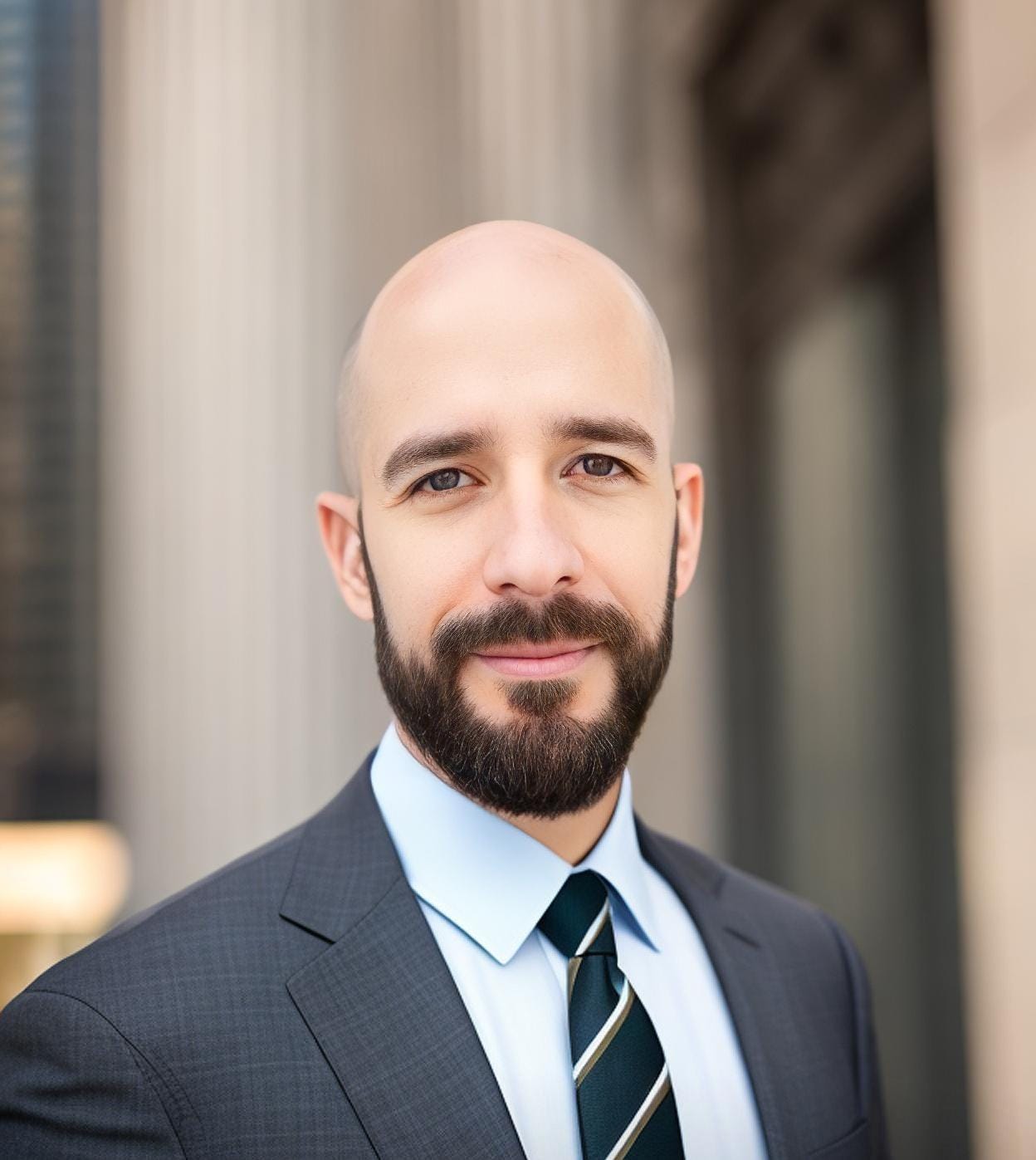
Host · Business Development Director, bioaccess®
Jesús E. Moreno is a business development director who provides efficient and reliable clinical research services across the Americas. With a passion for driving innovation in the healthcare sector, Jesús leverages his bilingual biomedical engineering background and his understanding of the unique challenges that Medtech startups face to provide valuable support and deliver accelerated clinical study results. Jesús profoundly understands the critical role that reliable and streamlined clinical research plays in the success of Medtech startups. He firmly believes that by offering cost-effective solutions without compromising quality, Medtech startups can achieve their clinical goals faster and make a meaningful impact in the healthcare industry. Jesús is passionate about supporting Medtech startups in their journey towards bringing innovative medical technologies to market. Jesús possesses the technical expertise to understand the complexities of medical devices and technologies. This knowledge enables him to identify tailored solutions that meet the specific needs of Medtech startups. Jesús has a bachelor's degree in biomedical engineering and a master's degree in electronics engineering.
What Trial Teams Miss When Science and Operations Work Separately


 RSS Feed