


Steven Collens, CEO at MATTER
This episode features Steven Collens, CEO of MATTER, a premier healthcare incubator and innovation hub that has supported over 1,000 healthcare startups. MATTER helps entrepreneurs and organizations innovate faster and more efficiently while increasing the likelihood of long-term success.
Founded by Steven in 2015, MATTER provides an accelerator-as-a-service solution for health systems, life sciences companies, payers, and foundations seeking to collaborate with startups, while also working directly with established companies to strengthen their innovation capabilities.
Steven previously served as Senior Vice President at Pritzker Group, where he helped create 1871, Chicago’s digital startup center and the world’s top-ranked business incubator in 2018. His background also includes leadership roles at Abbott and public service as a legislative assistant to U.S. Senator Carol Moseley-Braun.
In this episode, we discuss the evolution of healthcare innovation, building successful startup ecosystems, and how organizations can work more effectively with entrepreneurs to drive meaningful change.


Jesus Moreno (00:01.93)
Happy New Year's and welcome back to Global Trial Accelerators, the podcast where we dismantle the barriers to clinical innovation and explore the strategies driving the next generation of life-saving therapies. I'm your host, Jesus Moreno, and to kick off 2026, we are challenging the idea that innovation is a lightning strike of genius. In reality, innovation is an infrastructure problem. And how do we...
built a bridge that allows an idea in a garage to actually reach a patient in a hospital system. My guest today has spent a decade building that infrastructure. Steve Collins is the CEO of Matter, the global health incubator that has spun over a thousand startups. But Steve isn't just a startup guy. With a background spanning
high level policy work in US Senate and a decade at Abbott. He fluently speaks the language of government, big pharma and entrepreneurship. And he is here to help us bridge the gap between agility and scale. Steve, welcome to the show. It's great to have you with us.
Steven Collens (01:19.118)
Thanks for having me, happy new year.
Jesus Moreno (01:22.688)
Steve, I would like to start talking about a little bit about your background. Your resume is a master class in cross section leadership. You went from the US Senate to Abbott and then pivoted to building two engine disruptors, such as 1871 and Matter. I'm curious to learn how that transition from Abbott to the startup world
help you identify or understand how corporate America sees startup land and how those insights in a giant like Abbott shaped the way you built matter.
Steven Collens (02:13.198)
Yeah, it's a really interesting question. It has absolutely helped and shaped the way that we've put matter together and the value that we're able to create across the entire ecosystem. You know, I'd go back further when I was working in the Senate. was my first I was there for six years. It was my first job out of school. I didn't realize it at the time, but it's a very entrepreneurial environment. The you know, we sort of like tap. You know, my job was to like make schools better and.
and then go figure out how to do that, build coalitions, figure out legislation, just try things quickly, figure out what is going to stick and what isn't, and iterate and just move very fast. And that was kind of the premium and the people who are successful in those roles kind of operate in that very rapid iterative way, which I had no idea at the time, but it's very entrepreneurial kind of
I went to business school, I went to Abbott, and it was a shock to me as to how a large company operates. It my first experience in a big company. Abbott has gone through a lot of changes. But certainly at the time, was a huge company, very conservative, and just moved at a completely different pace.
with a completely different level of risk aversion and, you know, mean, a lot of assets and brands and, you know, hundred and whatever years of success to protect, but really quite a shock. And, you know, I would say I learned, I was there for 10 years, I had six different jobs in multiple divisions, different kinds of functions.
I learned an incredible amount about how, it was my first job in the private sector and I was a poli sci French lit major. I didn't have a lot of, and so learning about how business works, how decisions get made, how products get moved from kind of nascent C to global scale, it was a very
Steven Collens (04:37.198)
I should make sure I say was because I haven't been there for 15 years or more. you know, but a very disciplined organization. It was not a very innovative culture, a very innovative organization. And, you know, lot of the systems and structures and processes that are put in place that enabled it to be such a successful big company kind of mitigated against this sort of rapid
iterative approach that you see from lot of entrepreneurs as they're just trying to move fast before they run out of money to land on something that can really make a difference. And so that experience and that contrast has really helped me understand, not just having spent several years at a venture capital firm,
and then 10 years, just another 10 years immersed in the entrepreneurial world with Matter. But that experience also allows me to understand the journey of executives and managers in these large life sciences companies and how it is that, what are the struggles and challenges that they're encountering as they're trying to innovate and they're trying to push boundaries. And it allows us to help them in
in more ways than I would certainly be able to had I not had those experiences.
Jesus Moreno (06:12.032)
That's great. And actually, I think it would be interesting to go a step further and talk about a little bit when you founded 1871, which became one of the world's largest business incubators. And then you focused specifically on health care. And that's an interesting question right there. Why? Why health care? Health care is hard. It's highly regulated.
It's low as you just described and the stakes can be higher. It's life or death. So why did you choose to double down on healthcare? And was there a specific gap you saw in the market that the general tech incubators at the time were failing to answer to or provide the biotech founders that motivated you to step into that space?
Steven Collens (06:39.286)
Mm-hmm.
Steven Collens (07:09.262)
My job with 1871 was to... The guy I was working for at the time, he's now the governor of Illinois, but at the time he was a technology investor. There was a big gap in the market for something like 1871, but he didn't want to own it. He really wanted it to be for the community. It was my job to create it.
figure out the business model, staff it, get it up, get it sustainable, and then get out. And so I did that. I worked with a lot of people on it. And then a couple of years later, we were looking at the, really from an economic development lens in Chicago. And if you look around Chicago, we've got
arguably the second largest collection of healthcare assets in the country from big pharma devices, diagnostics companies, nutrition, health IT, insurance, hospital supply, pharmacy. We got fantastic research institutions, world-class healthcare providers. Most of the medical associations are based here. I mean, go on and on and on. But an ecosystem that really was not producing
health care and life sciences innovations at the pace that it should be or you would think it would be given this given all these assets and the And so we've started looking at that, know I also then went to 1871 and I was still spending a lot of time there and and it's like I wear all the the health care and life sciences entrepreneurs and Yeah, there were a few there. But you know out of the
hundreds and hundreds of companies, there were like a handful. So I went and talked to healthcare entrepreneurs and life sciences entrepreneurs and said, hey, why aren't you at 1871? Everybody knew about it. It got a lot of publicity in Chicago. So I'm it's really cool. I'm obviously generalizing. The message was, that is really cool. I'm so glad it's there. Of course, I've been there. This is not really our community. Then you look at
Jesus Moreno (09:29.44)
Hmm.
Steven Collens (09:30.862)
all the big companies that were involved in 1871 at the time, and there were no healthcare companies. I there a lot of healthcare companies in Chicago. Literally, at that point in time, none of them were involved in 1871. You had consumer packaged goods and consulting and finance and manufacturing and, you know, blah, blah, blah, blah, But there were no healthcare companies involved. And you could talk to them and they're like, yeah, we don't really, it's cool, but we don't really see.
where the value is for us in engaging. It's not really our community. And so that really started a process of just spending a lot of time visiting the healthcare entrepreneurs, visiting life sciences entrepreneurs, visiting universities, big companies, hospitals, and trying to understand how is innovation happening? How is the entrepreneurial, what are the gaps in the entrepreneurial ecosystem? And the conclusion was,
It's a separate community. It's a separate set of investors. It's a separate set of mentors. It's a different set of entrepreneurs. The pace of the development of these solutions is different. It's much slower than your average tech company. And the things that these companies, that the startups need in order to succeed,
come from a different set of people and resources than your average tech company. That then led to, well, we got to create something different and it's going to look different and offer some different services, have a different model. But learned an enormous amount from 1871 and that whole experience. So used that as the starting point and then adapted and tweaked and molded and changed it so that
that in a way that we thought and hoped would really help accelerate entrepreneurship and innovation in healthcare across the entire spectrum from early stage startups all the way to some of the biggest companies in the world.
Jesus Moreno (11:49.067)
Wow, that's amazing and very insightful to learn how really the missing piece there was finding or creating the right space for the actors to meet and finding community and tailoring community.
Steven Collens (12:05.102)
the right space, the right content, the right programs, the right events, the right mentors, the right investors, the right connective tissue to bring, whether that's physical or not, to bring all of the resources together.
Jesus Moreno (12:18.144)
Mm-mm.
Steven Collens (12:30.638)
It was absolutely the key. Our thesis around innovation was that collaboration is the only way to really do it in healthcare. Everything we did and architected was all around how do we facilitate collaboration between entrepreneurs and big companies, between big companies and big companies, et cetera.
Jesus Moreno (12:57.664)
I see, excellent. And you've touched on a couple of things that I would like to explore a little bit further, specifically Chicago. And this might be a little bit of us going down a rabbit hole, but I'm curious to learn about, I understand you served as the board chair for Albert Street Dance Chicago. And we often, you still do.
Steven Collens (13:23.095)
I do,
Jesus Moreno (13:27.356)
We often separate art and science, but both require an immense creativity and discipline. I would like to hear about if this exposure to art has led you to influenced how you spot talent and how you manage chaos in the tech sector.
Steven Collens (13:57.646)
Yeah, it's such an interesting question. mean, Hubbard Street, it's just a real passion and pleasure to be involved with the company and I've chaired the board for the last several years. you know, they're the really the top contemporary dance company in the world. They attract the world's best dancers, the world's best choreographers. And then they've got a discipline and a
a process, you know, kind of akin to what you were saying in your when you were leading off, is, you know, innovation isn't like a flash in the pan thing that happens. It's a discipline. Well, the art of of what Hubbard produces is very much the same thing. There's absolutely inspiration that comes from the choreographers, that comes from the dancers, of course.
But it's the process, it's the discipline of how those works get created, how they get rehearsed, how the dancers develop and hone and nurture their techniques and put it all together to be able to express themselves on stage in a way that makes for an experience that isn't just okay, but is spectacular.
And, you know, that's there's there's absolutely there's definitely parallels with with, you know, going back again to your your point at the beginning about about innovation. It's a it is a it is a discipline and you need the creativity and you need the the sparks. But without this infrastructure, it doesn't it's not going to go anywhere. And so that's what Hubbard Street provides for the world of
dance and and it is really a
Steven Collens (16:03.102)
such a pleasure to be part of that organization.
Jesus Moreno (16:07.616)
And I keep hearing this, the need for the right conditions to be present for innovation, for creativity, for a successful endeavor to materialize. And I think that that's a good segue to talking about industry trends for 2026. Let's look at the industry landscape as we start.
We started the year in a huge percentage of startups right now are focusing specifically on fixing clinical trials. We've seen everything from AI driven recruitment to digital biomarkers to remote monitoring platforms. From your vantage point at Matter, what trends are you seeing and has Big Pharma finally gotten ready
to rewrite that gold standard of workflow to integrate those new technologies.
Steven Collens (17:14.818)
It's such a good question because the you know, like every technology trend or area that we've experienced over the last 10 years, the development of new technologies and the possibilities that they present move faster than the industry is kind of prepared to adopt them and which makes perfect sense. And it kind of has to be that way.
I'll give you a few examples of what we're seeing in different dimensions. You mentioned a few of the key areas where we've seen a lot of innovation. think some of the areas we saw some stuff that really hasn't panned out as well as it, especially in the decentralized clinical trial space where the pandemic and right after that,
It was kind of like the buzzword of the day. And a lot of those early solutions really didn't, haven't panned out to create the kind of value that I think everybody was expecting for a variety of reasons. But I think that's changing. You mentioned recruitment. mean, it drives every pharma company nuts that it takes so long to recruit patients for studies.
I mean, it's kind of outrageous when you think about it, that the amount of time that the length of time it takes to recruit patients is just, it's not acceptable and it shouldn't be that way. And we've seen a lot more innovation and I think accelerating innovation in this space, I think does, and I guess it's a combination of two things. One is,
the entrepreneurs who are driving and driving and driving towards better solutions, plus the technology infrastructure layers, the development of artificial intelligence has also been moving faster and faster. so that has created, made it in some ways easier. There's more fertile ground. There's more data available.
Steven Collens (19:38.798)
And there is, as it sort of chip away over time within the industry, more and more of an interest in, and more and more exposure and experience and comfort with these kinds of technologies. As a company that's been part of Matter for years called Cancer Insights, and they use AI, they use natural language processing, they will go into a, from a hospital perspective, they'll go in and they'll take structured data, unstructured data,
and they'll find patients that are eligible for clinical trials and they can shave three or four times, cut by three or four times the amount of time it takes to find the right patients. And I guess I should say to find patients and find the right patients because it's not just finding a potential patient. Then they get through the screening and make sure it's actually
person's actually the right candidate for the study. They're doing a great job with that. They've had a ton of success. They're growing fast. I know they're not the only company out there, the one I'm most familiar with because they've been part of Matter for a long time and I've kind of watched them develop and hone their technologies. So think that's one big trend. think, you know, I've seen some interesting takes on just decentralized trials in general that
think bode well towards removing friction from the process. There's one called bento bio, which I think if you've seen them, it's a pretty novel approach. They're almost like a different breed of CRO in effect at this point. Where they came at this
at this from the patient perspective, which is clinical trials, they're not a good experience. You got to go visit these things to get your blood drawn and this test and that, and then you have to go to these locations to do it, and it's very clinical, and it sounds, but it's not like a very good experience. They said, if we completely reinvented that?
Steven Collens (22:05.272)
Bento box being like the Japanese. And so using at-home bio-sampling, at-home digital engagement, they've got relationships with all these different labs. They treat the participants like real customers and the process, it's like a product, and they contract with pharma companies. And the result is the studies get done faster. Patients, nobody drops out of their studies because
They just make it easy. They make it an actual enjoyable experience to be part of these studies. So the studies get done faster because you don't have to keep replacing people. And they're way cheaper. And so they're seeing a bunch of uptake with pharma companies. And I think there will be more innovation like that. And then I think the other area, I you mentioned real world evidence.
I was talking to one of the big pharma companies we've worked with for years recently, and I was very pleasantly surprised by the percentage of studies that they're running that include some sort of real-world evidence as either actual endpoints or as
data that they're actively collecting, which is going to help when they ultimately go to market as they engage with the payers. It was a very high percentage of their trials. To wrap this up, are big pharma companies ready? I think the answer is yes. I think the pace of
at which these technologies are starting to adopt and starting to really influence how clinical trials are put together and run is going to accelerate this year.
Jesus Moreno (24:18.176)
That's wonderful. And I want to explore that relationship between Big Pharma and startups a little bit further, but I want to pull on a thread you mentioned at the beginning of your answer to the previous question, which was the pandemic. In 2024, Matter successfully secured a federal
Steven Collens (24:36.374)
Hmm.
Jesus Moreno (24:43.912)
contract to develop digital solutions for pandemic preparedness. Now that we've a couple of years removed from that, what have we learned? Is the healthcare system actually more ready today because of this digital tools? Or are we still struggling to snap together separate data systems that are not talking to each other as they should?
Steven Collens (25:14.092)
We're absolutely still struggling to bolt together data systems. the healthcare data in the United States is, it's gonna be a long time before that all gets stitched together into some sort of coherent thing that can be tapped into for insights.
It's still very, you've got a gazillion public entities collecting data, you've got every hospital, get either just so many different sources, they don't talk to each other. Even ones that are on the same system, they're not developed at the same time by the same people and so the taxonomies are different, the structure is different.
And there's nothing more complicated than health care data. And that's going to be a challenge for many, many years to come. That said, there's a lot of progress being made. And I think there's some really interesting indications from both the federal government and certain private sector developments. And again, the
at the rate at which AI is developing, I think in the next few years that we might start to see some step changes in how all this data can come together. But it is very complicated. The contract we won, we're very happy to have won that and be selected by BARDA, which is part of the Health and Human Services Department to be there.
a digital health hub. And so we run startup accelerators for them. We fund studies for them. It's partially about pandemic preparedness. There's a big flu outbreak that... It's also partially about things like... I mean, it's kind of weird to think about, but like a nuclear bomb goes off in a city and...
Steven Collens (27:36.366)
and there's hundreds of thousands of people who get a concussion all at the same time, now what? Even if all the hospitals were still up and running, there is no capacity to triage or treat these mass events like that. That's what we're doing. The goal there is to
is that we need to identify and support and develop technologies that have commercial applications that also will be useful in the event of a big public health emergency. Because there isn't an ongoing market for public health emergency solutions. So it's got to be stuff that's there that's ready to go.
It's been a a fascinating area to really dig into and we have an ongoing terrific partnership with that agency. And we're in the middle of three new programs that we're running together with them and just a lot of opportunity there to really do some, I think really meaningful work to help the US become better prepared and better and more resilient in the face of future.
public health emergencies.
Jesus Moreno (29:08.832)
It sounds like you're rowing upstream, but it's definitely worth it because of the potential outcomes of succeeding in that space. So kudos for that. And now I would like to transition back to that relationship you were mentioning between startups and pharma. For the longest time, the model has been kind of a David versus Goliath
startups trying to disrupt pharma. now, 2026, it's starting to feel like David is partnering with Goliath. I'm curious to hear your perspective, because you're right in the middle of those deals. You're right in the middle of those conversations. Have we finally moved past that era of innovation threat to an era of more
commercial integration if you will and can you talk about some of the friction points that still exist between the two?
Steven Collens (30:18.009)
You know, in order to, I mean, this kind of goes back to our thesis of innovation, know, big pharma companies are, you know, successful ones, are really good at being big pharma companies. They're never going to be able to capitalize on...
emerging technologies at the rate at which those technologies are developing. Entrepreneurs are great at being entrepreneurs, the successful ones, have you have that, are great at being entrepreneurs, and they can develop new technologies and they can iterate them very rapidly, but they're not going anywhere without partnering in some way, shape or form with the industry. And so we...
spend a lot of time working with big pharma companies, helping them figure out how to innovate more effectively, figuring out how to help them collaborate with entrepreneurs more effectively, figure out the right use cases for things like AI. And we spend a lot of time working with entrepreneurs, helping them figure out, you know, not just what is, what they could do with new technology and what's possible, but
what will really resonate with the market, how to go to market, what are the right collaborations for them to enter into and how to approach the market. And we work on both sides of that. And there's no doubt that the most successful, innovative, big companies that we've seen
have figured out how to collaborate with entrepreneurs and the most successful entrepreneurs have figured out how to collaborate with the industry. The friction points that you that you asked me to comment on are just that they are just such different creatures and they move at different speeds. They have different expectations.
Steven Collens (32:39.534)
They have different sets of like how they calibrate their risk reward matrices. And it is a it's sort of an unnatural partnership in a lot of cases. And in order to succeed, it requires a real dedicated effort on behalf of the big company. So, again, what we spend a lot of time working with them on.
And it requires a lot of persistence on behalf of the entrepreneurs. We spend a lot of time there too. But when it works, that's where the magic happens. That's where it really comes together and enables those really innovative technologies to spread their wings and really start to create value and
and create the kind of change in the world that the entrepreneurs are looking to create.
Jesus Moreno (33:46.817)
that I think echoes perfectly that segment of the conversation where we talked about science and art and the need for creativity and discipline, both balancing each other out and not letting the weight of the process break the conversation or break that synergy that both are trying to create.
And I would like to focus on one of the pain points most entrepreneurs face. And we've talked about this in previous episodes, that idea of a pilot purgatory, where a startup gets a pilot into a hospital system, but it never scales. And looking at 2026 with the economic pressures we're seeing,
Do you think the healthcare system is becoming more risk adverse, making it harder for startups to get in the door, or they're more desperate for that efficiency that technology promises and therefore it's actually opening the door for them?
Steven Collens (35:03.23)
They are more desperate for efficiencies, but they've become much more conservative over the last several years. And I don't really see that changing in the near term. And there are a things that happened. One was, you know, a lot of the stuff that's going to hospitals is software, it's digital health. And, you know, 10 years ago, a lot of it was it was very novel. It was exciting. know, their hospitals didn't have any experience with it. Nobody had any experience with it. It's like a new thing, you know.
There was a few billion invested 10 years ago and then it just went on this rocket ship. Go back to there and it was novel, there wasn't as much out there and hospitals are really, let's try it. This could be exciting and it's very bureaucratic and process-oriented institutions, but there was like a, let's try it. You fast forward.
And there's a few things that have happened. So one, they're just inundated with potential solutions. I there've been hundreds of billions of dollars invested in digital health solutions focused on hospitals. And so there's no shortage of phones ringing and inboxes pinging with
with startups with solutions that can help hospitals in one way or another. And so there's a lot of like, my gosh, there's like, it's too much. They have gotten significantly more sophisticated over time because they've had some cycles and some reps of and some years of working with digital health solutions. And the fact is that a lot of them
sound amazing. A lot of them could be amazing, but in order to really get value out of it, it requires a pretty often intensive effort from the hospital system, not just to buy and implement the technology, but there's a whole change management layer that often goes into it. And that takes real work and they can only do a certain number of those things at any given time.
Steven Collens (37:28.438)
And then the margins, hospital margins have always been lousy and they've just gotten worse. And you mentioned efficiency because they're the economics of running a hospital continue to become, get worse and more challenging. And so what we've seen is that the bar has gone up.
20 solutions a week coming to them saying we can save you $100 million. The bar for proving that has gone up. The bar for demonstrating a level of sophistication on behalf of the entrepreneurs has gone up. It's gotten harder and harder for entrepreneurs to get in and
and get traction in hospitals. that whole, you know, there's still a, you know, there's still always going to be an issue with, you know, what did you call it? You called it pilot purgatory where, you know, you do a pilot and then it doesn't go anywhere. But that was that was something that we really saw grow a lot. And I've kind of seen that taper a little bit because there's less willingness on
on the part of the hospitals to just start pilot things as frequently as they used to.
Jesus Moreno (39:08.124)
And it sounds like with it's justified, giving the again, the economic situation, the climate we're currently going through. well, this conversation leads me to to want to talk about a little bit about matter. And maybe maybe you can draw some parallels between that.
Jesus Moreno (39:39.347)
resistance you just the resistance you described in regards of the healthcare institutions to implement this digital remote solutions and and what matter chose to do recently which was to. Sorry, let me me rephrase that I lost my train of thought.
Jesus Moreno (40:10.897)
So I would like to try to draw some parallels between those comments about the relationship between hospitals and digital solutions and what's happening at Matter currently. You just celebrated a decade of leadership and opened a new facility in 2025 that's not very common nowadays. In a world that has gone increasingly remote and virtual,
Why was it important for Matter to double down on a physical space and what happens in the building that simply cannot or is not happening in a Zoom call?
Steven Collens (40:55.352)
You know, COVID and what it's done to the way people work, I think is maybe one of the biggest social experiments of certainly my generation. And so we did, we moved into new space. It's a little bit smaller, but more importantly, it's
nicer and it's configured completely differently. So our space used to be really optimized for co-working. We had 120 co-working stations and people would come and they go to work. It's Thursday, let's go to work. It just was what people did. Now,
You know, for the most part, it's Thursday and I might go to the office. I might not. I might. You know, people work from all these different locations. But collaboration has suffered and innovation has suffered and inner team dynamics has suffered. And that's clear after a few years. You know, I mean, there were some things that became clear pretty quickly, which is that individual productivity, if anything, could go up, especially for people who aren't.
you know, the beginning of their careers, you know, where they already kind of know what they're doing and they don't have to commute. Their distractions are reduced. They can just crank. But when it comes to engaging with others and collaborating and the process of innovation is not a solitary process and Zoom is great. We Zoom too many hours a day, but it's, you know, it's terrific.
But it just does not replace or it doesn't. Maybe it substitutes for 60 percent of what it means to engage with people in person, but it doesn't substitute for 100 percent. What we see with our new space and the way that we designed it is it's much more optimized for collaboration than it is for
Steven Collens (43:16.664)
for just working. So we have workstations. are different kinds, like some of it's soft seating, some of it's tables, some of it's sit-stand desks, but it's a lot of conference rooms. It's a lot of flexible space. And we see demand from startups not necessarily to be here every day, but to have a place to use on some base to collaborate.
So that could be once a week, could be once a month, could be twice a week, where the team just gets there, gets together, they're all in the same place, and they're working through things in a different way than they could be if they were distributed. And we see our space being used just as much by our corporate partners. So big pharma companies and hospitals and payers and medical associations in here all the time. And they're...
Part of that, when I was at Abbott, we used to do off-sites regularly and we would go to a hotel or a conference center or to get out of the office. Well, now, it's like a different flavor of that. So we see teams of four or five people, we see teams of 20 or 30 people, and we've got all these different spaces that they can use and it's a-
It's a terrific environment for collaboration and ideation and iteration. And it's an exciting space. It's full of natural light. It's been very well designed. so that's how our space is being used. I'm here today. There's probably 40 people, maybe 50 people. It's like most of our conference rooms are full and people are moving around.
That's what we wanted to optimize for. But it's very different. The 40 or 50 people who are here today are not the same 40 or 50 people who are going to be here tomorrow. That's the world we're living in and what we wanted to create a space for.
Jesus Moreno (45:34.709)
I see. And while you've touched on key components of successful endeavors, and I would like to maybe explore a little bit of that data set that you're previewed to having supported over a thousand startups. That gives you a massive data set of what success looks like.
And if you look at the comparison in your portfolio of companies that have succeeded at crossing that chiasms between a startup and establishing themselves as a solid business, what is that one or two, what are those one or two traits that they share? Was it the technology? Was it the team ability to navigate the business?
and the healthcare system, what are some of those key components?
Steven Collens (46:37.353)
Yeah, it's such a good question. I mean, it depends a on the type of technology, if we're talking software companies, health IT, digital health, that kind of thing, the technology is key for sure. But what's more important in this healthcare world is really understanding how
they can fit into the healthcare environment and into the healthcare market. Who's actually going to buy it? Who's going to benefit from it? Who's going to use it? How are they going to use it? There's a ton of work that needs to be done upfront in order to really understand that. It's a little more complex in healthcare because there's so many different stakeholders and there's usually a bifurcation between the
buyers and the users and the beneficiaries of solutions. And it's the companies that really do that work to understand the market and their potential customers and how it is that they're going to fit in and create value and solve a problem that is top of mind and important for their
their customers. And that's hard to do. know, there's a lot of companies that get started based on people's personal experiences, because we all have bad experiences with the health care system, because we don't have a good health care system. But those entrepreneurs, the ones who succeed are the ones who then take that as a data point and then go invest in
figuring out what is the market, what's the opportunity on a more holistic basis. And it really comes down to that understanding of the market that differentiates.
Jesus Moreno (48:54.432)
Thank you. Thank you for that. think that's a key key point to our conversation. Understanding the importance of client profiling, if you will. yeah, what the actual objective issue or problem is and not what I am imagining the problem is. And having spoken to a little bit to the entrepreneurs in the audience, I would
also like to give a space to the pharma executives and C-suite executives that might be listening. And what is the call to action for this 2026 as you see it? How should they be engaging with Matter right now to find the solution that will drive their pipelines for the next five years?
Steven Collens (49:52.974)
Yeah, I love that. mean, thank you for that question. You know, we spend, as I mentioned, a lot of time working with pharma executives, also with health systems, with payers. you know, the innovation is happening and the companies that are going to be the most successful are the ones who are going to figure out how to harness it. it's not obvious. you know, there's...
there's a role for innovation champions within an organization. And there's also a role and a important role that we've seen over the last 10 years of having external partners who just bring a different kind of perspective and a different sort of visibility to collaborate and to work together. so we've got a number of companies
know, pharma companies and executives that we're working with right now and that we'll be working with in 2026. You one of the big questions that we keep hearing is, you know, we know we should be doing more with AI, but how do we figure out how to prioritize the right use cases? Because there's a million different things, you know, especially on the commercial pharma side and on the, you know, R &D side.
on those two where you could spend your whole day just think. It's like, all right, well, how do you figure out what are the right use cases? What can this technology actually do not in five years, but today? How to prioritize identifying those and then figuring out, okay, do we build something? Do we go partner with somebody? Do we need to clean up our data first? What does that look like?
I think that's going to be a big thing that we spend a lot of time on with companies in 2026.
Jesus Moreno (51:51.754)
Thank you, Steve. And Steve, you've built an engine that doesn't just launch companies, but sustains an entire ecosystem. And that's exactly where the future of the industry is being built. Thank you for sharing your invaluable insights with us today. yeah, thank you. Thank you for being in the space.
Steven Collens (52:14.126)
Thank you so much for having me. It was a pleasure chatting with you and it's a real pleasure being on your podcast.
Jesus Moreno (52:22.721)
Thank you, sir. And for our listeners, if you want to see where the next generation of digital health and life science technology is being born, I highly suggest you look at what Steve and the team at Matter are doing. You can find the links to Matter and Steve's link profile in the show notes. And until next time, keep accelerating.
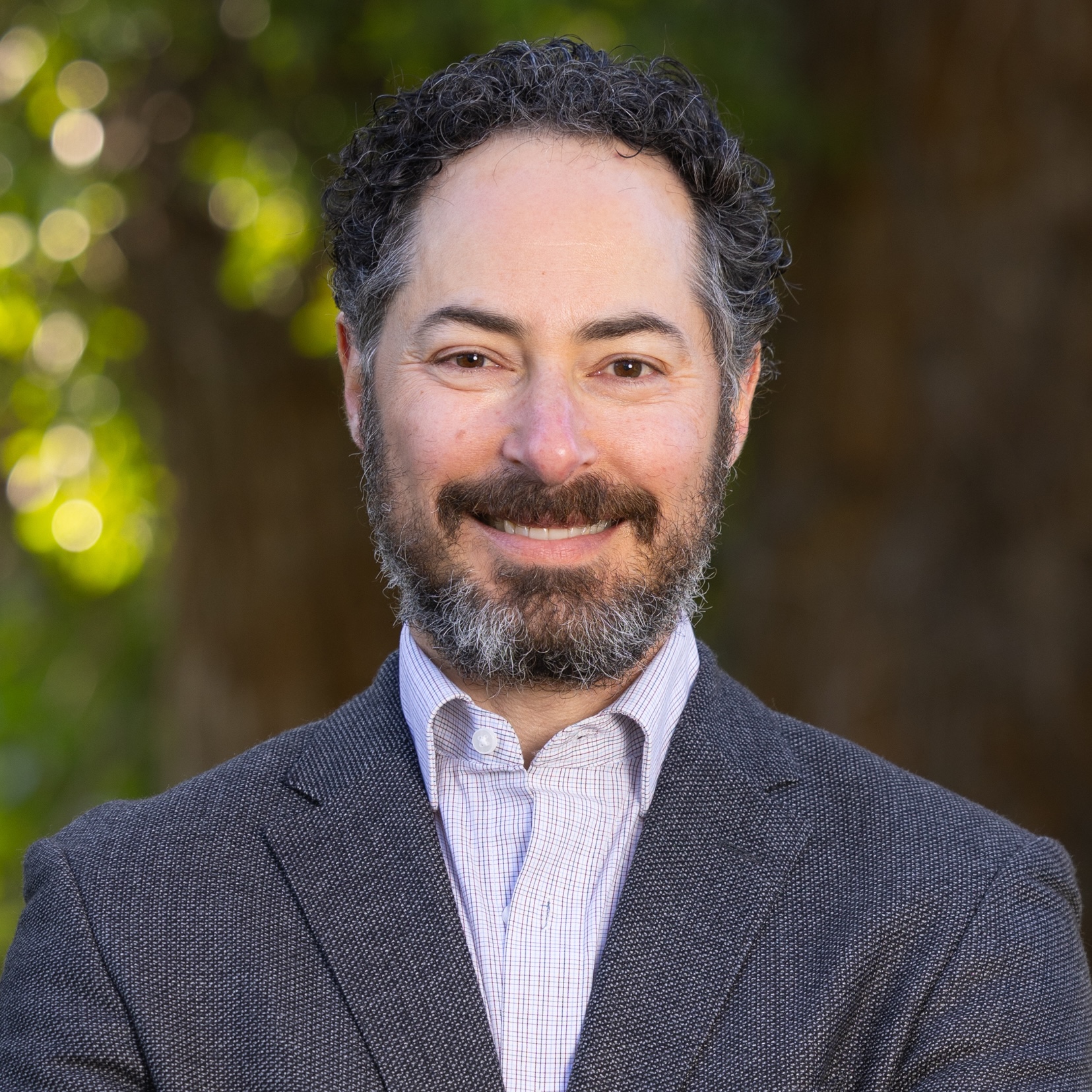
Steven Collens is CEO of MATTER, the premier healthcare incubator and innovation hub. MATTER helps healthcare innovators achieve their goals faster and more efficiently and increases the odds of their success. The organization has incubated more than 1,000 healthcare startups and offers an “accelerator-as-a-service” solution to leading health systems, life sciences companies, payers and foundations seeking to build collaborations with entrepreneurs. MATTER also works directly with established companies to help them innovate more effectively.
Collens founded MATTER in 2015, after serving as senior vice president at Pritzker Group, the investment firm led at the time by brothers J.B. and Tony Pritzker. In that capacity, Collens led the team that created 1871, Chicago’s center for digital startups, which became the top-ranked business incubator in the world in 2018. He previously worked at Abbott in a variety of domestic and international functions, including product management, policy and public affairs. Prior to Abbott, he served as legislative assistant to U.S. Senator Carol Moseley-Braun.
Collens holds an MBA from Northwestern University’s Kellogg School of Management and a BA from Washington University in St. Louis. He chairs the board of Hubbard Street Dance Chicago and serves on the boards of 1871 and the Chicago High School for the Arts. He is a member of ChicagoNEXT, the Chicago mayor’s council on technology and innovation, a Leadership Greater Chicago fellow, and a member of the Economic Club of Chicago and the Commercial Club of Chicago.