


Matteo Talotta, Director of Clinical Solutions at Biorce
This episode features Matteo Talotta, a global leader with experience across banking, academia, government, and a wide range of organizations — from start-ups and scale-ups to large multinationals. After working in Canada, Italy, the U.S., Spain, and Romania, Matteo brings a rich, multicultural perspective to the world of clinical innovation.
Fluent in four languages and driven by collaboration, his career has led him to focus on the transformative power of AI in biotechnology. He is currently part of Biorce, an AI-powered organization redefining how the pharmaceutical industry, biotech companies, hospitals, and clinical trial teams develop new therapies. Their goal: to make breakthrough treatments more accessible and affordable by uniting advanced technology with human insight.


Jesus Moreno (00:02.121)
Welcome back to Global Trials Accelerators, the podcast where we dismantle the barriers to clinical trial innovation and explore the strategies driving the next generation of life savings therapy. I'm your host, Jesus Moreno, and today we're looking at the convergence of finance, cross-border operations, and artificial intelligence. In this industry, we often
look for specialists who have stayed in one lane their entire careers. But sometimes the most disruptive innovations come from those who have successfully navigated multiple worlds. My guest today is Matteo Talota from BioForce.
Matteo Talotta (00:48.556)
Bye, yours.
Jesus Moreno (01:13.949)
Matteo brings a fantastic nonlinear perspective to the table, spanning banking, academic, government and private sector experience. has operated across Canada, Italy, the US, Spain and Romania, giving him a truly global lens on the fragmented landscape of healthcare.
He is now applying that multidisciplinary experience to Biforce and AI driven organization redefining drug development to make treatments more affordable and accessible. Mateo, welcome to the show. It's a pleasure to have you here.
Matteo Talotta (01:59.138)
Jesus, thank you very much. appreciate it. Happy to be here.
Jesus Moreno (02:03.57)
Mateo, I wanted to start with your background because it's distinctly diverse. You've moved from banking and government into the complex world of clinical innovation. This is not the typical path a biotech leader takes. Looking back at your time in banking and public sector.
How did those high-pressure structured environments shape the way you approach the interface between the current clinical trial? Sorry, let me post that question one more time. Looking back at your time in banking and public sector.
How did those high pressure structured environments shape the way you approach the inefficiencies we currently see in clinical trials?
Matteo Talotta (03:01.326)
It's a great question right off the start. If I go back to right at the beginning when I started in banking, I started, was quite young when I first started. So being thrown into such a high pressure environment, especially in something that deals with money, I always tell people, you know, someone could seem very nice until you do something with their money and then you see a completely different side to them. So in the sense of being able to manage.
a very fast paced environment and ever changing environment. And also something that is very, very pressure filled when it comes to people's money that affects their day to day. It taught me a lot, especially just if I think about when it comes to managing relationships.
direct relationships even with businesses. I had a chance when I was in banking to work with a lot of businesses, small businesses as well as medium-sized businesses. So learning the different landscape, the different approach, being able to adapt. I would say it of laid the foundation for what I still do, what I do on a day-to-day in the clinical trial industry in terms of working with clients, in terms of being at a conference.
working one-on-one with people, that's really what got it started for me. I guess to summarize, mean, it really laid the foundation for me to have the soft skills that I needed to be doing this.
Jesus Moreno (04:26.309)
Absolutely, I completely agree. The financial and operational discipline from those sectors is something we arguably need more of in research and development in the clinical trial space. You also have a significant, we could say nomadic element to your career, working across North America and various distinct European markets like Italy, Spain and Romania.
Cultural competence is often undervaluing global trials, yet it makes or breaks recruitment and regulatory adherence. How has living and working in these diverse environments altered your perspective on patient engagement and site management?
Matteo Talotta (05:15.294)
I mean, it's, I think from the start when you said nomadic, you could definitely use that to describe my career. I definitely feel that way as well. It's been absolutely fundamental, I would say, not just even from the patient side of things, but again, even if I focus on the business aspect, that's both external but also internal. A lot of the organizations that I've worked at.
in various countries across the world and cities. The teams themselves have been very diverse. in terms of the cultural competence, mean, it really, it's really fundamental just even to understand who you're working with, how to adapt, how to be flexible. If you want to grow on a global scale, which our industry, must say, with respect to other industries I've worked in, it's incredibly global. You're constantly
You're working with people from all around the world. You're constantly touching on different regions of the world, especially too, with a lot of clients that we work with. It's been a difficult few years in our industry and they're trying to be as competitive as possible. I tend to focus more so on the CRO space and competition is everything and they're looking for new areas in which they could expand. so being able to understand that from a cultural point of view in order to do business there is really everything.
I'd say even from a European point of view, it's, know, buyers were based here in Barcelona. But aside from having a very international team, I mean, we work with clients that are in Italy, work with clients that are in Germany, the UK. Sometimes people tend to think, might think of Europe as, okay, it's a little more. The cultural variations from a business point of view are not that great, but they really are. And if you really want to grow and you want to be competitive in our space,
which is becoming more more important just because of the issues that we've been facing in the last few years, particularly financial, but not only. That level of cultural competency and being able to expand and understand people and understand the business world from that point of view is really fundamental. And that transfers over as well to the patient recruitment side, as you mentioned.
Jesus Moreno (07:21.211)
And we'll get into the financial trends that you mentioned just now in further question that I have for you. But I would like to dig a little bit deeper into your journey. It seems that this journey was leading you towards a specific intersection of technology and health care.
As we mentioned, your path has been anything but linear, yet it led you to Biorse. What was the pivotal moment or realization that convinced you that AI and biotech was not just a trend, but the necessary next step in your career?
Matteo Talotta (08:07.906)
I think it started on the personal side. I always had an interest in new technologies. Prior to joining BIOS, I was still within our industry on the clinical system side. So IRT, which touches on the supply chain side of things in the industry, later phase trials, eCOA, ePatient, eConsent, any kind of innovative technology I was always interested in, both in the professional, but in the personal as well. And with AI, it started more so on the personal side.
I saw from a first hand the benefits of knowing how to use it well and really how it could enhance your role. And I'm sure this is something that we're going to get into, but there is that fear anytime when it comes to new technologies. One thing that we see a lot in the AI space is, is AI going to take our jobs? I think the approach really is if you understand how to use it, you'll see the benefits and the value and how much it will enhance you within your own role and ultimately your organization as a whole.
It started there and then kind of leaning into seeing how the industry started dipping its feet in it. Some companies were building their own systems. Some companies were adopting other systems for various parts of the process. And I got to see firsthand the difference that it was making to a point in which I said, you know what, actually, this is something that it touches on, not just a professional interest, but a personal interest. Let me try to mend the two and see a real innovator in the space. And ultimately that led me to buyers.
Jesus Moreno (09:38.304)
Incredible. That's wonderful. And I would like to explore that a little bit further. you sit at the intersection of AI and clinical research, space that is incredibly noisy right now. Every company claims to be AI driven. From your vantage point, where are we seeing the actual value adds of AI right now versus the hype?
specifically regarding the reduction of friction in clinical trial supply chain or data management, for example.
Matteo Talotta (10:16.854)
Yeah. So it's, it touches on something I think even they've been doing a lot of traveling for conferences and it's usually, if not the hottest topic at a lot of conferences. A lot of the speeches that are made, a lot of the keynotes that are given deal with AI in various aspects of the industry. I think in terms of hype, among other things, a lot of times you hear about building and buying. That's a really common one.
Should you build your own AI? What would that look like? Should you hire a team to do it? Should you focus more on AI when it comes to the data management? Should you focus more on AI for clinical development? I think it's something that there is the hype of AI and companies are taking an interest in it, but there's a disconnect in knowing how to implement it, where it will be beneficial. think sometimes, sometimes clients that I'll speak to are people that I'll meet in conferences. They're interested in AI.
but more of in a general, they don't know exactly what it looks like, what the differences are, because there are a lot of different, AIs become a very general term, and there are so many different aspects of it and ways in which it could be implemented, the difference that it can make. From my vantage point, that's what I would say is probably one of the biggest things right now, is knowing how to implement it because the hype is there. On one hand, on the other hand,
there's a bit of a disconnect as well in the sense that interest in AI tends to be very black and white. You either have people that are very, they see the value in it, they wanna implement it, probably, well, they probably, do use it outside of work. Maybe they'll even use it sometimes in work. But then on the other hand, you have people that are very against it. So the idea is trying to find that gray area and ultimately expand that gray area.
to you're not gonna have everybody with any new technology be immediately supportive and behind it, but how do you get, how do we bridge the gap between this polarization that we're seeing an interest in AI to show the real value in it?
Jesus Moreno (12:29.021)
Yeah, like rope in those early adopters and have them be advocates for the technology further down the line.
Matteo Talotta (12:38.154)
Exactly, exactly. And having them understand really aside from again, just the hype piece to show in a tangible way, this is the difference that using this particular tool, such as even the tool that we created at Byers, this is the tangible difference that it makes. It's not about the flashy settings and the capabilities. It's about the value of what it provides to you within your role, but also to the business as well, which ultimately it's to save time and to save money.
Jesus Moreno (13:09.321)
Of course. And I would like to now tap into your banking background for this next question. We're seeing a massive contraction in the funding. The EC money era of biotech is over, as some might argue. Investors are demanding efficiency. For years, the industry has been stuck in
pilot Porgatory, if I may, where running endless small experiments that never actually scale to enterprise level.
With capital becoming harder to secure, do you think the era is over? Has the financial cost of not innovating finally become too high for the industry to ignore?
Matteo Talotta (14:10.198)
think it's over by any means. think it's, it's to what you said, it's just become harder. And I think it always will be I think, you know, if we had this conversation 10 years ago, it was the question you just asked would still be a valid question, it would just look a bit different based on the time. I think it's always difficult, I think it gets more difficult as new things evolve, but also
That's the idea. Well, one of the ideas of business at the end of the day, it's still always be evolving. It will evolve anyways, even if you don't want to evolve, the business will evolve. New technologies will emerge. There will be new issues that come up and affect our organizations, our sector. How do you get ahead of that?
And also from an investor point of view, how do you show the investor that you're capable of being at the forefront of any kind of new innovation or any problem that might arise, you could rise to the occasion. So I don't think it's over. It's certainly harder. I think it will continue to get harder, but it's also a trend that I think has always been around. at the end of the day, I think it's just about adapting really.
Jesus Moreno (15:23.313)
Of course, that's a fundamental aspect of business growth, I would say.
Speaking about adapting, you're fluent in several languages and have managed global teams. We're seeing a trend towards decentralization and pushing trials to new geographies to ensure diversity and speed and hopefully lower costs without sacrificing quality data.
What are the biggest opportunities or bottlenecks you've seen today when a North American company or a European company try to execute trials in different geographies? For example, Latin America. How can technology bridge those gaps?
Matteo Talotta (16:24.718)
I think it's a mix of some of the things that we had mentioned before in terms of cultural competency. I language for sure, though I will say our sector being international, English does tend to be, and English has become an international language of communication. But in general, being able to target specific populations, language is key, but also the cultural aspect. And I'll touch a little bit.
as what I said before, from a business point of view, understanding that if we take, example, you know, more than 50 % of our industry is in in North America, more than 50 % of clinical trials, right are running in North America, or by North American pharmaceutical companies. It's understanding the business practices and other parts of the world. If you're trying to run a trial, for example, in Eastern Europe, which is becoming more popular.
knowing that you're going into a very different market, the regulatory guidelines are very different, the way in which people operate are very different. Having experts that are there that are able to bridge that gap and be able to say, listen, I understand these these two perspectives, and let's let's find a way to bridge that is very fundamental. I think if you go to a new place, and you don't have that knowledge beforehand, you're going to struggle. Because in large part, you know,
different parts of the world move at faster paces than at others, for example. Again, even with the regulations piece, that's a big one. Japan tends to have very specific regulatory guidelines. Brazil is another country with very specific regulatory guidelines. So taking that into consideration and also if you're going to run a trial adjusting those timelines to show that, you this particular trial, if we run it in X country in the world versus if we run it in
another country in the world, you know, the timelines will shift.
Matteo Talotta (18:22.712)
So I think.
Jesus Moreno (18:27.231)
In terms of how that technology can be leveraged to overcome those frictions, those obstacles, what have you seen even in your own company or with your client base?
Matteo Talotta (18:46.072)
From a technological point of view, think, again, even understanding, you know, in different geographies in the world, understanding, are they up to speed when it comes to particular technologies or not? What's the infrastructure look like there? Using it in particular, I mean, I will say there is the...
Matteo Talotta (19:10.328)
You got me a little stumped on this question, Makalai. I'm trying to find the best way to bring it all together.
Jesus Moreno (19:12.893)
Okay.
Matteo Talotta (19:20.246)
Yeah, I think just for a second time we could move ahead.
Jesus Moreno (19:25.595)
Would you like to, I can repeat the question. You can try to answer it again. You would like to move past it. What would be your preference?
Matteo Talotta (19:37.356)
Yeah, you know, let's try to do it again. I'll try to be a little more fluid in my response.
Jesus Moreno (19:40.306)
Okay. Okay. That's, that's fine. Don't worry about it. I'll introduce the question and then I'll pose the question. So here we go. You're fluent in four languages and have managed global teams. We're seeing a trend towards decentralization and pushing trials into new geographies to ensure diversity, speed, and hopefully lower costs.
without sacrificing quality data. What are the biggest opportunities or bottlenecks that you've seen today when a company from let's say North America or Europe try to run a clinical trial in other geographies like Latin America or other places in Asia? And how can technology bridge that gap?
Matteo Talotta (20:36.748)
Yeah, so I think in terms of to start, we could touch on a couple of things that I had said previously. One is the cultural competence, knowing where you're going. But from a business point of view, also to just again, how does that how do the people in that society operate? What's the business mindset like? What are the financial? What's the financial situation of that country and companies? I think that tends to play a big role. If I would focus first on the bottlenecks.
really the financials, what's the infrastructure like, the clinical trial infrastructure. It's one thing to say, you know, this is an untapped opportunity when it comes to running a particular trial, but it's also asking, you know, if there's not a lot of data there, why is there not a lot of data? Are the sites gonna be up to speed? Are the hospitals where you might run your trials, are they going to be adequate with the way in which you're structuring your trial?
Are you structuring your trial with the perspective of where your company's based or where you're from and it's not going to be exactly applicable to this new geography in which you want to run the particular trial. Latin America is a good one. And on from a European point of view, Eastern Europe is also rising as a, a, I don't want to say hotbed, but for lack of better term, I'll say hotbed for clinical trials in the sense of innovation. So, and the technology piece.
is really important as well from a research point of view. That I would say if I think about, if we just tie it back to AI as a whole, I'd say one of the biggest benefits is that research piece. What could take you a significant amount of time to do that research manually with a number of people? You can leverage the technology to speed that up, to get those answers, to really bridge also the cultural gap between wherever it is that you're from and also the geography, the city, the country where you would like to run your trial.
Jesus Moreno (22:30.111)
I see and that brings us perfectly to the work. Excuse me, can you hear the sirens? I'm going to let that go by.
Matteo Talotta (22:36.739)
Yeah.
Jesus Moreno (22:46.335)
It happens, yes. Okay, I think...
Matteo Talotta (22:47.083)
It happens.
Matteo Talotta (22:51.577)
Also, I want to mention as well, which I know we're 20 minutes in, but if I give an answer that you don't think you'd like to hear something else, let me know and I'll change it.
Jesus Moreno (23:03.143)
So far so good. mean, it's been to the point. It's been clear, concise. I think it's communicating valuable insights. So far, no notes from my end. Okay.
Matteo Talotta (23:17.324)
Appreciate it.
Jesus Moreno (23:23.059)
since we've made this kind of a pause in the interview, this next section is where we go, we dive a little bit deeper into your company. So I would suggest just, you know, being more outspoken about projects or, well, we'll go over the solution that you offer, right? But just, it's okay to focus or speak.
to what BioRsie offers.
Jesus Moreno (24:01.119)
This brings us perfectly to the work you're doing now. Your journey. Sorry again. This brings us perfectly to the work you're doing now. You're joined by, by, by your set buyers, buyers, buyers. This brings us perfectly.
Matteo Talotta (24:15.01)
buyers.
Jesus Moreno (24:20.967)
to the work you're doing now, you join Byers motivated by novelty and the mission to make treatments affordable. We know that the cost of drugs development is ultimately passed down to the patient slash payer. Byers is positioning itself to redefine the pharma and hospital approach to development.
Can you walk us through the specific problem buyers solves and where exactly in the clinical value chain does your platform intervene?
Matteo Talotta (24:59.798)
Yeah, so I mean, what I could say right from the start, essentially, what we did was we built an AI tool. That's essentially an LLM. The tool is called ICA. It's targeted towards clinical development and clinical operations to really fix the bottlenecks that they face from a time and cost point of view, but particularly amendments from study startup, the conduct phase, and right to study close out.
So the system can generate protocols. can generate ICFs, IBs, CSRs, notes to file among other documents in under two minutes. And these documents, particularly if I focus on the protocol, it could take a month. It could take a month and a half, sometimes two months to write a protocol manually. And the system can do it in under two minutes. Again, aside from the document generation, aside from the research capabilities, ultimately the goal of the tool and
the way in which we're trying to help the industry is to save time and money. Takes on average 11 years to run a clinical trial, millions upon millions upon millions of dollars that are spent, oftentimes wasted too. Significant delays due to amendments. We built our system with the idea in mind to alleviate that. On average, over 57 % of trials have at least two amendments, which again, result in delays.
result in trials being slowed down, sometimes trials even failing, drugs not getting to market in time. And the idea ultimately is to speed up trials to get to create new drugs and get them to patients and cure various diseases that patients have. The idea of it was really born out of, a personal point of view, the CEO of my company, Pedro, who's one of the co-founders, his father was actually diagnosed with cancer.
And he enrolled him in a clinical trial that extended his life by a year. Unfortunately he passed, but from that experience, Pedro looked at it and said, well, you know, being in the clinical trial realm for the first time from a patient point of view, well through his father, but still having to go through all of that. There are a lot of bottlenecks. is, this should be a lot faster and more people should have access to it. How could I create something that's cutting edge that will allow that to happen? And that's.
Matteo Talotta (27:25.674)
Amongst the other features that I mentioned, that's really the backbone of who we are and why we built this product.
Jesus Moreno (27:32.947)
That's beautiful. That's such a compelling story. And in terms of what tools it might offer to investigators or CRAs, how does this AI tool complement rather than complicate their workflow?
Matteo Talotta (27:50.87)
Yeah, absolutely. It's a question that I'll get quite often at conferences. I'm not going to lie. In large part, the amount of time that it saves to do that manual research, the amount of time it saves to do the quality assurance, know, the system could be could be taken. I don't want to say taken advantage of, but the system could be taken advantage of in some respects to to speed up the ability to do one's role. A task that might take 20 hours.
If I throw that number out there with the system, you might be able to do it within 10 minutes. It's really that fast. And with more time, you're able to do more, you're able to speed up a clinical trial, you're able to become more competitive by running more clinical trials. And ultimately, we're in this industry for the benefit of the end goal, which is to, as I said before, to cure diseases. So anything that would speed it up and make us more efficient. That's really the idea, the goal of it. It's not supposed to replace
you, it's not supposed to take anyone's job. It's supposed to speed up how fast we can do our role. That's really the focal point of it. So yeah, and that's something that I usually, it's probably the first question that I get at a keynote or at a conference about AI taking jobs. And I say, listen, at the end of the day, you can generate, like I said, you could build a...
Jesus Moreno (29:07.901)
Yeah.
Matteo Talotta (29:15.276)
robust protocol in under two minutes, but would you print it off and send it to the regulatory authorities? No, you're the scientist. It needs your science. needs you to double check it. If you want to make changes to it, you can make changes to it, but it saved you X amount of time to write that all manually, which generally speaking, because it passes through so many hands, results in a lot of amendments down the line. The system does it all for you. It's a coherent document all around all the documents. The system knows that it speaks to itself. It would never
you know, in one section put one thing that would conflict with another section, which ultimately would result in an amendment. So being able to speed that up, makes you more efficient in your role. And that's going back to an earlier point that I said of learning how to use it and adapt it to your working style and being more efficient as a professional.
Jesus Moreno (30:06.427)
Absolutely. And for the executives and innovators listening who want to see where this is going, what is on the roadmap for Bioorsay over the next 12 to 18 months? directly impact? Sorry, let me post that again.
For the executives and innovators listening who want to see where this is going next, what is on the roadmap for Biorese over the next 12 to 18 months that will directly impact the speed or quality of clinical trials?
Matteo Talotta (30:47.342)
Yeah, it's a great question. I can't give away too many details publicly, but to paint a picture, I guess I could also, I could paint a picture of the past going back a little bit and where we are today. What I could say is, you know, about at this time one year ago, the system was very much so, it's, I don't want to say infancy because it was still quite robust and built out, but the main focus of it was protocol generation. And we were a company of 10 people.
Jesus Moreno (30:54.333)
Right.
Matteo Talotta (31:17.064)
And as of last week, we just passed the 60 person mark, 60 employees at the company. Thank you. We were, we're headquartered in Barcelona and that's where most of our, employees are. But six months ago, we opened an office in New York because we've been growing our client base in the U S. So we have an office in New York. We're growing our, our, our base, our, you know, head counts over there as well.
Jesus Moreno (31:21.663)
Okay, congratulations.
Matteo Talotta (31:44.104)
And what I had mentioned as well in terms of study startup conduct and close off phase, the various documents and research that can be generated by the system. That's all grown in the last year. Because like I said a year ago, aside from just the head count piece, were, the system was really focused on the startup phase from the clinical development and clinical operations point of view. So the idea is to continue growing.
and to continue expanding. And we've been on really good pace, quite fast. I must say things change, I'd say by the day, but sometimes it seems by the hour, but it's a good thing that's going on. It's a testament to, again, just the novelty and the innovation and also our clients around the world. We have clients in Europe, Asia, and the United States. Just the growth that they've been seeing, how much they've been benefiting from the product and our ideas to continue.
Jesus Moreno (32:21.234)
you
Matteo Talotta (32:41.118)
And in large part as well, will say a lot of additions that we'll make to the system are things that we have planned on the roadmap. The clients, it comes from client input. So a lot of our earlier earliest adopters had mentioned to us, Hey, have you thought about adding this actually? It would be really nice if we could see this. And we take that idea back to our tech team and say, Hey, you know, is it possible to, to put this into play? What would that look like?
We're a little over 60 people now. It's a mix of people with a medical background, a scientific background, very heavy tech background. The design team comes from various organizations around the world. have people from the industry, Merck, ParExcel, Ipsen, design team, people from Porsche, Toyota, the tech side, Microsoft, Apple. So we really have a robust team that comes from various walks of life.
because we thought about building a product that touches on every aspect of it. So from in a long-term point of view, again, clients that we work with have a big input into what they wanna see. And we constantly ask them that as well. It's not just feedback on, hey, how's it been going using the system and how's it been enhancing your role and speeding up your trials and saving you money. It's also, what would you like to see? Because we will add it. So that's what I can share going back to show you the growth, if that helps.
Jesus Moreno (34:04.549)
Absolutely. And it sounds like a very exciting proposition. Mateo, your journey from the financial and the public sector into the heart of biomedical AI offers a blueprint for the kind of cross polinization. Let me try that again. We're closing the interview, by the way. This is me closing the interview. Mateo. Sorry.
Matteo Talotta (34:24.279)
Okay.
Jesus Moreno (34:31.005)
That sounds like a very exciting proposition. Mateo, your journey from the financial and the public sector into the heart of the biotech and AI offers a blueprint for the kind of cross-pollinization this industry desperately needs.
Thank you for sharing your insights with us today. And for our listeners, if you're looking to understand how to leverage AI to not only speed up your trial, but to fundamentally lower cost barriers for patients, I highly suggest that you take a look at what Matteo and the team at BioRsate are building.
Until next time and keep accelerating.
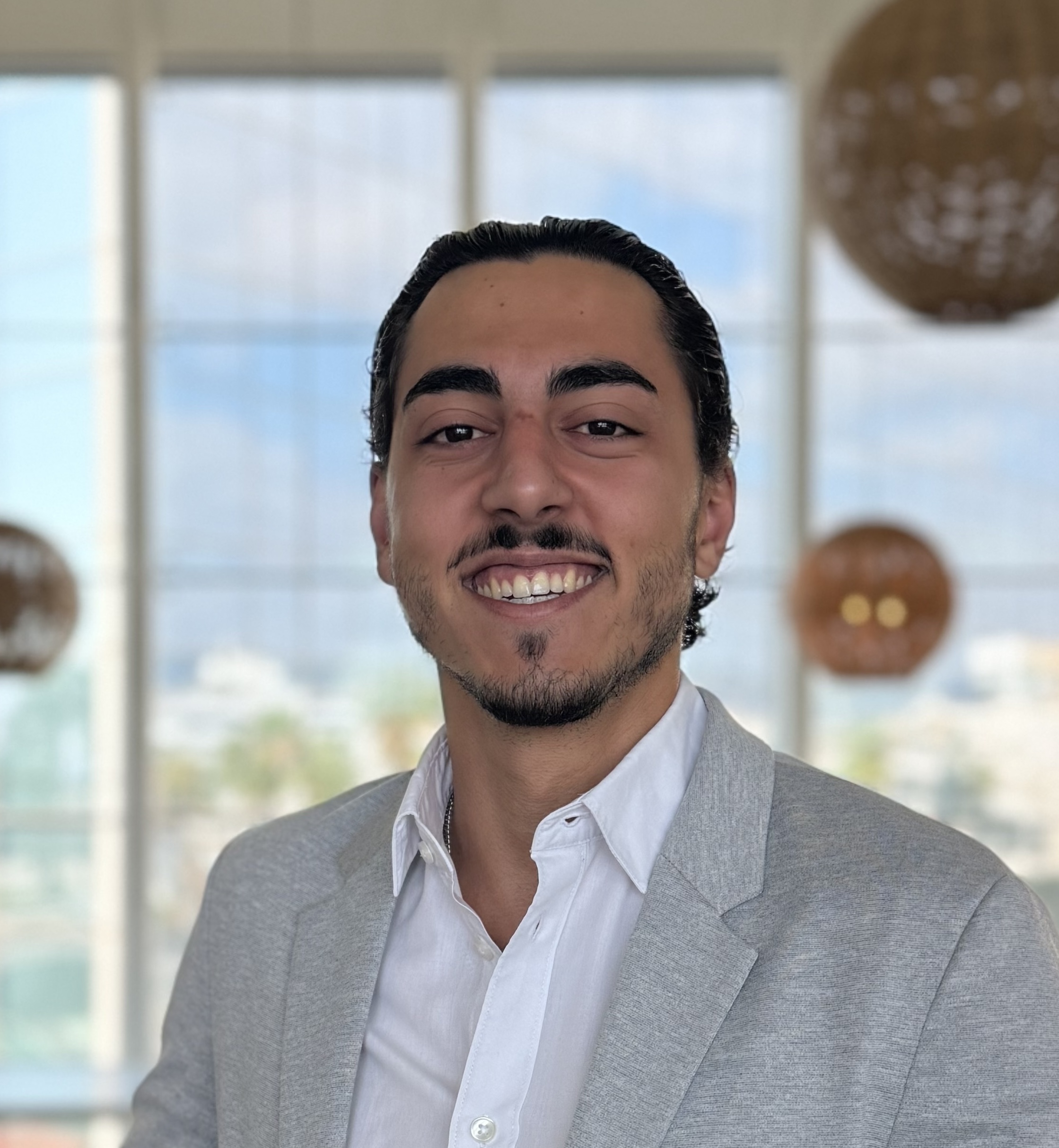
Associate Director of Clinical Solutions
With a diverse background spanning banking, academia, government, and the private sector, Matteo brings a multidisciplinary and multicultural perspective to clinical innovation. Over the years, he has worked across continents — from Canada to Italy, the U.S., Spain, and Romania — gaining firsthand experience with the varying healthcare challenges and opportunities around the world. Fluent in English, Italian, Spanish, and Romanian, he thrives in global teams and diverse environments.
His professional journey includes roles in start-ups, scale-ups, and multinational corporations, each one sharpening his leadership, communication, and solution-building skills. Though his path has been anything but linear, it has ultimately led him to a deep focus on the transformative potential of AI in biotech.
Motivated by novelty, Matteo joined Biorce — an AI-driven organization at the forefront of redefining how Pharma, Biotech, Hospitals, and Clinical Trial Researchers approach drug development. The company’s mission is to make life-changing treatments more affordable and accessible by integrating cutting-edge technology with human insight.