



David Albert, Founder at AliveCor Inc
This episode features David E. Albert, MD, a physician-inventor and serial entrepreneur whose work has shaped modern digital cardiology. Over a 30-year career, Dr. Albert has developed life-saving medical technologies and successfully translated many of those innovations into high-impact startups.
As founder of several health-technology companies and former Chief Scientist of GE Cardiology, Dr. Albert brings rare insight into both clinical medicine and medical device innovation. His inventions, including consumer ECG technology that gained global attention, have helped redefine remote cardiac monitoring and patient empowerment.
During the episode, we discuss Dr. Albert’s entrepreneurial journey, lessons from building and exiting startups, the evolution of digital health, and the future of cardiovascular technology. This conversation provides valuable perspective for founders, clinicians, and anyone interested in healthcare innovation.



Jesus Moreno (00:01.704)
Welcome back to global trials accelerators, the podcast where we dismantle the barriers to clinical innovation and explore the strategies driving the next generation of life saving therapies. In medical device world, innovation is often just incremental, but true disruption happens when you take a gold standard hospital technology, something that usually requires a rolling cart and thin cables, and you're able to shrink it.
to fit a pocket, all while maintaining clinical equivalence. However, the challenge isn't just the engineering. It's the decade-long war of clinical validation, regulatory hurdles, and reimbursement codes that comes after. Joining us today is a legendary figure in the medical technology community, Dr. David E. Albert, a visionary physician, a serial entrepreneur,
a founder of Alivecore and the man who turned the smartphone into a clinical grade ECG. He brings to the table a story track record of multiple successful exits to giants like GE. And he's joining us on the heels of a massive start to 2026 where Alivecore secured two major wins. A landmark FDA clearance that allows their cardiac
12L AI system to detect 39 different heart conditions and a pivotal CMS decision to officially cover this test for Medicare patients. Dr. Albert, it is an honor to have a pioneer as yourself in our show. Welcome.
David Albert (01:49.474)
Thank you, Jesus. I appreciate the invitation to always tell our story.
Jesus Moreno (01:57.234)
And to understand the scale of your impact, that story, I want to look back at the hero's journey of your career, tracing the pivotal moments where you transition from a practicing physician into a disruptor who has consistently redefined the boundaries of medical technology. So Dr. Albert, every great hero story has a call to adventure moment.
You were a physician, but you chose the path of an innovator, an entrepreneur. Was there a specific moment perhaps at the bedside of a patient or a singular failure early on where you realized that you could save more lives through a circuit board than through a stethoscope?
David Albert (02:49.902)
Well, it was a series of events, Jesus. It started when I was still in training. I went to medical school and biomedical engineering graduate school at Duke University back in the late 70s and early 80s. I had my father at the time who lived to be 91. He was at the time he was 70, had a heart attack and he was back in Oklahoma, which was my home state.
And when he was discharged from the hospital, they said, you you need to exercise, cardiac rehab. He lived in rural Oklahoma out way far away from anybody. said, well, you need to walk until your heart rates up to 110 beats a minute. And there were no Apple watches. There were no Polar chest straps. There were none of those technologies we take for granted today.
at that time, nothing existed. So I went to one of my classmates who had been an undergrad engineer at Duke, and he introduced me to another grad student who said, yeah, I can build you something, a heart rate monitor for your dad. And I gave him $200. $200 was, I was gonna have to eat ramen noodles for four months.
We give this guy $200 at that point in my life, but I did. And, and two months later, he came to me with a breadboard with all these wires. said, well, it doesn't work, but that's all I'm going to work on. And I was so angry. I said, this is ridiculous. So I said, I'm going to become an engineer. So I'm not ripped off again. Cause I felt ripped off. So I went and went to engineering graduate school, took a leave of absence. only had eight months left of Duke medical school and
Jesus Moreno (04:25.974)
Of
David Albert (04:32.462)
And over the next two and a half years, I became an engineer, but not only that, I became an inventor and I invented a wrist-based heart rate monitor and then an ultrasound machine to measure the performance of the heart. And I went back to Oklahoma to finish my training after I graduated. And so I'd licensed inventions and I bought myself a Corvette. My fellow trainees were
you know, driving used cars. And I had a brand new Corvette that I'd bought for myself because I sold inventions. And then what happened is I had another idea and nobody wanted to license this one. And I thought it's my best idea yet. So I went to my wife and my father and I said, hey, by the way, I'm going to drop out of medicine and I'm going to become an entrepreneur. And I knew nothing about business. Absolutely zero. Zero. It was the dumbest move I've ever made in my life. But that's now
40 years ago about and I haven't looked back and You know, I've I've Like everybody else it looks like it's always up into the right but there's a series of failures as well as successes and I guess I'm just too stubborn to quit. So I think what I've learned is I you know
I leave business to business people, but I'm a pretty good inventor and a decent clinical trialist so that today I have 150 publications, almost 100 patents. I've seen more than 25 devices through the Food and Drug Administration and helped literally millions of people. So the things you said, I realized I could see
patients a day or I could help 200,000 patients a day. And today at AliveCore, we get about 1.2 million ECGs every week are recorded with Cardias. And so, you you divide 1.27, I'm about at that 200,000 a day helping people. I...
David Albert (06:53.12)
I feel like I've done the right thing, but it isn't always easy and it isn't just continued success. It's moving forward and believing that you're doing something right.
Jesus Moreno (07:10.516)
Wow, that's incredible. And I would definitely consider you a serial inventor. But most people struggle to get one idea off the ground. And you have close to 100 patents and multiple successful exits. That begs the question, Doctor, what is David Albert's filter? How do you look at the world differently to see solutions where others only see status quo friction?
David Albert (07:39.533)
Well, you know, I've read a lot of business books about innovation and entrepreneurship. And over the years I've developed over the decades, I've developed my own methodology for innovation and I call it orthogonal thinking. I've,
25 years ago, I gave a lecture at the Sloan School of Business at MIT, which is their business school. And I talked about intercepting the strategic vector. If you can see, along with everyone else, where technology is moving. Obviously, AI is a big thing today. It's taking over many aspects of our life or integrating itself into those aspects.
what you need to be able to do is figure out not where it is today, but where is it going to be next year, five years from now, and try to figure out not what's the perspective of the people today, but what would be the perspective tomorrow. And so, you know, I try not to follow the conventional wisdom. I try to look at things from a different perspective and, you know,
In geometry, orthogonal means at 90 degrees. So instead of being along the path, I try to come at it from a 90 degree angle from a different perspective. And that kind of just general notion is how I've continued to innovate.
Jesus Moreno (09:14.856)
Of course that makes sense and it's impossible to be disruptive if you're following the same path as everyone else. So it makes complete logical sense. But I also think that you run a risk by doing that. Every hero's journey has a belly of the whale moment, if you will. A time where the tech didn't work or the markets said no.
Throughout your career, your 30-year career, what was your most instructive near-death experience for a startup? And how did that specific scar tissue make you a more formidable founder today?
David Albert (10:02.168)
Well, I'd be honest with you, if I said I only had one, I'd be lying. I've had a number of them where, you know, I thought we're dead. And, you know, what you have to do is figure out how to get past it, how to cross the chasm, the famous business notion of crossing the chasm. You know, in our business, I could say at Alivecore in 2018,
we had at the time the world's biggest company announced that they're going to be a direct competitor to us. And I thought, well, we're dead, you know, they're everywhere in everybody's pocket on everybody's desktop. But I have to give credit where credit's due and credit due is to our chairman of the board.
very famous venture capitalist Vinod Khosla who said it's the best thing ever happened to you. You've been a small voice saying we're going to democratize the electrocardiogram and cardiac monitoring and take it to the masses. And now you have the world, one of the world's biggest brands, if not the biggest brand saying that is important. And he was absolutely right. Our business has grown 10 times since then. And so that was, I thought we were dead.
And in reality, it was a giant boost to our business. So from that perspective, I learned and you got to continue to learn. mean, people say it all the time. You have to be a lifetime learner. So here I am in my early 70s. OK, and I try to learn every day.
And I can tell you, I'm pretty convinced I continue to innovate, I continue to invent, and you will see lots of new innovations coming out of AliveCore that continue our mission to help patients and lower healthcare costs and improve quality and outcomes. So that journey we're on will continue.
Jesus Moreno (12:15.67)
Wonderful. And you touched several different subjects that I want to explore more deeply as we progress in this conversation, starting out with what do you contribute or attribute your success to? You started as an individual contributor inventing, leading global teams.
And now you're leading those teams through a massive technology, excuse me, technological shift. Looking back, how much of that success was due to your own eureka moment versus the ability of recruiting the correct talent, the believers in your vision? And how does that...
leadership style, leadership model change now that the teams are increasingly including AI agents and automated workflows.
David Albert (13:19.522)
Well, you've said it. Well, first of all, it's classic. There is no I in team. you know, we have development resources literally around the globe at AliveCorp, even though we're a relatively small company. And so I would tell you that developing new innovations requires a team.
And I realized that long ago, several decades ago, that while I might have an idea, the realization of the idea takes a lot more people with a lot of different skills and skills that I don't have. And so that is true. I think I've come by this stage, know what I'm good at and what I'm not good at. And I think that's...
That's being honest with yourself and realizing that you need to find those people with the complementary skills such that the team has everything it needs to succeed. And today, that includes AI. That includes insights into markets and communities that I'm unfamiliar with. I've always been...
In medicine, understand cardiology, doctors, but selling to consumers, selling, you know, I have a saying, not every consumer is a patient, but every patient is a consumer. And you must treat them with the same kind of respect and understand their thinking. They may have a few different motivations than the, you know, the average 75 year old is a little different than the average 25 year old.
And you have to understand those things, especially because we have different needs at different stages of our life. And so you need to have people who understand all those aspects of all those different opportunities, markets, and in order to succeed. And I think I learned that lesson a while back and I've continued it. know, AliveCore has people who come from...
David Albert (15:31.542)
a variety of backgrounds and a variety of experiences. And it is that soup of all those capabilities that creates our success.
Jesus Moreno (15:44.991)
interesting that diversity is a crucial factor to success. And I think that points towards another very important topic I want to cover with you. You've seen clinical research evolve from slow anical and excuse me, and I'm going to start that question again.
You've seen clinical research evolve from a slow analogous process to a high speed AI error. There is a constant tension between the move fast and break things tech culture and the safety first regulatory standpoint.
Where do you think the industry has landed on that landscape? Have we have we achieved the balance? Are the current pathways flexible enough for the speed of innovation we're approaching nowadays?
David Albert (16:49.154)
Well, at the beginning of January, the Food and Drug Administration announced that it was essentially deregulating a series of wellness technologies that won't require a regulatory, FDA regulatory pathway of 510K, et cetera. And I think that's a move in the right direction. Now, the question is, what should people believe in? What should they trust?
And by people, mean both consumers as well as physicians. And so I think you'll continue to see the fact that, for instance, at AliveCore, we sell regulated medical products, but we sell them in many ways direct to consumers. So that's different than selling a wellness device, an activity tracker device. It is selling a medical device. And by the way, in many instances,
the output of that medical device will ultimately need to find its way back into the medical system to a physician, to a caregiver, so that it can be utilized to better help that patient and to personalize their care. And so that introduces a whole other aspect because we have a very
huge medical enterprise in this country. And inside of that is a whole IT system that developed over the last 25 years of the electronic medical record where we're in a very private fashion, all your data should be stored. And getting data into that system is a challenge. And we at AliveCore have been working with partners like GE Healthcare to make sure that the appropriate data
that can be used to help a patient finds its way back into that electronic medical record. So I would just say, know, clinical validation is critical if you're building a medical product. It's absolutely necessary if you're going into a regulatory process, the FDA or outside the United States. And I think we've we've been very involved and conducted a number of
David Albert (19:06.826)
of clinical studies validating our technology. And I brought that to the company because I have experience dating back to the early 1980s and doing clinical research, publishing papers, validating innovations. so, you know, that's part and parcel of our success is that we bring validated technologies to the consumer base.
Jesus Moreno (19:34.423)
Of course, and I would like to drill down a little bit further in that notion of validation. I would like to post this statement and see if you agree, but in 2026, regulatory environment, the burden of proof for AI has shifted towards explainability and repeatability. So that
That begs the question, how do you design a trial that provides an algorithm? It's that, excuse me. How do you design a trial that proves that an algorithm isn't just a black box? And how do you ensure that your AI clinical intuition is repeatable across different patient populations?
David Albert (20:28.62)
Well, first of all, it all starts with data. mean, the fundamental, the foundation of today's AI is machine learning. So our algorithms, our models learn. We at AliveCore have been very fortunate. have...
well over 300 million recordings that have been gathered with our devices. And in addition to that, we have millions of 12 lead ECGs from our clinical partners at Mayo Clinic, Emory University and Massachusetts General Hospital that we use to train our algorithms. And these are very diverse, multi-million recording databases. And what are the metrics of success? They still are. What is a consensus?
diagnosis by three board certified cardiologists in one instance. So what do these three humans, what conclusion do they come to and does our AI model fit that and what are the statistics of that correlation? So what's the sensitivity, the specificity, the positive, negative predictive accuracy, the area under the curve?
the area under the precision recall curve. These are all metrics, the F1 score. These are all conventional metrics that are now applied to these AI models. When in the past, we used expert systems, rule-based systems, but today we have these machine learning. You can't look inside the black box with complete clarity. There are still some things that
We can't fully understand how it comes to a decision, but we can evaluate the accuracy of that decision, the repeatability of that decision, and how it applies across demographics, across populations. And that's what we do, and that's what the Food and Drug Administration requires that we do of these new AI solutions.
Jesus Moreno (22:38.646)
I see. So as long as you're confident that the answer at which the model arrived at is the reality, is the objective reality, you don't necessarily need to understand every step it took to get there.
David Albert (22:57.538)
Well, I mean, that's right. That's exactly right. It is not a if-then-else type of rule-based cascade where if this, then do that, then this is it and this, and it's not that. Again, it's machine learning and inside of this deep neural network, it's figuring out. And so we know that we've seen with the advent of chat GPT and LLMs just three years ago, this incredible
accelerating advance of tools. And I think, you know, we've seen issues of what they call hallucinations, but at the end of the day, these models continue to get better, continue to be more accurate, continue to hallucinate less. And I think that's an almost inexorable path to where the AI, we will
trust it more. And I think we see that in our business and I think we'll see it in all aspects of our lives going forward.
Jesus Moreno (24:10.742)
Yes, I agree. I definitely see that happening today. But going back to that crucial material, that raw material you alluded to in the first part of your answer, data. And this is a known, known bottleneck.
the fact that not all data sets are created equal and we don't have data sets to represent all populations. And as a result of that, we've been hearing more about in silico trials and synthetic data to speed up testing. As a practitioner, do you trust this digital shortcut? If I may use that term to describe this strategy.
Or is there a risk that we are creating a dangerous feedback loop where AI is essentially grading its own homework without enough real world human data?
David Albert (25:11.662)
Well, I liked creating my own homework when I was in school. However, know, we're in early days. You're absolutely right. We are seeing the advent. We are investigating it ourselves of creating synthetic data to broaden the training set, to broaden the test set. And that clearly is a process that's being carried out around the world.
exactly how useful it's going to be. Will it improve the expandability and the accuracy of our models? Well, that's to be determined. I think we're again, we're just in early days of utilizing synthetic data to expand our databases. But it's clearly something we need to look at because you can, can, you know, with a few examples, I can characterize it's that it's kind of like this issue of
what we call foundation models. The foundation models are being used more and more. And in our business, a foundation model basically doesn't have the traditional architecture of reverse propagation, where you give it the answer and you give it the input and you let it figure itself out. You just give it a bunch of data. And it, in essence, sets all the nodes within a model. And in essence,
learns features, doesn't give you an answer, just learns features and sets up the many layers of a deep neural network and then you train it. And what are the advantages? Well, they talk about one-shot training, a single example, or speeding up training to where in essence you've given it an unfair advantage. You've given that neural network an unfair advantage. It knows something about the signals you're giving it. It doesn't start from a
baseline of zero. And I think these, we're learning that these can be very useful to help us improve our models. And we're exploring those things right now. And I know at several scientific meetings I attend, people are discussing that. I think that will become an integral part. changes in how we train our AI or how it trains itself.
David Albert (27:37.369)
You hear about adversarial AI, where you have two neural networks that basically go back and forth, and that this creates new and innovative solutions. Well, I think we're all gonna, we're gonna explore all of these aspects. Again, we're at early days, we're at the infancy. know, come back to me in 10 years and we'll be able to answer some of these questions with more certitude.
Jesus Moreno (28:04.648)
Of course, of course, it's it's a scientific process. It's iterative and sometimes a little messy. And and even even. Yes, it is. And there's another limiting factor, which is the economy of of this this process.
David Albert (28:16.258)
real world is always, medicine is always messy.
Jesus Moreno (28:28.912)
And you've recently locked in a CMS reimbursement for the Cardiac 12L and for the VCs listening. With rising costs of clinical trials and tighter margins, how much of your strategy is now focused on economic innovation, proving that the tech reduces the cost of care?
versus the actual medical engineering aspect of it.
David Albert (29:02.062)
Well, payers are very interested. mean, first of all, the United States pays much more for its health care than anyone else in the world. And it could be argued we don't get our money's worth. So there's great interest both in the government. I listened to Dr. Mehmet Oz, the head of CMS, talk about that at a session at the Consumer Electronics Show. They're willing to experiment with
new ideas that potentially lower the cost of care. Also, they're willing to experiment with things that are preventive. In the past, here in the United States, in our fee-for-service world, there was no incentive to prevent disease. Hospitals made money treating disease. Doctors made money treating disease. They didn't make money if there's no disease. People don't come to the hospital, don't go to see their doctors.
But everybody understands that we have to do that. We have to help people prevent certainly the tsunami of chronic disease that we've seen in our society. So there are experiments for doing that. Companies that are self-insured, that bear that weight, they're very interested in anything that can lower their costs, yet keep their employee base productive.
And so I think these kinds of ideas are now gaining traction and gaining momentum as opposed to simply advancing technology to treat people who are in the hospital, who are in the intensive care unit, who are in the operating room. That's going to continue to go, but we clearly are going to put some more focus on how do we prevent those things from happening because
you know, an ounce of prevention is worth a pound of cure. And that's a fact. And it's in dollars, can be very, very, have a high ROI, let's say. So I think we're gonna see that. I mean, our country has to experiment to see if we can lower the cost of healthcare. I just saw an article the other day that said for a family of four,
David Albert (31:24.236)
The average health insurance cost for a year is $27,000. You're buying a new car every year to take care of your family's health care costs. That's unsustainable. by the way, the costs keep going up. you know, we've got to experiment. We've got to find ways to control costs. No doubt about it.
Jesus Moreno (31:46.485)
Absolutely. And you again introduced two subject matters that I want to explore further. The first of which is consumer wearables. There's been a trend recently around consumer wearables crossing into the clinical space.
from a business perspective, is there a clinical ceiling, a point where a consumer tech just can't meet the regulatory burden of proof, or are we seeing a permanent blurring of the line between what a gadget is and what a medical device is?
David Albert (32:31.518)
There's certainly been a blurring of that line. You know, it didn't take, you know, Apple watches or Samsung watches or Fitbits and today, Aura rings and other wearables to push that. Consumers are bearing a higher burden of the financial cost. They are incentivized.
to help control that cost. And people are understanding that, you know, it could be a, you know, glucometer, an Abbott or a Dexcom glucometer. People can buy those over the counter now, and you can watch how your blood sugar responds to your diet and exercise. Getting people engaged in their own health is critical. And I think that's the part that wearables play. You know, clearly,
they'll be more or less accurate. mean, that's part of the deregulation effort at FDA that was announced in early January is to allow them not to have to cross some very serious accuracy standards if they are going to help people live healthier lives. And I know the Secretary of Health and Human Services, Secretary Kennedy has said, you he wants everybody wearing a wearable.
Be aware of your health, be aware of your body. And if those wearables can help you do that better, then they'll be valuable. They'll help us achieve that notion of prevention and a healthier lifestyle. So I'm a firm believer that wearables are very valuable. They're going to be different, but they continue to evolve and get better.
in terms of accuracy and capability. And I think that path is inexturable. They'll continue to get better. And the gap between those and what we see in a hospital, in an intensive care unit, in an operating room, will continue to close. I'm not sure it'll ever close completely unless we start sticking things in the body like we do in the hospital. But it will continue to get smaller, that gap.
Jesus Moreno (34:47.678)
I see. And I think the integration with GE Healthcare MUSE system speaks to that belief that you hold, which some or my question is, would it be a fair description to say that this is a signal of a major shift from a hardware centric business or healthcare model?
to a model that integrates data as a service, much more like a platform. And does that mean that, I don't know, four years from now, 2030, the medical device company doesn't really exist? What we will be looking at are feature sets of AI-driven hospital operations.
Is everything going to be integrated into a massive data as a service platform that's going to allow us to determine the health care or the health condition of a patient?
David Albert (35:59.193)
Well, remember I mentioned electronic medical records. mean, one of the aspects is today these are held behind firewalls secured inside of a health system or a hospital's premise. And I think in the future, the individual will control their own record. Because if you move, it's a challenge to get your data, imaging, ECGs, notes.
to another location. And so if a person owns their own record and has control of that. So I see your, I mean, today already, AliveCore is an information business. We're not, we're a hardware only that we need to generate hardware, but we're an information business. And we're in the business of integrating our information, especially that that's critical, into a patient's care journey.
so that we allow them to have better outcomes. It sounds simple, it's not simple to implement. Integrating into the electronic medical record is a challenge today, especially from outside, especially when you have, in essence, a tsunami of potential wearable personal health data, weight, blood pressure, blood sugar, EKG, pulse oximetry. We could go on and on, activity.
steps, but what we need is the AI to analyze that tsunami of data and create insights and then enable those insights to make their way back to the clinical desktop such that another AI helping a physician says, look at Mrs. Smith's, her blood glucose is up, her heart rate is down. I think something's happening to her.
Those are the kinds of early insights. You can treat and manage a patient better if you can address a problem early. And I think that's where some of these consumer-like technologies will play a role in helping physicians better manage at an earlier stage some of the issues patients have.
Jesus Moreno (38:23.094)
That's a very promising landscape. And I'm curious to hear your perspective on what do you think we're missing? Where should we be looking for the next?
Or should we be looking for the solution to the bottleneck that it is that extracting the value of that tsunami of data? How close are we to a world where you can use a smartphone to tell or predict better, to predict a cardiac event before the first symptoms appear?
David Albert (39:12.024)
Sure. Well, think you have to integrate all the data. Yes.
Jesus Moreno (39:14.452)
Excuse me, doctor.
I believe Morgan has stopped the recording. Sorry, I received a message. I think she dropped from the call and that prompted me.
David Albert (39:32.814)
You drop from, that's fine, the recording's still going.
Jesus Moreno (39:36.041)
Okay. she's there again. Okay. So excuse me. I'm going to if, if I will, if I may, I'm going to post the question again and allow you to answer. Okay. So looking at that promising landscape, what do you believe is the bottleneck that is keeping us from a world where a smartphone can tell us can predict a
David Albert (39:45.038)
Sure, go right ahead.
Jesus Moreno (40:04.054)
cardiac event is soon to happen based on all that tsunami of data available to us through those wearables and sensors. Is the AI sophistication the barrier we need to overcome to achieve that predictability or are there any other obstacles that we need to...
David Albert (40:27.32)
Well, there are other obstacles. The issue is wearables can only give you so much data. For instance, we have technologies today called a CT angiogram that with a CT scan of your heart, we can actually see the development of atherosclerotic plaques and understand the risk of each plaque. as we, that information is critically valuable when it comes to predicting
a future event. Now, what it doesn't tell you is when will that event happen? That's where the real time data you gather from a wearable could be very valuable when merged with that information. Well, that resides inside the hospital. That resides inside that firewall. So again, at the Consumer Electronics Show, I heard Dr. Oz, who runs Medicare,
say we're going to knock down those barriers, we're going to enable the fusion of that data. So the very valuable, you know, invasive data that we get inside the medical enterprise, inside of the doctor's office, the ultrasounds of your heart, the CT angiograms, all of that really invasive type of data or more intense data needs to be merged with the real time monitoring that wearables provide us.
so that we know your baseline risk. And now we can see how that's varying in real time using the real time monitoring that a wearable provides. So I think that's going to take some effort because today we have things like HIPAA that say your data is very private. Well, you're going to have to approve.
the use of getting that data out of the hospital, out of the doctor's office and merging it and allowing the AI to see all of that data. Well, that doesn't exist today, but that's a promise that might lead us to being able to predict. And in medicine, prediction is prevention. And that's the ultimate goal. We want to stop, we want to prevent you from having that heart attack.
Jesus Moreno (42:44.434)
Yes, that's the holy grail for sure. But so it's a regulatory issue rather than a technological obstacle to overcome.
David Albert (42:55.042)
Well, it's regulatory and technological interact because these things are behind firewalls. You know, you can, in many instances, it's a one way communication data can go in, but it can't go out. You know, it's Hotel California. You can check in, but you can't check out. And so these things have to be, you know,
changed. The actual IT infrastructure has to be modified to allow this, along with all the privacy and security issues that have to be resolved. So I can't tell you what's going to happen in the short term.
I know people are working on it. know that Dr. said CMS is committed to making sure that this data flow happens. So, you know, we'll see. We've addressed it ourselves with our partnership with GE Healthcare to enable data from our Cardia 6L to flow into the MEWS and the reports then flow into
electronic medical record in a hospital. And I can tell you that was a big challenge to get that done. but it but it now is operating at at at several major medical centers with a lot more lined up to to adopt it. But it wasn't an easy process and it took quite a bit of time.
Jesus Moreno (44:26.9)
Yes, it's a risky gamble to unregulate access to such sensitive data and taking that into account. And also the democratization of technology, of AI models to a CEO that might seem like a
David Albert (44:38.157)
That's right.
Jesus Moreno (44:56.494)
lost in their competitive edge, meaning if the data is available to all and the models are open sourced or easily reproducible, my question to you is, what do you think for the CEOs that are listening, what do you think is that one uncopyable, unobtainable business asset
that companies need to be focusing on today to not be obsolete in 2030.
David Albert (45:33.273)
Well, that's a challenging question. My crystal ball is in the shop right now, okay, it's being repaired. you know, what I would tell you is you need to always be, you know, there's the old saying of always be closing, always be innovating, always be improving. So...
you know, ABI, whether it's always be improving or always be innovating. That's how you ensure success. And there's no such thing as a guaranteed success. You have to always keep making whatever you're providing better, providing better value, providing in our case in healthcare, better outcomes, lower costs. So I can't tell you a specific thing they can do except keep pushing forward.
Jesus Moreno (46:27.412)
That's wonderful. Persistence is more often than not the key to success. And Doctor, you mentioned during the first part of our conversation about your relationship with MIT, and you've been mentored to entrepreneurs at MIT.
David Albert (46:34.03)
That's correct.
Jesus Moreno (46:50.55)
I'm curious to learn if you were starting over today, if you were at that stage of those young entrepreneurs starting out today, 2026, with the landscape we're looking at right now, would you still start with cardiology or is there a different area of the healthcare system, healthcare?
market you would see that it's... Sorry?
David Albert (47:23.384)
My interest in cardiology came before my initial entrepreneurial jump. I read my first 12 lead ECGs in the microfilm room of Duke Medical Center in 1978.
Jesus Moreno (47:32.48)
Mm-hmm.
David Albert (47:42.731)
Okay. And my mentor there was one of the world's gurus of, of, of EKGs, sent me on that path, you know, almost 50 years ago. So that, that came first. I would just tell you that the opportunities, the resources for entrepreneurs are way bigger today than they were when I started.
You know, it was extremely unusual in the 1980s for a physician to leave medicine and become an entrepreneur. Today, I know lots of people. I've had scores of physicians come to me. It is far more common and there are far more resources. There are accelerators, far more venture capitalists. Every aspect of the environment
the ecosystem to support entrepreneurship has grown tremendously. And so I think that that that speaks well. You know, we're going to have you've got democratized technology. When I started, had, you know, IBM PC was a brand new thing. And, you know, I thought a 10 megabyte hard disk, I'll never fill it. Right. A 10 megabyte hard disk. I have a lot of files bigger than 10 megabytes. So the world has changed and only for the better when it comes to
enabling entrepreneurship and innovation. That doesn't mean it's going to be easy. It doesn't mean it's going to be automatic. It doesn't mean they're not going to be failures. There'll be all of those. I think young entrepreneurs, here's a classic, 10 years ago. So 10 years ago in San Francisco, when AliveCorp was headquartered in San Francisco, I could tell you that from Union Square, which is right there at the center,
and of San Francisco downtown. Union Square. I could literally walk two blocks, Northeast, South or West towards Market Street, towards Chinatown, it didn't matter. And I would hear the word startup. Now that was 10 years ago. I could walk in any direction for two blocks and I would hear the word startup once from somebody. And it's only grown from there.
David Albert (50:00.463)
So I think that makes me very optimistic. San Francisco is having a renaissance. It had a little down period after the pandemic and issues, but today it's the center of the AI revolution. And so I think it is reborn as the AI hub. When 30 years ago, was the dot com hub.
And Silicon Valley is reborn, whether it's Nvidia or Google, it doesn't matter. It re-engineers itself for innovation. And obviously the core of innovation today is AI. So I'm very optimistic that young entrepreneurs have great opportunities and we need all of them. Whether they're at MIT or Stanford or wherever they are, Iowa State, I think we have opportunities for entrepreneurs to come in and
and contribute to the betterment of our society.
Jesus Moreno (51:04.382)
And with that optimistic note, Dr. David Alberts, thank you so much for sharing your time, your insights with us today. I truly believe that you're approved that the best way to predict the future, which has been the focus of our conversation today, is to invent it and go out and solve some difficult questions.
Yeah, move fast, break things, but be sure to, to, yeah, color, color within the lines because even after you invent something, you need to spend the rest, the next couple of years proving that, that it's safe to use. So, doctor, thank you so much for, for sharing this time with us. Thank you for.
David Albert (51:37.774)
careful when you're dealing with human beings, but yes.
Jesus Moreno (52:01.31)
Being here and sharing your insights with our audience and for listeners. We will include links to Dr. Albertson's live core company and the show notes and Until next time keep accelerating. Thank you for listening. Goodbye
David Albert (52:18.136)
very soon. Bye bye.
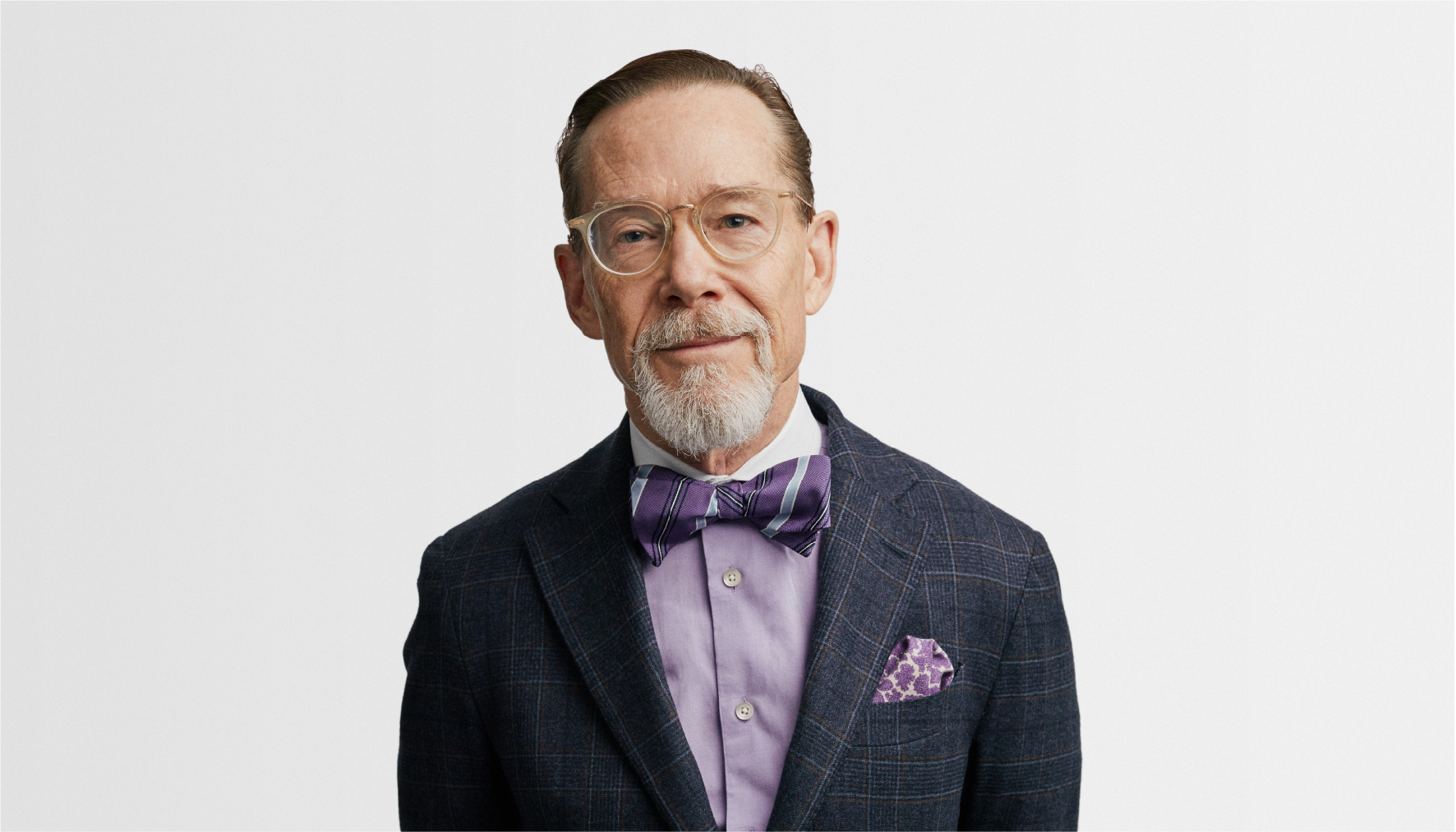
Founder and Chief Medical Officer at AliveCor
David E. Albert, MD, an Oklahoma native, is a physician, inventor and serial entrepreneur who has developed life-saving technologies and products over the last 30 years, turning a number of those innovations into tech startups. Today, he is a founder of three technology companies, InnovAlarm, Lifetone Technology, and AliveCor. His previous startups include Corazonix Corp (sold to Arrhythmia Research Technology) and Data Critical (sold to GE). Dr. Albert left GE in 2004 as Chief Scientist of GE Cardiology to disrupt several new markets. His latest invention, AliveCor’s KardiaMobile personal ECG technology, became a global sensation via a YouTube Video in January 2011 around the Consumer Electronics Show and was featured on ABC, CBS, CNN and Fox News among many other media outlets. Dr. Albert has 80 issued US patents, a large number pending and several new “secret inventions” in development. He has authored or co-authored over 100 scientific abstracts and publications, principally in the cardiology literature. Dr. Albert has lectured at the Entrepreneurship programs at the MIT Sloan School and the University of Oklahoma. Dr. Albert graduated with Honors from Harvard College and from Duke University Medical School.