


Alfonso García, CEO & BD Director at Leon Research
In this episode, we welcome Alfonso, CEO at Leon Research and Managing Board Member and Marketing Director at AICROS, for an in-depth conversation on leadership, clinical research, and business development in the pharmaceutical industry.
Alfonso has 14 years of experience in managerial and executive roles, with the last 10 years dedicated to clinical investigation. Originally trained in psychology, his curiosity and passion for continuous learning have driven a career that blends science, strategy, and people-centered leadership.
As CEO of Leon Research, a full-service CRO operating in Southern Europe, Alfonso leads with a clear mission: to grow the organization by empowering its people and staying true to core principles of intelligence, creativity, flexibility, and honesty. Through AICROS, he has also played a key role in designing and implementing sales and marketing strategies that strengthen client relationships and expand business opportunities across the CRO alliance.


Jesus Moreno (00:01.73)
Welcome back to Global Trial Accelerators, the podcast where we dismantle the barriers to clinical innovation and explore the strategies driving the next generation of life savings therapies. I'm your host, Jesus Moreno, and today we're discussing a common trap in the race to globalizing clinical trials. The assumption that standardization means saneness. We often try to force a protocol design
in Boston to work unchanged in Barcelona, Berlin, or Buenos Aires. But the reality of clinical research is that execution is always local. My guest today is Alfonso Garcia-Cañamaque, the CEO of Leon Research. With over 16 years in the industry and a unique background in psychology, Alfonso brings a behavioral lens to a complex world of drug development.
He has watched the European market evolve from a fragmented landscape into a powerhouse of recruitment. And he has deep insights into the macro trends shaping the CRO sector. Alfonso, welcome to the show. It's a pleasure to have you with us.
Alfonso (01:19.537)
Hello Jesus, thank you very much for hosting me. It will be my pleasure to be able to talk about Spain. Just a little bit point out is that we are doing our job in Spain, Italy and Portugal. So south of Europe is most my region. Although of course I'm based in Spain and my main knowledge is for the Spanish market.
but also the European one is where we are involved. So again, thank you. It's my pleasure to be here.
Jesus Moreno (01:55.34)
Excellent, thank you Alfonso. And I wanted to start with your background because it provides a unique filter for industry. You are a psychologist by training. Clinical research is an industry obsessed with data, protocols, and endpoints. But at its core, it is a business of human compliance, getting patients to participate and sites to follow rules. Can you tell us
about your background in psychology and how that led you to where you are today and perhaps how it has changed the way you diagnose our industry's challenges.
Alfonso (02:38.276)
Well, when I decided to study psychology, it's because I wanted to be a psychiatrist, which was different. But I remember that at that time I saw an accident of a guy on a motorbike and it was a lot of blood everywhere. And I was not able to afford it. So I decided to switch to mine, of course, and personality, which is something that I've been always...
interested, but I was, I thought that I was not going to be able to be a physician itself. So I decided to switch to psychology, which were my main focus. And I was also interested in business. So I decided to study psychology in business psychology. So my first activities were based on human resources management, training, this kind of stuff.
So I started there in a company in a consultancy dedicated to training to adult training or training in work environment. So I started there. And then my sister, Rocio, me, she's a pharmacist and she started to work as a monitor of clinical trials. And she decided to create the company and asked me to join and take part of the, and be part of the company.
So we divided the company into operations which were dedicated or guided or led by her. And on the other side, the business side of the company, human resources, business development, quality, finance, and that kind of things that was on my side. So I started with that. It was like a couple of weeks ago when I was...
having a meeting with investors and some other people and they say, it's curious because normally we are used to manage companies with a CEO graduated in finances. So the numbers and the results are the important part. We've been working with operation CEOs that are based on the operations and everything has to be there.
Alfonso (05:01.957)
but also low or whatever. But in the end, it's true that maybe Leon research has this difference, that the CEO is a psychologist. And probably I am more focused on people. And as you mentioned, it seems like this market is based on data and everything like that. But in the end, people is the most important thing. The decision why I decided to join this adventure.
with my sister was due to that. I was having a cancer at that time, colorectal cancer, and everything is fine. 20 years ago, I'm perfect. But it's true that at that time, I thought that it was really important, the activity that we were doing here for people, not for companies, of course, for the society, of course, but in the end, it's patients and the late motif or the...
Jesus Moreno (05:41.163)
I'm glad to hear that.
Alfonso (05:59.408)
main motive or the main core of what we do is based on that, patients and bringing to them some solution to the problem. And that's wonderful part. And I think that from my perspective, I guide it down to the rest of the company and everyone here is very concerned with that, with the good treatment. Patients or investigators or clients or everyone in the end, we are all people.
and people is almost the same everywhere. Although things are changing now to AI, but I guess we will talk about it later.
Jesus Moreno (06:38.477)
Absolutely. Yes, that's one of the questions I have for you. I'm very keen to explore that topic with you. But I wanted to keep this line of exploring your experience as a CEO. And you've been in leadership roles since 2009. You have seen the industry through the
2008 financial crisis, the COVID-19 pandemic, and now the 2024-2026 economic shift. Having navigated those different economic cycles, have you seen the mindset of the sponsors change? Are pharmaceutical executives today more risk adverse than they were a decade ago?
or perhaps has the pressure to innovate, force them to be more agile and more open to new ways of doing things.
Alfonso (07:37.552)
Well, I guess I consider the world is like a pendular, not continuously pendular indeed. There are some periods when sponsors, mainly big ones, not big players, they decided to do it internally things. Then someone on the board says, no, no, let's do it now externally again. And then they return back to the internal way.
So it's a pendulum thing and it's continuously moving that way. From my point of view, what I have seen during these years, course, are different. The 2008 crisis was affected more locally. It was more, it was a global crisis, of course, but it was, the affection of it was more local. So if you were in a good international way, the crisis were less.
where less damage is a little bit less. And that happens during that time. We were very focused on the international market. So for us it was complicated, but we overcome it really well. And then on the 2020, it was more a global crisis. And it was absolutely, I mean, if you were...
based on international markets, there was a big problem. Local ones were a little bit less, but in the end it was also big ones. Then now situation is of course growing and everything seems to be fine. Although there are always challenges and risks around everywhere, but the external situation is always different. So the point is that you have to be comfortable with who you are and what you do.
and with your principles, basis or what have bring you to here. And that's a big point here. I guess that we are very focused on that and we are really concerned on being who we are, not anything else. We don't want to be any other one. We just want to be ourselves. that's a... When you know who you want to be, which is the most complicated part to...
Alfonso (10:03.378)
to identify with what you want to be, then you only have to follow that path. And that's always better.
Jesus Moreno (10:13.813)
I see. And in that shifting of the market, have you noticed any change in who pharmaceutical executives are? Have they been approaching you in a different way? Are they more interested in exploring new strategies or they're even more reluctant to, you know, being flexible and trying new things?
Alfonso (10:41.113)
Well, you know that this is always also a part of what it's called OPM, the others' pocket money. So they are not normally these decision makers. Seriously, they don't use their money. They don't risk their money. They risk the others' money. So in the end, but it's also a really intense money and a really intense responsibility.
Jesus Moreno (11:02.295)
Mm-hmm.
Alfonso (11:10.501)
There is no way on not taking this under consideration. what this really makes is that the risk is on their persons, on their career, on their job. So there is a big deal there. So they want to do, they need to trust. They don't have money problem. It's not an issue of money.
they need trust. And trust, confidence is not that I am inventing this, but you know that you can lose all your confidence in one second and it takes too long time to win it. And that is the most relevant thing that I see on the...
Jesus Moreno (12:00.503)
you
Alfonso (12:10.199)
sponsors and executives of the sponsors. It's also true that I am becoming old and they are becoming younger, which is another difference. But that's also part of the time life. We are moving forward and everyone. So people are getting younger. And probably when you face someone who is more young than others, they used to take more risks.
than when they are more or older than the others. So there is another difference. Yeah.
Jesus Moreno (12:46.541)
Traditional, let's say. So what I hear you say, correct me if I'm wrong, is that it's a combination of factors between what's at stake, if it's money, reputation, who you're speaking with, the generational component, and also the
how the relationship has developed and if there's a rapport, if there's a trust that has been built or if it's a first encounter where both parties are figuring out how to approach this interaction. Those seem to be factors that transcend macroeconomic factors and are always the key basis on which
that relationship between CROs and sponsors work. Would you agree with that?
Alfonso (13:44.818)
Absolutely, it doesn't mean that a macroeconomics issue does not affect. Of course, all factors affect. also, as I was mentioning previously, this pendular thing, sometimes it's just a simple decision on the board that they say, are paying to... I have heard this particularly.
I've heard one executive saying, we are paying you too much. We are wasting too much money on a zero. We will do it internally. And they decided to. And these used to be macroeconomic factors that participates on that. Because in that world, what they see are big results, big information, big data, and that's all. But then when they go to the earth,
and they start working and there is the complications there, then is when they come back and say, well, maybe we are not paying that much, maybe this is not our core business, maybe this is not where we are winning, or the place where we are going to win. But this is always this part of that. And at that times when that happens is when they start with mergers, acquisitions.
participating in other companies and that's the other way around but definitely what most affects from my point of view is that relationship, to have a relation more than what kind of relation it is it might be a fantastic one or it might be a simple one we might be friends or we might be just
co-workers or colleagues, but in the end, that's the big part. Relation on one side and then on the other side, these kinds of economic decisions.
Jesus Moreno (15:42.093)
partners.
Jesus Moreno (15:52.276)
Excellent, thank you for that. And speaking of that landscape and how the market is shifting, we're seeing massive consolidation. The big five CROs are buying up mid-size players and trying to create a one-stop shop for pharma. Have you seen this happening?
This bigger is better model actually serving the industry or are we seeing a bifurcation where the market splits into two, the giant serving big pharma and a new ecosystem of specialized regional partners serving the innovators.
Alfonso (16:44.657)
Both, also we, for example, Leon Research, we are members of an alliance of CROs, international one, where we have members in China, US, South Africa, everywhere, Europe, course, India, and we cover all that regions, and we want to be also a one stop for that. So we can provide, we say it, slogan say that...
You don't need global CROs to do global studies. So that's the other part. But it's also true that the big ones, what they are doing are big studies. And for big studies, you need big resources. that's another difference. It's also, I mean, we are a boutique CRO located in covering one region and that all. We can do many trials and we can...
we can do a lot of investigation. indeed, Spain is the second country in the world in terms of clinical trials managed. Beside China, where we don't have clear numbers, but I guess it will be US, then China probably. But if not the second, it will be the third one.
including China and Spain. So Spain is really well positioned there and we have a huge market, local one and global one. but in the end...
Your localization is a really relevant part of the decision. they can take sponsors used to decide, I'll go to Spain or I'll use it. And as I'll go to Spain, I will use a local one. But also global CEOs need local resources sometimes. So we are working also for big CEOs. So when they say no, we can provide the services.
Alfonso (18:50.929)
all over the world, but sometimes they need local resources for that. So that's the other part. sponsors, what they want to be clear is patience. This is the main focus. Time and patience. These are the two factors that they're looking for. So if you provide them with patience, then you are a fantastic zero. If you can provide...
patience to the studies, then you are the worst CRO in the world. So that's the part of it.
Jesus Moreno (19:31.008)
Of course, and you've touched on a subject I wanted to explore. In terms of geographical innovations, Spain has consistently ranked near top of the world for clinical trials in recent years. What is the macro lesson other countries can learn from Spanish model? Is it the digitalization of health care systems, the centralization of hospitals?
management or is it the culture itself? Could you tell us about the secret sauce that has allowed the region to outperform larger economies?
Alfonso (20:15.825)
I would love to have the exact answer to that because that will make me be in a fantastic position for a global, every government will want me to work for them. But that's not the, I just have an idea of that. And what I've seen in Spain is that there are three main factors that are absolutely continuously managed. First of them is the centralization of the...
Jesus Moreno (20:29.399)
Hehehe.
Alfonso (20:46.095)
the approvals of the participation of sites. The management of the studies is centralized governmentally, I mean. The central one, the Spanish Agency of Drugs and which would be the FDA but in Spain or the IMA but look in Spain, AMPS.
This is one of the key factors. The second one is the data. As you mentioned, also managing the data, having everything digitalized, all the data of the patients digitalized and everything is another fantastic thing. have maybe the best partners there in terms of data management or ECRS or EDCs. It's another key point here. And the third one.
is the established legislation. We are working with the same regulation, including all these topics, since, of course, it's always evolving and always being improved, but we are working with this royal decree since 2010. a legal framework where everything is stable is another fun.
Definitely is another key point. It's also true that we are continuously creating new regulations like the new law for biotechnology or recently the MDR where we adapted to it immediately. But that's the other key factor. I think that governments should be always aware that they have to simplify the process because again, what is...
important for sponsors is the data, patients and the timelines. If you say that you're going to take seven months to give them an approval, you can be sure that you will not be selected to the trial. If you say that you're going to do it in 90 days, you are getting in risk. If you say that you are doing it in 45, you will be absolutely in.
Alfonso (23:06.225)
It's also true that you have to comply with it. It's not just saying, no, I do it because we've seen this in some countries. I will not point out anyone, but I've seen in some countries they say, no, we have the approval in 30 days. Yeah, the less required trial can take 30 days. But then if you go to the average, you see that it's 120 days or something like that, and you say no.
You can do it in 30 days, of course, but then... it happened with the COVID. When we were obtaining the approval for the clinical trials in COVID, it was done... the studies were done absolutely everywhere because the timelines for the approval were exactly the same everywhere. And that's another part. And again, what is... I don't know if you know Spain, but in the north of Spain... If something is etic on the north of Spain...
It should also be Ethic on the South. There is no difference. Ethics are ethics. It doesn't mind where you are. And that's why centralization of it is so relevant.
Jesus Moreno (24:22.217)
an advantage. And we can't talk about the European region without talking about the EU clinical trial regulation, the CTR for short. The goal was to harmonize the market, the European market as one actor.
Now that we are living with the CTR reality, has it delivered on the promise of speed, do you think, or has the centralization of submission actually created a new unforeseen bottleneck that US sponsors aren't aware of? How have you seen that implementation play out?
Alfonso (25:03.308)
Well, the regulators have detected that something was not working absolutely properly and there is a decision to renew this regulation and to improve it. But in improvement of the regulation, which I completely consider it's required to actualize some parts of it, the regulation is fine.
And it's working fine. was what for Spain, it's been so easy to adapt to it because we already have that kind of regulation, centralization of the authorization of the approval. That's another part. It's what I was talking previously. If it's ethic or adequate to conduct a trial with some conditions in Germany, it should be the same in France or in Italy or in...
Cyprus, it should be the same. So that's why the centralization is fine. It's also true that the local part has to be also reviewed and adapted. Of course, we are giving information to the patients. We need to have the information to patients in their local language. need many things. The protocol has to be clearly understood by the patients in their language. There are many things that have to be adapted to that. But the regulation is...
it has improved but it has to improve a little bit more it was more... there were much more studies previously in Europe because there were individual studies so someone could say I want to do a study in Russia and Germany and Germany participated in the study now if it's a Russian sponsor they will say
I want to do the study in Germany, but also, as I can, I will do it also in Baltics. And in the end, we are having a little bit more complicated studies. That's why also it's been some delays on the authorizations and approvals and everything. But the regulation is fine. I think it's been an improvement. Of course, the extra regulations and everything seems...
Alfonso (27:26.939)
seems always horrible, because we say, it's now it is the market already over-regulated and we're going to regulate it a little bit more, but it's always changing the regulation. So there is no new regulations except this regulation about ATMPs or adaptive designs or these kinds of things that has to be included.
Regulation always has to adapt to reality and it's always a step behind. But I think it's a good regulation. I think it has to improve. And I know, because we have relations also with the European Parliament and the IMA and everywhere, that the regulation is being under review and it will be improved soon.
Jesus Moreno (28:24.169)
And we'll be waiting for that and to understand what the changes will bring as side effects and benefits as well. I wanted to pivot to technology, if that's okay with you. Everyone is talking about AI and decentralizing clinical trials, but there is often a gap between the tech pitch and the site reality.
Alfonso (28:35.473)
Absolutely.
Jesus Moreno (28:53.537)
When we try to deploy advanced technologies like remote monitoring or AI driven patient finding into a traditional European hospital system, where does that process break? Are the sites technically ready for this evolution or are we just adding administrative burden to the already burned out staff? How do you think that
equilibrium can be met. The innovation versus the adding friction to an already strained system.
Alfonso (29:34.543)
I have to say one thing about AI. promise I use it. I think it's a fantastic tool and it's fantastic. We are developing an AI tool for data analysis and biostatistics, but AI is a little bit boring. I know it might be not very popular what I'm saying, but if you ask...
Jesus Moreno (29:56.792)
How so?
Alfonso (30:03.886)
any of the AI tools, something, they give you an answer and then you say, no, you are wrong. They say, yes, sorry, I'm wrong. And it's like, well, can you please, I mean, we need to have, we are humans and I am psychologist on that part. And I know that humans, want friction, we want complications, we want discussion, we want that kind of things. And with AI, it's not happening. But beside this, there are many...
many tools that have helped on the improvement on the trials. I was mentioning previously the data management systems like EDC, ETMFs, CTMS. I mean, there are hundreds of tools that has been included in the trials and has worked fantastically and has helped to improve.
the trial execution and AI will be another tool that we will need to include and we need to manage it. So with AI, I have this relation, this both side relation. So don't make it bored. That's the only thing that I'm asking because it will be required and it will help a lot. Sides.
are using it also in many of the studies. I've seen that today the EMA is evaluating. I've seen on the news today in Spain, I don't know if it's already done, but I've seen that regulation in the AI regulation is being developed. And today it's being evaluated, or I don't know if today, but sometime around, it's being evaluated the first
AI clinical trial design. will we be able to adapt to that kind of designs? We will consider it's a good design if it's being made by the AI or maybe even if we don't know if it's being made by the AI, will we consider a design for trial based on these kind of tools? I think we should and I think it's because the future is going that
Alfonso (32:29.957)
and we cannot move against the future. But it's also true that the future has to be enjoyable. And that's the complicated part. yeah, sites are prepared. CROs, are prepared. Sponsors are prepared. The only ones that are maybe not that prepared are the regulators. And that's something that they should be more dedicated to.
Jesus Moreno (32:57.549)
I see, okay. And considering that human element that you mentioned, that need for friction, I'm curious to learn if you perceive that there's a burnout on the human capital.
in the site at a site level. We have seen high volumes of turnover for clinical research associates at a global scale since the pandemic. Technology has or was supposed to make the CRA jobs easier, yet they seem more stressed than ever.
What is the industry getting wrong about the workforce? do you fix the talent drain that is currently threatening the quality of trial oversight?
Alfonso (33:56.69)
For us, are differences depending on countries and everything. The main challenge is the talent retention and the talent participation of the studies. So we need talent continuously. We need people well-trained. We need people considering that the GCPs are not just a thing.
or just something that they need to know but they need to apply. We need people concerned about investigation. We need investigators dedicated to investigation and physicians dedicated to general practice. We don't need, I mean, it should be clearly distinguished. We do it in every other...
technology or in every other science part. We accept it to be different. An academic person dedicated to investigate even marketing and it's different from the ones who are on the field using it. So if we accept that difference, why can't we accept that there are
Jesus Moreno (35:01.322)
industry.
Alfonso (35:22.129)
investigators dedicated to investigation and that all and they don't need to be dedicated also to the practice but we do not accept it because there will not be good key opinion leaders or they will not be good investigators. You can be a perfect, a fantastic investigator if you are just dedicated to investigation and you don't do any practice at all. So that's something that I consider it has to be differentiated and it happens
with the rest of the talent we need in investigation. In CROs, need CRAs dedicated to be a CRA and not mixed with, no, I am a CRA, but I am also the one who is negotiating the contracts with the sites. It's like, how can a CRA negotiate a contract? They are not lawyers. They don't know anything about contracts. We at Neon Reset, we have a person dedicated just
for contracts, we don't leave this job to the CRAs. It is not their job. They are CRAs. We have a department for regulatory. It's different regulating regulatory activities, obtaining approval and helping the sites to approve studies. It's different from the CRA work. We have data management people dedicated to data management, data entries. mean, specialization is required. So we need a lot of talent everywhere.
And, but it's also true that every work we do, we get tired of it. I'm tired of being a CEO. Everyone is tired, instead of their work, everyone, sometimes, then you have, then you always get new energy from, from somewhere, but everyone gets tired and everyone needs to change things. And that's, and that's important. Also mobility, internal mobility. And that's something that big CEOs do very well.
and we try to copy them because they have a lot of movement. And it seems like if you change a CLA during the study, you are doing something wrong. And sometimes it's better to do it because it helps then on the audit or on the evaluation of the studies. mean, talent is the main challenge we are facing. Then, of course, talent retention, not only to find it, but also to retain them.
Alfonso (37:46.354)
Then in Italy, for example, we have a lot of talent, fantastic talent, and sometimes a big zero and they go with them. It's true that we are beginning to be more stable with that, but at the beginning of our activity was continuously that.
Alfonso (38:10.469)
We need talent, need people dedicated to, we need specialized people and we need to be specialized on what we do. We can not, not all of us can do everything, I guess. Maybe someone there can, but I'm sure that I can't. delegating tasks, delegating activities and giving the activities to other is something that we need to do. When I started working on that consultancy,
The first thing that I was dedicated was to in a company with, we were creating quality management system or quality systems for companies. And my boss there said, you can delegate the task, but you can never delegate that responsibility. And I learned that quite, I put it into my DNA.
I delegate a lot of tasks, but I never delegate the responsibility. But tasks can be delegated and shall be delegated. So that's the part of having talent and accepting that that talent is able to do it better than you. I do not agree with that lines in many American films where they say, if you want something to be correctly, don't do it yourself. I absolutely disagree with that.
you have to be able to do it yourself or with someone else. But there is always someone willing to help and willing to do it even better than you.
Jesus Moreno (39:48.234)
Excellent. Thank you for that profound insight about specialization and the requirement to delegate without stepping out of the responsibility, without that adoption of the role.
as a captain or as a CRA or whoever you might be in the clinical trial process.
Alfonso (40:19.707)
However, Jesus, there is always time to delegate. There is always things that you have to delegate because maybe because you do it, that's my sister, she wanted to create a company and she said, I don't like things like financial and that kind of thing. So she decided to delegate it to me. That's the most intelligent thing that I believe or the more clever thing that you can do. If you don't like to do something or you...
Jesus Moreno (40:23.041)
Mm-hmm.
Alfonso (40:49.273)
are not able to do it leave it to someone else who will do it better and with more but not leaving the responsibility in that that's the difference
Jesus Moreno (40:59.253)
Of course. And with that, I wanted to...
Go ahead and explore another subject. As you say, it's important to delegate and find who's the right person, the right tool for this particular job. And we've all heard about AI, but is there any other trends that are flying under the radar right now that you perhaps think are the next?
the next answer to the questions we're having, maybe logistics, maybe advocacy, maybe regulatory enforcement. What do you think it's going to catch the executive Spicer Prize and open up the door to new possibilities?
Alfonso (41:33.327)
for sure.
Alfonso (41:51.386)
Now, it's going to be technology for sure. Technology is the main challenge here. And that's why technology companies, tech companies like Google, like Oracle, like they are becoming to, they are coming into this market. Why? Because they see that the technology will be the main challenge here. Technology in all the aspects that we manage. We manage technology in data, which is of course a technology issue that they can do it better than anyone. But then...
There is technology on relations, technology on application of the products, technology on the distribution of the trial IMPs or the medicinal products or the products that are being under evaluation. Even in patients management, in the management of their cash or their payments or everything. mean, we need technology everywhere because
We are in a tech world, we have everything in our pocket with this smartphone. We have everything we need in terms of information, of course. What probably, again, that is my part of maybe my background or that what makes me believe that there will be a difference and what will surprise will be emotions.
And this is something that AI will never have, technology will never have, but we have these emotions. We are humans and we are based on this. We need emotions to have relations between us. And that's the part. We are going to need someone managing these emotions.
One of the first things that I asked the AI when I started, of course I was concerned and I asked them, will you need a psychology if you became able to think by yourself, will you need a psychology? And unfortunately they say probably yes, we will need some kind of emotional support or some kind of support. And I said, OK, well.
Alfonso (44:12.849)
I'm safe, I will have work no matter if I have to manage people or AI systems. But yeah, this is the thing that we're going to surprise. We are talking about humans again. Maybe we are coming back to the beginning, but we are talking about people and people is absolutely emotional. need, and this is the only way that we can't control with technology.
Jesus Moreno (44:20.941)
you
Alfonso (44:42.993)
We can only control it with other emotions
Jesus Moreno (44:47.373)
So that's wonderful, need for a balance between the new, the technology and the basic, the traditional, the core of what it is to be human, the emotional side that we all rely on to motivate and keep moving forward.
Alfonso, you've given us a unique look beyond the buzzwords of AI and technology and whether it is psychology of the workforce or the realities of regional regulations, the details matter. And thank you so much for sharing with us your insights today. It's been a pleasure.
Alfonso (45:13.265)
Absolutely.
Alfonso (45:39.225)
Pleasure has absolutely been mine. As we mentioned at the beginning, feel really, you make me feel really comfortable. Maybe I have talked a little bit more than I should, but in the end, I mean, I can't avoid it. So it's always a pleasure and thank you very much for taking your time to bringing me here.
Jesus Moreno (46:03.871)
It's our pleasure. And for our listeners, as you plan your global strategies, remember that global is just a collective of local. Understanding the nuance of the region and the human behavior behind the protocol is often the difference between success and failure. You can find links to Alfonso's LinkedIn profile in our show's notes. And until next time, keep accelerating.
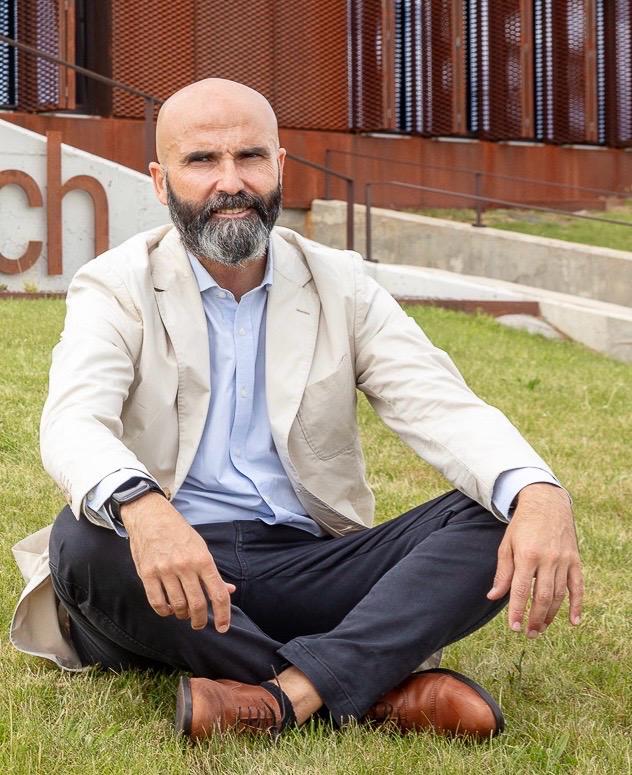
CEO
I am Alfonso, CEO at Leon Research.
I have 14 years of experience in managerial and executive positions in different industries, during the last 16 years in clinical investigation.
Having experienced working and studying in different areas, I have grown to become an open-minded person who thrives in diverse fields. I studied psychology and I joined the pharmaceutical industry in 2009 by being trained in clinical research. I am a very curious person eager to keep learning and apply all this knowledge to every project I am involved in clinical trials.
At Leon Research, back in 2009 I became General Manager, and in 2016 I assume the role of CEO at Leon Research, a CRO for southern European Countries. My goal is to leverage the potential of Leon Research and its employees to make us grow and connect the company with the world outside.